




Search
Related News
- 00
0000-00
How to Select Agricultural Irrigation Solutions for Water-Limited Farms - 00
0000-00
How to Select Food Plant Sanitation Equipment for High-Risk Processing Areas - 00
0000-00
Selecting Meat Packaging Technology to Extend Shelf Life and Control Leakage - 00
0000-00
Selecting Secondary Dairy Packaging Systems for Hygienic, High-Speed Distribution - 00
0000-00
How to Design Greenhouse Irrigation Zones for Uniform Watering and Lower Waste
FDA CEA Pilot Raises IoT Traceability Demands




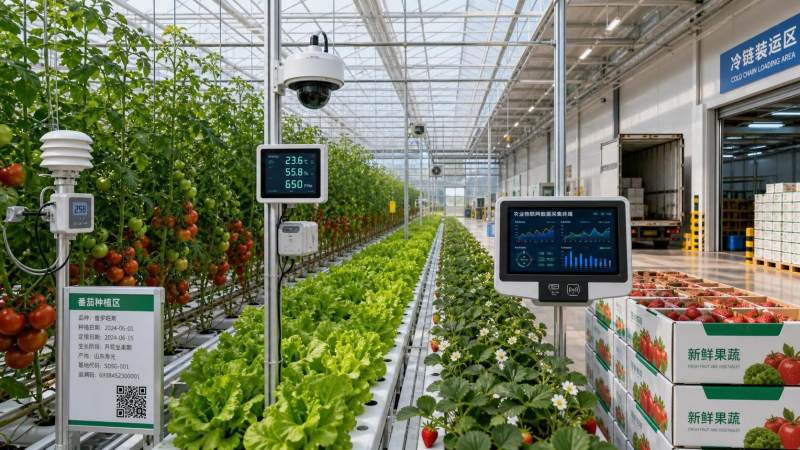
On June 26, 2026, the U.S. Food and Drug Administration announced a new traceability pilot for controlled-environment agriculture products, with implementation beginning in September for covered import channels. The change matters because it moves traceability from conventional shipment and product records toward continuous environmental data reporting, affecting greenhouse exporters, import-side coordination, platform onboarding, and downstream compliance review for produce entering the U.S. market.
What the pilot requires at this stage
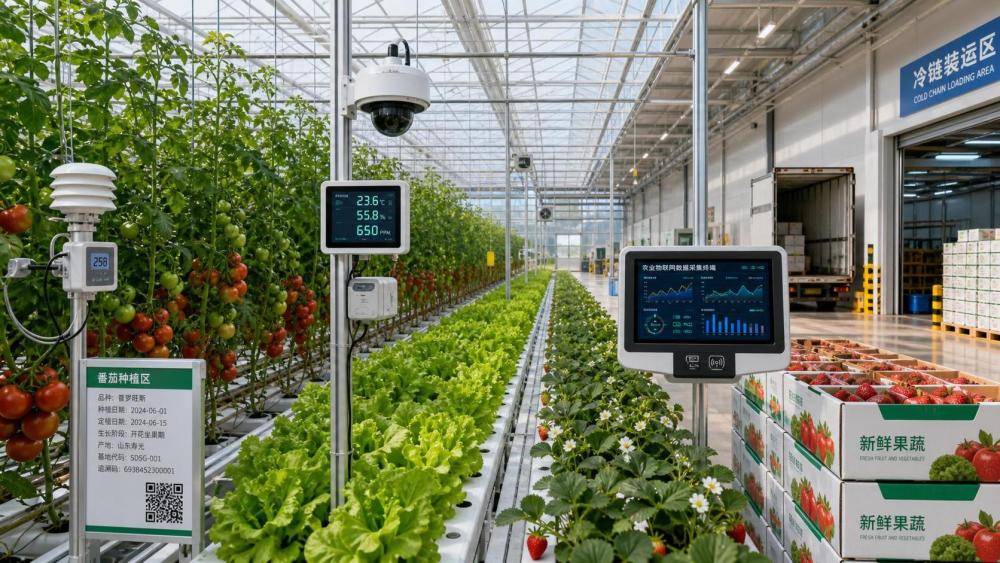
The FDA said it is launching the Controlled Environment Agriculture (CEA) Traceability Pilot. The first covered greenhouse product categories are tomatoes, lettuce, and strawberries. Starting in September 2026, Chinese suppliers shipping greenhouse fruits and vegetables to the U.S. market through the pilot channel must upload raw IoT sensor data through an FDA-recognized platform, with examples including TraceLink or IBM Food Trust. The data fields referenced in the announcement include temperature control data, CO2 concentration, and nutrient solution pH/EC readings.
Where the pressure is likely to appear across the trade chain
Export growers and greenhouse operators face a higher data-readiness threshold
From an industry perspective, the most direct impact falls on exporters producing covered greenhouse crops for the U.S. market. The issue is not only whether products can be shipped, but whether environmental records can be captured as raw sensor data and transferred through an accepted digital platform. What deserves closer attention is the operational link between cultivation records, sensor integrity, and export documentation workflows.
Import-side coordination becomes part of market access execution
For importers and channel operators using the pilot route, the rule change suggests that supplier onboarding and data synchronization may become part of practical compliance management. Analysis shows that procurement teams may need to verify not just product specifications and shipment timing, but also whether upstream suppliers can support the required data transmission format and platform process before goods move.
Supply chain service providers may be drawn into data and handover control
Observably, logistics coordinators, traceability platform service providers, and compliance support teams may also feel the effect. Their exposure comes from the handover points between farm-side sensor records, trade documentation, and importer submission requirements. Even without further execution details, the pilot signals that data continuity may matter alongside physical delivery continuity.
Practical points companies should watch now
Check whether current records are usable as raw data submissions
Analysis shows that companies should first distinguish between internal monitoring dashboards and raw data records that can be uploaded through an FDA-recognized platform. A greenhouse may already monitor temperature, CO2, or nutrient solution conditions, but that does not automatically mean its records are organized in a form suitable for external compliance review.
Review platform access and importer-supplier responsibility splits
What deserves closer attention is how responsibilities are divided between the Chinese supplier and the importing party once the September start date arrives. The summary confirms that suppliers must upload through recognized platforms, but it does not provide full execution detail on workflows, review points, or exception handling. Companies should therefore pay close attention to platform onboarding requirements and importer-side document requests as they emerge.
Focus first on the named products and the affected shipment channel
At this stage, the named categories are tomatoes, lettuce, and strawberries, and the requirement applies to greenhouse produce entering the U.S. market through the pilot channel. Observably, businesses dealing in these products should pay closer attention to contract terms, order acceptance conditions, and shipment preparation for the relevant trade route, rather than assuming the same requirement already applies to all products or all channels.
Prepare for compliance review to extend beyond traditional shipment files
From an industry perspective, this development may push compliance checks toward a broader evidence set that includes sensor-origin records tied to production conditions. That does not yet confirm a final long-term enforcement model, but it does suggest that exporters, buyers, and support teams should watch for changes in requested supporting materials, traceability files, and quality follow-up procedures.
Why this looks like an execution signal, not just a policy headline
Analysis shows that the most important feature of this update is its operational nature. The announcement identifies covered products, a start period, and specific categories of environmental data to be uploaded through recognized platforms. It is more appropriate to understand this as an execution signal with direct compliance implications for affected shipments, while also recognizing that the full enforcement approach, review practice, and market response still require observation.
How the market should read this development for now
For the industry, this update is best read as an early but concrete shift in import-side traceability expectations for covered greenhouse produce. It does not, based on the provided information, establish a complete long-term rule framework for all fresh produce trade. A neutral reading is that companies with exposure to the covered categories should treat it as a real compliance preparation issue now, while continuing to monitor how the pilot is implemented in practice.
Basis of this article and what still needs verification
This article is based on the user-provided news title, event date, and event summary. For developments of this kind, relevant source types typically include official regulator announcements, customs or trade authority notices, industry association updates, standards organization materials, and reporting by authoritative trade media. No specific official source link was provided in the input, so the exact source document still needs to be verified on an ongoing basis. Observably, the areas that merit continued attention include detailed execution language, compliance interpretation, platform-level onboarding requirements, procurement document changes, and industry feedback once the pilot begins.