




Search
Related News
- 00
0000-00
Protected Cultivation Technology: Which Climate Control Systems Fit Your Crop? - 00
0000-00
Sizing Livestock Ventilation Systems for Heat, Humidity, and Ammonia Control - 00
0000-00
Agri-Food Industry Trends Reshaping Supply Chain Risk and Investment Priorities - 00
0000-00
How to Evaluate Food Processing Suppliers for Capacity, Traceability, and Quality Control - 00
0000-00
How Food Contamination Prevention Systems Reduce Risks Across Processing Lines
Protected Cultivation Technology: Which Climate Control Systems Fit Your Crop?




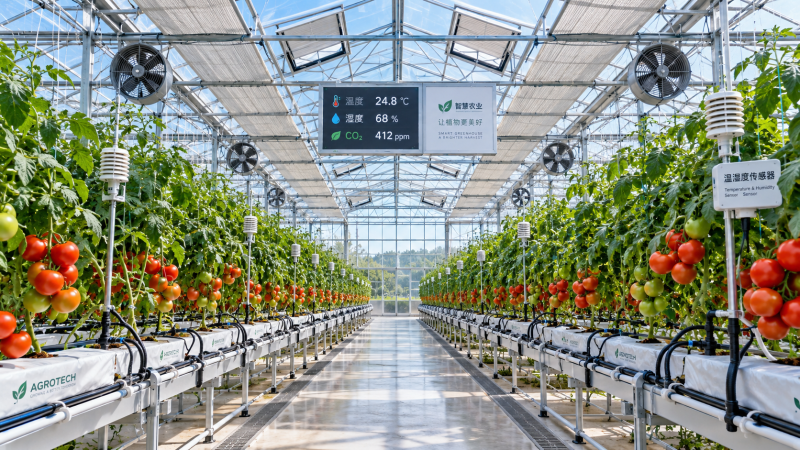
Protected Cultivation Technology: Which Climate Control Systems Fit Your Crop?
Protected cultivation technology gives technical evaluators a practical path to stabilize crop performance despite changing weather, water constraints, and energy costs.
Selecting the right climate control system requires more than comparing sensors, ventilation, heating, cooling, humidity control, and automation features.
It requires a clear understanding of crop physiology, local climate conditions, greenhouse design, production targets, operating costs, and the operational discipline available on site.
The central evaluation question is straightforward: which environmental variables most limit the target crop, and which system can control those variables reliably at acceptable lifetime cost?
For most projects, the strongest answer is not the most automated greenhouse. It is the climate solution that removes the crop's primary constraints without creating avoidable energy, maintenance, or complexity risks.
Start With Crop Requirements, Not Equipment Specifications
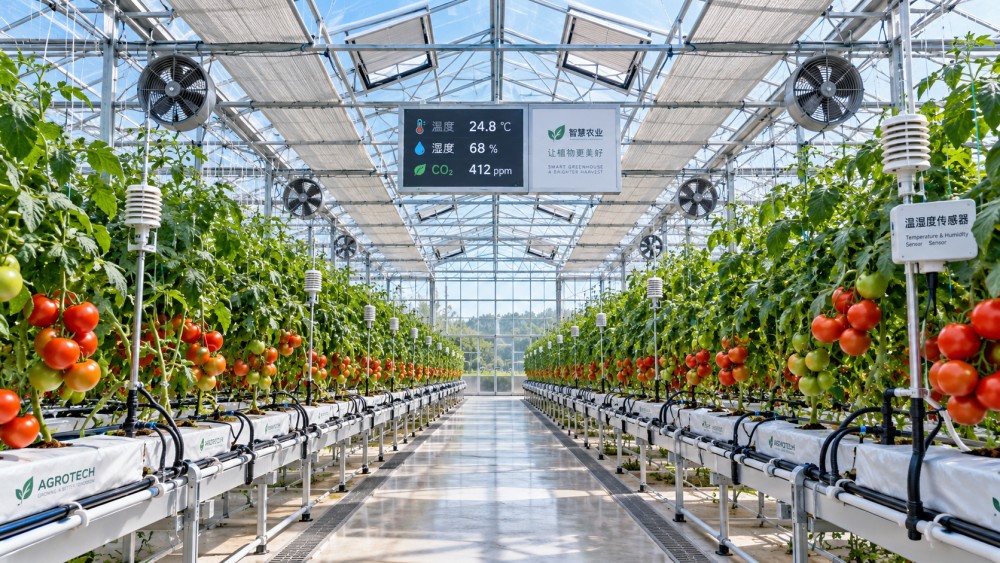
Technical evaluations often begin with vendor specifications, yet protected cultivation technology should first be assessed through the crop's temperature, humidity, light, airflow, and root-zone requirements.
A tomato project, a lettuce farm, and a high-wire cucumber greenhouse may all use similar structures, but their climate priorities, tolerance ranges, and failure consequences differ substantially.
Fruit vegetables generally require strong solar management, reliable ventilation, active humidity control, and sufficient heating capacity to maintain crop balance during cold or wet conditions.
Leafy greens often need tighter control over temperature and vapor pressure deficit, particularly where high humidity can encourage tip burn, mildew, condensation, or inconsistent quality.
Herbs may require careful airflow and dehumidification to protect aroma, leaf appearance, and shelf life. Medicinal crops can demand even narrower environmental consistency and traceability.
Evaluate the crop by identifying its optimum range, acceptable operating range, and damaging threshold for each critical environmental variable. These ranges should inform equipment sizing and control logic.
Temperature matters, but it cannot be reviewed in isolation. A warm greenhouse with poor air movement or excessive relative humidity may still create disease pressure and weak transpiration.
Similarly, cooling capacity alone does not guarantee performance. In hot climates, cooling must be evaluated alongside solar radiation, outside humidity, water quality, greenhouse height, and crop density.
Technical teams should translate crop targets into design criteria before requesting quotations. This prevents suppliers from proposing systems based primarily on standard packages or available inventory.
A useful crop requirement sheet includes daytime and nighttime setpoints, humidity targets, maximum allowable leaf wetness, carbon dioxide strategy, photoperiod needs, irrigation temperature, and seasonal production objectives.
Match the Climate System to the Local Weather Profile
Local climate determines whether a greenhouse primarily needs heat retention, summer heat rejection, moisture removal, air exchange, or protection from abrupt seasonal swings.
Annual averages are insufficient for protected cultivation technology decisions. Evaluators should review hourly temperature, solar radiation, humidity, wind, rainfall, and extreme-event records for the project location.
Hot and dry regions can often use natural ventilation, roof shading, fogging, and evaporative cooling effectively. Their main challenge is controlling peak daytime temperature without excessive water consumption.
Hot and humid regions present a different challenge. Evaporative cooling delivers limited benefit when outside air already contains substantial moisture, while disease pressure can increase rapidly.
In these locations, large roof vents, insect screens with low airflow resistance, high-capacity circulation fans, shade management, and mechanical dehumidification may deserve priority over pad-and-fan cooling alone.
Cold climates require dependable heating, thermal screens, insulation quality, and condensation management. The cost of uncontrolled heat loss can undermine both crop quality and project economics.
Temperate climates frequently need flexible systems that handle cold nights, humid shoulder seasons, and occasional summer heatwaves. A system designed only for average conditions will underperform during critical peaks.
Wind conditions also affect design choices. High winds can reduce natural ventilation performance, damage vent mechanisms, and change internal airflow patterns around crop rows.
For each season, model the number of hours outside the crop's preferred range. Then identify whether passive measures, semi-active systems, or fully active climate equipment is required.
This approach distinguishes a greenhouse that survives local weather from one that consistently delivers commercial-grade yield, uniformity, harvest timing, and disease control.
Choose Ventilation and Air Movement for Plant Health
Ventilation is the foundation of climate management because it removes heat, reduces humidity, replenishes carbon dioxide, and limits stagnant air around leaves.
Natural roof ventilation is often the most energy-efficient option where greenhouse geometry, wind conditions, and outside climate support sufficient buoyancy-driven air exchange.
Ridge vents should be evaluated for opening area, opening angle, insect-screen resistance, automation reliability, and compatibility with thermal screens, roof shape, and gutter structure.
Side vents can support airflow, but their performance may decline when adjacent buildings, windbreaks, production blocks, or tight site boundaries obstruct air movement.
Mechanical exhaust systems offer more predictable airflow, especially in smaller structures or regions with low wind. However, they introduce electricity demand, maintenance requirements, and uneven pressure zones.
Horizontal airflow fans should not be treated as optional accessories. Properly designed circulation improves temperature uniformity, reduces condensation, and supports transpiration throughout dense crop canopies.
The evaluation should include fan placement, throw distance, air speed at crop level, noise, service access, corrosion resistance, and backup arrangements for critical production periods.
Airflow performance must be validated under realistic canopy conditions. An empty greenhouse can appear well ventilated while mature crops create stagnant zones and localized humidity problems.
For disease-sensitive crops, use sensors at several crop locations rather than one central point. Localized humidity and leaf temperature often reveal risks that average readings conceal.
Assess Cooling Systems by Heat Load and Water Reality
Cooling system selection should begin with a heat-load calculation that includes solar gain, structure transmission, crop transpiration, equipment heat, ventilation rate, and desired internal conditions.
External shade screens reduce solar load before heat enters the greenhouse. They can lower cooling demand, but excessive shading may limit photosynthesis and reduce fruit quality or crop speed.
Retractable screens are usually more versatile than fixed shade materials because they allow growers to manage radiation differently across seasons, cloud conditions, and crop development stages.
Pad-and-fan cooling can be effective in dry climates, particularly for large greenhouse blocks. Its performance depends on outside wet-bulb temperature, pad quality, fan sizing, and water management.
Technical evaluators should calculate expected temperature reduction during the hottest hours, not rely on nominal cooling claims. Humid conditions can sharply reduce evaporative performance.
Fogging and high-pressure mist systems may support cooling and humidity control, but droplet size, water quality, nozzle maintenance, and ventilation coordination determine practical results.
Poorly controlled fogging can wet leaves, increase disease risk, and create uneven conditions. It should be linked to radiation, vapor pressure deficit, ventilation status, and crop-stage rules.
Mechanical cooling provides tighter control but has significant capital and energy implications. It is generally justified for high-value propagation, vertical farming, pharmaceutical crops, or premium specialty production.
Water availability is a central selection criterion. Cooling technologies should be assessed against local water permits, filtration needs, salinity, discharge rules, storage capacity, and drought exposure.
A cooling solution that performs well in a design model but depends on unreliable water supply is not a resilient protected cultivation technology investment.
Size Heating, Screens, and Dehumidification as One System
Heating systems should be evaluated as part of an integrated climate strategy, not simply as a boiler capacity question. Screens and dehumidification directly affect required heating output.
Pipe heating near the crop can support transpiration and reduce condensation, while aerial heating may warm air quickly but provide less precise crop-zone control.
For vine crops, rail pipes can combine heating with labor logistics. For propagation areas, bench heating may deliver better root-zone consistency and improve early-stage uniformity.
Thermal screens reduce nighttime heat loss and can lower energy consumption materially. Their performance depends on sealing quality, moisture handling, fire requirements, and reliable movement mechanisms.
Double screens may be justified in cold regions or high-energy-cost markets, but their financial value should be modeled against installation expense, reduced light transmission, and maintenance.
Humidity control is increasingly important because modern greenhouses are more sealed, use larger screens, and operate through wetter seasonal periods to protect energy efficiency.
Ventilation-based dehumidification uses outside air and heat to remove moisture. It can be economical where outside air is sufficiently dry and heating energy is available.
Mechanical dehumidification can reduce moisture without opening vents, helping retain carbon dioxide and heat. Its value rises in cold, humid climates and tightly controlled production systems.
Review latent-load calculations, condensate management, heat recovery, refrigerant regulations, and maintenance capability before selecting active dehumidification equipment.
The practical goal is to maintain crop transpiration without prolonged condensation. Relative humidity alone is not enough; dew point, leaf temperature, and vapor pressure deficit should guide control decisions.
Decide How Much Automation the Operation Can Support
Climate automation improves consistency when it uses reliable sensors, well-defined control rules, and operators who can interpret alarms and respond to changing crop conditions.
A sophisticated controller cannot compensate for poor sensor placement, irregular maintenance, unavailable spare parts, or teams that lack authority to adjust crop strategies.
Minimum monitoring should include outside and inside temperature, relative humidity, solar radiation, wind speed, wind direction, rainfall, carbon dioxide, and key irrigation parameters.
For higher-value crops, include leaf temperature, substrate moisture, substrate electrical conductivity, drainage percentage, root-zone temperature, and multiple climate zones within the greenhouse.
Sensor redundancy matters for critical variables. A failed outside wind sensor can damage roof vents, while inaccurate humidity readings can trigger poor heating or dehumidification decisions.
Evaluate controller architecture carefully. Open communication protocols, remote access controls, data ownership, alarm escalation, cybersecurity provisions, and local service support affect lifetime value.
Automation should support operational decisions rather than obscure them. Dashboards need to show actionable trends, such as climate deviations, energy use, irrigation events, alarm history, and zone variation.
Ask vendors to demonstrate how their system manages a hot afternoon, a cold humid night, a power interruption, and a sensor failure. These scenarios reveal practical control quality.
Manual override functions remain essential. Operators must be able to safely control vents, screens, heating, irrigation, and alarms when communication systems or software services fail.
Compare Systems Through Total Cost and Production Risk
Capital expenditure is visible, but it is rarely the only decision factor. Energy, water, labor, maintenance, consumables, replacement parts, and downtime determine total ownership cost.
A lower-cost ventilation package may appear attractive until crop losses, manual intervention, or high disease incidence create inconsistent output and expensive production interruptions.
Conversely, highly active systems can become financially weak when electricity prices, cooling loads, or maintenance needs exceed the margin created by improved crop quality.
Build a scenario-based business case rather than relying on one expected yield figure. Include normal weather, extreme heat, cold snaps, humid periods, utility disruption, and equipment failure assumptions.
Quantify the value of climate stability through yield, grade distribution, harvest scheduling, reduced pesticide use, lower rejection rates, labor planning, and contractual supply reliability.
For projects serving retailers, exporters, processors, or seed companies, predictable quality may be more valuable than maximum theoretical yield. Climate systems should reflect that commercial requirement.
Supplier evaluation should cover installation experience with the target crop, commissioning support, response time, local spare parts, training quality, warranty conditions, and reference-site performance.
Request performance data from comparable locations whenever possible. A solution proven in a dry inland region may not perform similarly in a humid coastal climate.
Technical teams should also examine integration boundaries. Heating, screens, irrigation, lighting, water treatment, electrical infrastructure, and greenhouse controls must operate as a coordinated system.
Use a Structured Evaluation Matrix Before Final Selection
A structured matrix helps project teams compare alternatives consistently and prevents a single attractive feature from outweighing more important agronomic or operational criteria.
Start with crop fit, assigning high weight to the ability to maintain target temperature, humidity, airflow, light conditions, and root-zone conditions during critical seasons.
Then score local climate compatibility, including peak weather performance, water availability, power reliability, structural suitability, and resilience during extreme events.
Operational fit should assess local technical skills, operator workload, spare-part access, automation usability, preventive maintenance requirements, and emergency operating procedures.
Financial scoring should include installed cost, expected annual utilities, replacement cycles, maintenance contracts, yield upside, quality improvement, and sensitivity to input-price changes.
Finally, assess supplier credibility through references, engineering documentation, commissioning plans, guaranteed performance terms, and willingness to provide transparent assumptions behind their proposal.
Protected cultivation technology decisions are strongest when agronomy, engineering, finance, and operations review the same evidence. Separate decisions often create expensive gaps after installation.
Before signing, verify design calculations, equipment schedules, control points, utility demand, drainage plans, sensor locations, and acceptance criteria for commissioning.
Conclusion: Select Control Capacity That Protects Crop Value
The right climate control system is not defined by the number of sensors, screens, or automated features. It is defined by how reliably it protects crop value.
Technical evaluators should begin with crop physiology, test solutions against local weather extremes, and examine ventilation, cooling, heating, humidity, and automation as interconnected functions.
For many greenhouses, the best protected cultivation technology combines strong passive design with targeted active controls, practical automation, and reliable service support.
That balance improves yield consistency, quality stability, resource efficiency, and operational confidence while avoiding investments that exceed the crop's commercial requirements.
A disciplined evaluation process turns climate control from an equipment purchase into a production-risk strategy, helping greenhouse projects deliver dependable results across changing seasons and markets.