




Search
Related News
- 00
0000-00
How to Select Agricultural Irrigation Solutions for Water-Limited Farms - 00
0000-00
How to Select Food Plant Sanitation Equipment for High-Risk Processing Areas - 00
0000-00
Selecting Meat Packaging Technology to Extend Shelf Life and Control Leakage - 00
0000-00
Selecting Secondary Dairy Packaging Systems for Hygienic, High-Speed Distribution - 00
0000-00
How to Design Greenhouse Irrigation Zones for Uniform Watering and Lower Waste
Can Probiotics Extend Dairy Shelf Life Without Artificial Preservatives?




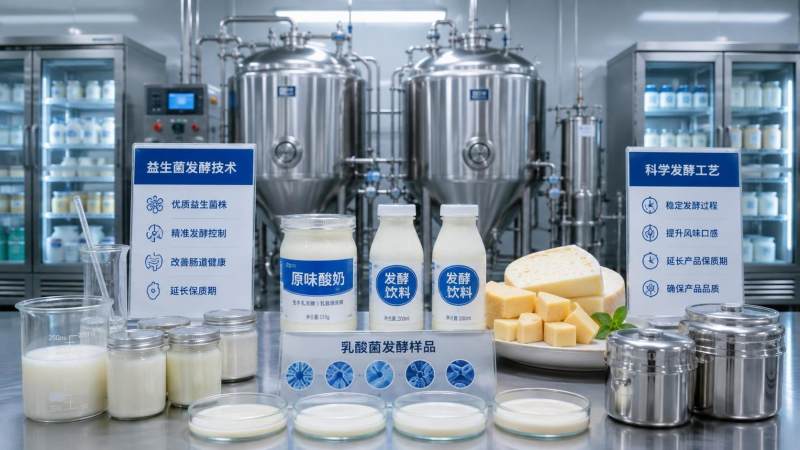
Probiotics can contribute to longer usable life in some dairy products without relying on artificial preservatives, but they are not a universal substitute for preservation technology. Their strongest role is in fermented dairy, where selected cultures can suppress spoilage organisms, support acidification, and help maintain a stable microbial environment. In neutral or only mildly acidic products such as milk drinks, high-protein beverages, or fresh dairy desserts, the same approach is far less predictable.
The practical question is not whether a probiotic culture has antimicrobial activity in a laboratory test. It is whether that strain remains viable, organoleptically acceptable, legally compliant, and microbiologically useful throughout the product’s intended shelf life under real manufacturing and distribution conditions. A dairy manufacturer that treats probiotics as a “natural preservative” without validating those conditions can create flavor defects, texture instability, excessive post-acidification, or an unsupported shelf-life claim.
What probiotics can—and cannot—do in dairy preservation
Probiotics are live microorganisms that, when consumed in adequate amounts, are associated with a health benefit. This definition matters because not every protective culture is a probiotic, and not every probiotic is suitable for shelf-life extension. A culture selected for digestive-health positioning may have weak activity against the spoilage organisms relevant to a particular yogurt, cheese, or cultured beverage.
Some lactic acid bacteria can affect microbial stability through several mechanisms:
- production of lactic acid and, in some cases, acetic acid, which lowers pH and reduces the growth potential of many undesirable microbes;
- competition for nutrients and ecological space within the product;
- production of antimicrobial metabolites, including hydrogen peroxide, diacetyl, organic acids, or bacteriocin-like compounds, depending on the strain and conditions;
- interaction with the primary starter culture, which can alter fermentation speed and the final microbial balance.
These effects can be valuable, particularly against yeasts, molds, or selected bacterial spoilers. They do not eliminate the need for pasteurization, hygienic design, sanitation, cold storage, oxygen control, or packaging integrity. They also do not reliably control every foodborne pathogen. A probiotic culture should therefore be considered one component of a hurdle system, not a stand-alone food-safety control.
That distinction is especially important when evaluating the question, “Can probiotics be used to extend shelf life in dairy without artificial preservatives?” The answer is yes for carefully designed products, but only when “extend shelf life” means maintaining acceptable quality within a validated process and distribution system—not compensating for weak hygiene or an unstable cold chain.
Fermented dairy is the most realistic starting point
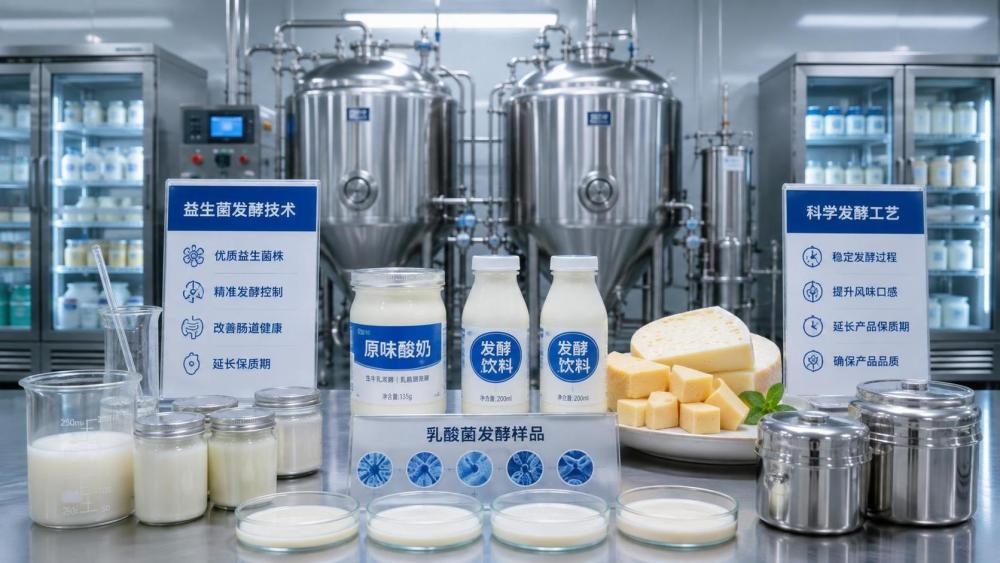
Yogurt, kefir-type products, cultured milk, fresh cheese, and fermented dairy dips offer the most favorable environment for probiotic-assisted shelf-life strategies. Their lower pH, existing starter-culture activity, and established chilled distribution model already provide barriers to many spoilage organisms. A compatible adjunct probiotic or protective culture can strengthen that environment.
Compatibility is central. Some probiotic strains grow slowly in milk, while others may be inhibited by the acidification pattern of conventional yogurt starters. A strain that survives well in a refrigerated yogurt may still affect flavor, viscosity, syneresis, or acid development in an undesirable way. The issue becomes more pronounced near the end of shelf life, when continued metabolic activity can cause post-acidification.
Post-acidification is one of the most common commercial constraints. A product may leave the factory with acceptable flavor and texture but become too sour during refrigerated storage. This can reduce consumer acceptance even when microbiological quality remains satisfactory. The culture selection process must therefore assess both protective effect and metabolic restraint at the actual storage temperature.
Fresh cheese presents a different set of challenges. Its relatively high moisture, variable salt level, and often less acidic matrix can support spoilage if post-processing contamination occurs. Certain cultures may help control spoilage yeasts or molds, but the effectiveness depends heavily on the cheese variety, water activity, salt concentration, packaging atmosphere, and surface versus internal application. A strain that performs in a cultured yogurt matrix should not be assumed to work in cottage cheese, cream cheese, or soft-ripened cheese.
Neutral dairy products require more caution
In pasteurized milk, flavored milk, dairy protein drinks, cream-based beverages, and many dessert products, probiotics face a less favorable preservation environment. These products often have a higher pH than fermented dairy, and their sensory profile may not tolerate further acidification or fermentation-derived flavor changes.
Adding a live culture after heat treatment also introduces a process-control question: the culture addition step must not become a route for contamination. In many products, a manufacturer must choose between introducing the probiotic after pasteurization under highly controlled hygienic conditions or using a process that limits viability but delivers a different type of ingredient claim. That choice affects both shelf-life strategy and labeling.
For neutral dairy beverages, probiotics may still support product differentiation and live-culture positioning, but they should not automatically be expected to extend shelf life. In some formulations, the main preservation burden remains with heat treatment, refrigerated storage, package design, dissolved-oxygen management, and control of contamination during filling.
Products with fruit preparations, cereals, chocolate, or high levels of added nutrients deserve separate scrutiny. Such inclusions can introduce their own microbial risks, alter water activity, or provide substrates that change culture behavior. A probiotic that is stable in plain milk may behave differently once sugar, fruit acids, fibers, minerals, or plant proteins are introduced.
Choose strains for the product, not for the claim alone
A commercial selection process should begin with the specific spoilage problem. “Longer shelf life” is too broad to guide strain choice. The relevant question may be whether the product is vulnerable to yeast growth, mold development, psychrotrophic bacterial spoilage, post-acidification, gas formation, surface discoloration, or flavor deterioration.
A supplier’s probiotic dossier should be reviewed beyond health-positioning materials. Useful technical information includes strain identity, deposit or traceability information, recommended dosage, fermentation behavior, resistance to processing conditions, expected viability during refrigerated storage, and known interactions with starter cultures. If antimicrobial activity is cited, it should be linked to the intended food matrix and target organism rather than presented as a generic property.
Strain-level identification is important. Effects observed for one Lactobacillus-related, Bifidobacterium, or Lacticaseibacillus strain cannot be assumed for another member of the same genus or species. Taxonomy changes also complicate procurement documentation, so technical teams should ensure that old and updated strain names are consistently linked in specifications, certificates, labels, and regulatory files.
Viability targets need equal attention. A probiotic may contribute to preservation early in storage but decline below the desired live-cell level before the end of the declared shelf life. Conversely, a highly active culture may remain viable but continue producing acid or flavor-active metabolites. Shelf-life design requires a balance between survival and controlled activity.
Process conditions can outweigh the culture itself
Even a well-selected strain will not deliver consistent results if the production process is poorly aligned with it. Culture addition temperature, inoculation sequence, fermentation endpoint, cooling rate, agitation intensity, homogenization, filling hygiene, and storage temperature can all change performance.
In stirred yogurt, for example, the point at which the probiotic is added can affect exposure to shear and acidity. In set yogurt, fermentation kinetics and cooling are particularly important because excessive residual activity after incubation can change final pH during distribution. In fresh cheese, brining, draining, and packaging may determine whether the culture remains active where spoilage pressure is greatest.
Oxygen is another frequent blind spot. Several probiotic organisms have limited oxygen tolerance, while many spoilage molds and yeasts benefit from oxygen exposure. Packaging that reduces oxygen ingress may therefore support both probiotic survival and spoilage control, but it must be assessed in relation to product appearance, package deformation, filling conditions, and recycling requirements.
Cold-chain assumptions must be realistic. A shelf-life study conducted only at an ideal refrigerator temperature may not represent retail storage, cross-border distribution, or short periods of temperature abuse. The intended distribution route should shape the validation protocol. Long-distance export, multi-stage warehousing, and variable retail refrigeration can create very different product conditions from a local chilled supply chain.
“Clean label” does not remove the need for preservation design
Removing chemical preservatives can be commercially attractive, but “no artificial preservatives” is not a technical control measure. The product still requires a coherent preservation system. Depending on the dairy category, that system may include pasteurization or another validated heat process, acidification, refrigerated storage, appropriate packaging, low contamination during filling, and, where suitable, a protective or probiotic culture.
There is also a terminology issue. Some ingredients perceived as natural may still be regulated as food additives, processing aids, cultures, or flavoring components depending on the jurisdiction and their technological function. A culture used primarily to inhibit spoilage may be treated differently from one used primarily for fermentation or a health-related claim. The legal classification cannot be inferred from consumer-facing language such as “natural” or “clean label.”
Health claims require separate evaluation. A product may contain a live culture without being permitted to make a probiotic or health-benefit claim in every market. Requirements vary by jurisdiction and can involve strain identification, evidence standards, minimum levels through shelf life, wording restrictions, and local food-category rules. Export products should be checked market by market rather than relying on the regulatory position of the manufacturing country.
Validate against the actual failure mode
Laboratory screening is only the first filter. Commercial decisions should be based on product-specific validation that compares a control formulation with the proposed culture system under defined storage conditions. The assessment should include microbiological results, but it should not stop there.
Useful evaluation points include pH drift, titratable acidity, viscosity, syneresis, gas formation, package appearance, flavor development, aroma changes, probiotic viability, and the growth behavior of the spoilage organisms relevant to the product. Where food safety is implicated, challenge testing and validation should be designed and interpreted by qualified food microbiology professionals within the applicable regulatory framework.
Sensory review should run throughout the target shelf life, not only at release. A culture-based system can appear successful in microbiological data while creating a product that is too acidic, too bitter, excessively yeasty, or physically unstable at the end of life. Shelf life is a combined microbiological, chemical, physical, and sensory outcome.
Manufacturers should also define what “extension” means before testing. The goal may be additional days of acceptable quality, lower spoilage variability, improved stability after package opening, or a replacement for a particular preservative ingredient. Each objective requires a different test design and may lead to a different culture choice.
Common decision errors
The most costly mistake is treating probiotic inclusion as proof of preservation. A culture may be viable and marketable without materially improving spoilage resistance. The opposite can also occur: a protective culture may work well against spoilage but not meet the evidence or dosage expectations needed for a probiotic claim.
Another error is transferring results between product formats. A strain validated in a fermented cup yogurt cannot be assumed to perform identically in drinkable yogurt, high-protein yogurt, lactose-free milk, or a fruit-prepared dairy snack. Protein concentration, sugar content, acidity, stabilizer system, oxygen exposure, and filling process all alter the biological environment.
Finally, companies sometimes focus on the culture cost while overlooking the cost of validation, process adjustment, additional microbiological testing, specification management, and cold-chain discipline. A probiotic-based approach can be commercially justified, but its value depends on whether it improves the total product system rather than merely replacing one ingredient on the label.
A practical conclusion for dairy formulation
Probiotics can support shelf-life extension without artificial preservatives most credibly in fermented dairy products with compatible cultures, controlled acidity, strong hygiene, appropriate packaging, and dependable refrigeration. They are less reliable as a preservation tool in neutral dairy products, where the microbiological and sensory environment gives them less control.
The best formulation strategy separates three questions that are often combined: does the culture provide a validated health-related benefit, does it improve microbial stability in this specific product, and can it do so without harming taste or texture through the end of shelf life? When all three answers are supported by product-level evidence, probiotics can become a meaningful part of a cleaner-label dairy preservation system. When they are not, they should remain a functional or marketing ingredient rather than be treated as a substitute for sound preservation engineering.