




Search
Related News
- 00
0000-00
How to Select Agricultural Irrigation Solutions for Water-Limited Farms - 00
0000-00
How to Select Food Plant Sanitation Equipment for High-Risk Processing Areas - 00
0000-00
Selecting Meat Packaging Technology to Extend Shelf Life and Control Leakage - 00
0000-00
Selecting Secondary Dairy Packaging Systems for Hygienic, High-Speed Distribution - 00
0000-00
How to Design Greenhouse Irrigation Zones for Uniform Watering and Lower Waste
Can Food Manufacturing Automation Cut Labor Costs by 40%?




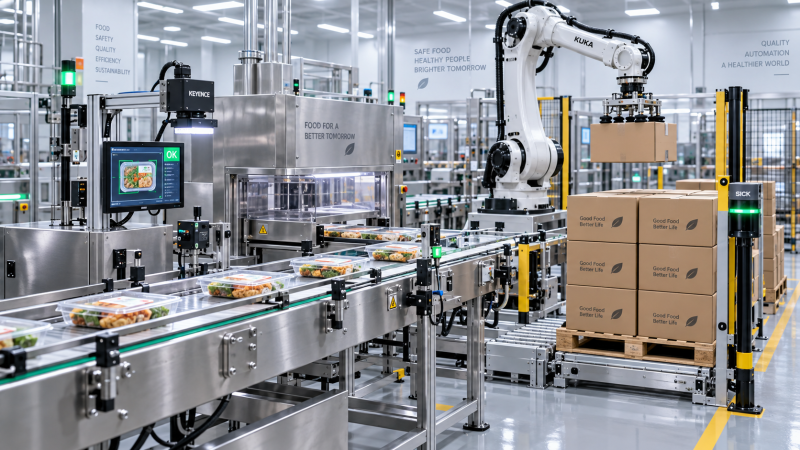
Can Food Manufacturing Automation Cut Labor Costs by 40%?
Can food manufacturing automation reduce labor costs by 40 percent? In selected operations, yes. Across an entire facility, however, that figure is usually an ambitious upper-range result rather than a standard outcome.
Processors can achieve major savings when automation replaces repetitive, high-turnover work while also increasing throughput, reducing waste, and limiting quality failures. The strongest cases are operational, not merely technological.
For food manufacturers, the key question is not whether robots or automated equipment can perform a task. It is whether the production system can sustain the investment.
Where Can Food Manufacturing Automation Deliver the Largest Labor Savings?
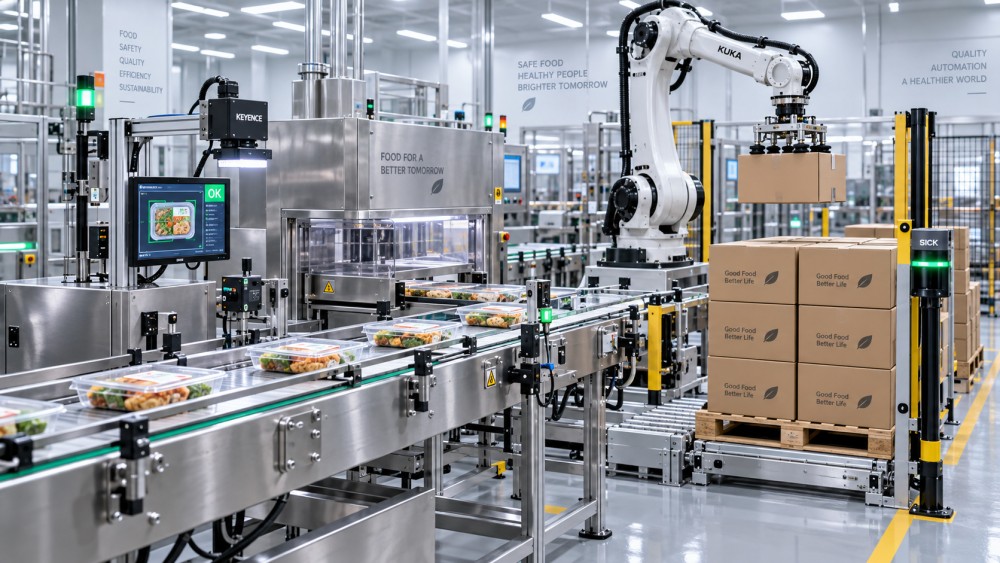
Labor savings are most realistic in predictable, repetitive, physically demanding, or hygiene-sensitive tasks. These include loading, sorting, cutting, filling, sealing, palletizing, inspection, and internal material movement.
Packaging departments are often the first priority because they employ large teams across multiple shifts. Cartoning, case packing, labeling, palletizing, and stretch wrapping frequently offer clear automation opportunities.
End-of-line automation can reduce direct manual handling while improving line speed and shipment consistency. It may also reduce injuries related to lifting, repetition, awkward posture, and warehouse movement.
Vision-guided inspection systems can lower labor requirements in quality control. Cameras and sensors can identify damaged packs, missing labels, seal defects, foreign materials, incorrect coding, and weight variations.
Primary processing applications can also produce substantial results. Automated washing, grading, slicing, portioning, deboning, batching, and dispensing can reduce dependence on difficult-to-recruit production workers.
However, product variability matters. A highly uniform snack product is easier to automate than irregular fresh produce, mixed meals, delicate bakery items, or products with changing visual characteristics.
Manufacturers should therefore separate tasks that require human judgment from tasks that require repeatable movement. Automating the second category first generally creates a more reliable business case.
Why a 40 Percent Reduction Is Possible but Not Universal
A 40 percent labor-cost reduction is possible when a facility has high manual labor intensity, stable production volumes, multiple shifts, and processes that can be standardized.
It is less likely when production relies on frequent changeovers, seasonal demand, small batches, complex recipes, fragile products, or highly variable incoming raw materials.
Many automation projects reduce direct line labor but add technical roles. Operators may be replaced by fewer but more skilled technicians, maintenance specialists, programmers, and quality personnel.
This does not make automation unsuccessful. It means manufacturers must calculate total labor cost, including recruitment, turnover, overtime, training, absenteeism, supervision, and workplace injury exposure.
A company with low wages but reliable staffing may see a slower return than a processor facing constant vacancies, expensive overtime, and high temporary labor dependence.
The headline percentage also depends on the measurement basis. Savings may refer to one workstation, one packaging line, direct labor only, or total plant labor.
Management teams should ask suppliers exactly what is included in projected savings. A credible estimate distinguishes between labor eliminated, labor redeployed, overtime avoided, and output created.
How to Build a Realistic Automation Business Case
The most useful business case starts with a detailed baseline. Manufacturers should measure labor hours, output, downtime, yield loss, rejects, rework, overtime, sanitation time, and maintenance history.
Labor cost should be calculated by product family and shift, rather than as a broad monthly total. This reveals which lines absorb the greatest operational burden.
Next, identify the process constraint. Automation creates the most value when it removes a bottleneck that limits throughput, causes recurring stoppages, or creates inconsistent product quality.
For example, automated case packing may be valuable because it reduces four operators per shift. It may be more valuable because packaging speed no longer restricts cooking output.
That distinction matters because additional saleable production can outweigh direct wage savings. A system that increases capacity without requiring a building expansion may change the investment calculation.
Include capital expenditure, installation, guarding, utilities, software, integration, spare parts, validation, employee training, and expected maintenance in the total project cost.
Manufacturers should also estimate the cost of planned downtime during installation. Retrofitting an existing line can be more complex and expensive than integrating automation into new construction.
A practical financial model should calculate payback period, return on investment, net present value, and sensitivity to labor rates, volume changes, yield improvement, and downtime.
Which Technologies Usually Produce the Strongest Returns?
Conveyors, accumulation systems, automated feeding, and material handling equipment often provide dependable returns because they reduce repetitive transport and create a more stable production flow.
Robotic palletizers are widely used because pallet patterns are predictable, labor demand is significant, and workplace safety benefits are easy to measure.
Collaborative robots can be useful for lower-speed applications, especially where floor space is limited. Their suitability still depends on payload, cycle time, guarding requirements, and sanitation design.
Automatic weighing, dosing, batching, and recipe management systems reduce manual ingredient handling. They can improve formulation accuracy while reducing giveaway and lowering contamination risk.
Machine vision provides value when defects are frequent, inspections are subjective, or traceability requirements are strict. It should be tested with real product variation before purchase.
Automated guided vehicles and autonomous mobile robots can reduce forklift travel and manual material transport. They work best where internal routes, pallet standards, and warehouse layouts are controlled.
Packaging automation often delivers a stronger return than highly customized primary processing robots. It is usually easier to integrate, easier to validate, and less affected by raw-material variability.
Food manufacturers should avoid choosing technology based only on industry trends. The right automation platform matches actual product characteristics, sanitation requirements, throughput targets, and future product plans.
Integration Risks That Can Reduce Expected Savings
Automation does not operate independently from the rest of the factory. A fast robotic cell will not create value if upstream preparation or downstream cold storage remains constrained.
Integration problems commonly arise from inconsistent product orientation, unstable conveyor speeds, poor handoff design, inadequate utilities, weak data connectivity, or limited access for cleaning and maintenance.
Food safety requirements deserve particular attention. Equipment must support hygienic design, appropriate materials, drainage, cleanability, allergen control, and validation procedures suitable for the product category.
Automation can improve hygiene by reducing human contact. Yet poorly designed equipment can create hard-to-clean zones, increase sanitation time, or introduce contamination risks.
Changeovers are another frequent problem. A highly efficient system for one package size can lose value when frequent format changes require manual adjustments and long line stoppages.
Before approving a project, manufacturers should request demonstrations using actual products, packaging materials, production speeds, and environmental conditions instead of relying only on standard supplier tests.
Factory acceptance testing and site acceptance testing should include difficult scenarios. These may include damaged packaging, irregular products, missing materials, line restarts, sanitation cycles, and operator interventions.
Clear performance guarantees are important. Contracts should define throughput, uptime assumptions, reject rates, product quality standards, maintenance support, training, and responsibilities for integration failures.
What Happens to the Workforce After Automation?
Successful automation programs do not simply remove people from production areas. They redesign work around equipment operation, preventive maintenance, quality oversight, scheduling, troubleshooting, and continuous improvement.
Employees with process knowledge are valuable during implementation because they understand recurring problems that may not appear in engineering drawings or supplier specifications.
Training should begin before commissioning. Operators need to understand normal running conditions, alarm response, safe recovery procedures, quality checks, cleaning requirements, and escalation routes.
Maintenance teams need more than mechanical training. Modern food automation increasingly depends on sensors, drives, machine vision, controls, networking, production data, and software updates.
Workforce communication also affects project performance. Employees may resist automation when they see it only as a headcount reduction rather than a response to shortages and operational instability.
Management should explain how roles will change, where redeployment is possible, and what skills will be needed. Transparency reduces uncertainty and helps retain experienced staff.
In many regions, automation supports growth without proportional hiring. This is particularly relevant for manufacturers that cannot fill existing positions or must rely heavily on temporary workers.
How Should Manufacturers Prioritize Their First Automation Project?
Start with a process that is painful, measurable, and technically manageable. The best pilot is rarely the most advanced application or the one with the largest theoretical savings.
Look for workstations with high turnover, repeated overtime, frequent safety incidents, inconsistent cycle times, labor-intensive inspection, or persistent production bottlenecks.
Choose a line with relatively stable products and sufficient volume. Stable operating conditions help a company validate assumptions before attempting more complex, variable applications.
A phased approach often reduces risk. Manufacturers can first automate conveying, feeding, inspection, or palletizing, then connect data systems and expand toward integrated line automation.
Each project should establish measurable success criteria before installation. Useful metrics include labor hours per unit, overall equipment effectiveness, throughput, reject rates, unplanned downtime, and sanitation duration.
Review results after enough operating time to account for learning curves. Early production data may understate performance while staff, maintenance teams, and suppliers refine the system.
Lessons from the first project should inform design standards for future investments. This includes preferred controls platforms, hygienic requirements, spare-parts policies, training methods, and data architecture.
Beyond Labor Savings: The Full Value of Food Automation
Labor reduction is often the most visible benefit, but it is rarely the only one. Automation can improve consistency, traceability, safety, yield, product presentation, and production planning.
Consistent portioning can reduce expensive ingredient giveaway. Automated inspection can detect quality deviations earlier, preventing larger batches from reaching packaging or distribution stages.
Digital production data can improve decision-making. Managers can identify recurring downtime causes, compare shift performance, monitor equipment health, and improve preventive maintenance planning.
Traceability also becomes easier when automated systems record batch information, production parameters, weight data, inspection results, and packaging codes in connected manufacturing systems.
For export-oriented food manufacturers, reliable process control can support customer audits and regulatory compliance. Buyers increasingly expect documented controls, repeatable quality, and rapid access to production records.
Automation can also support sustainability objectives. Better dosing, reduced product waste, lower packaging errors, optimized energy use, and fewer rejected products can improve resource efficiency.
These benefits should not be assumed automatically. They need operational targets, appropriate data collection, and accountability across production, engineering, quality, and supply chain teams.
Can Food Manufacturing Automation Reduce Labor Costs by 40 Percent?
Can food manufacturing automation reduce labor costs by 40 percent? The answer is yes for selected lines and labor-intensive processes, especially packaging, handling, inspection, and standardized processing tasks.
For a complete facility, the result depends on product complexity, labor structure, operating hours, equipment reliability, integration quality, and the company’s ability to redesign work effectively.
The strongest investment decisions do not begin with a target percentage. They begin with a specific bottleneck, a detailed cost baseline, and a credible plan for implementation.
Food manufacturers should evaluate automation as an operational capability rather than a standalone machine purchase. The goal is a safer, more predictable, productive, and resilient manufacturing system.
A well-chosen project can reduce labor dependence substantially while improving quality and output. A poorly matched project can add complexity without solving the underlying production constraint.
For decision-makers, the practical conclusion is clear: pursue automation where the process is repeatable, labor pressure is significant, benefits are measurable, and integration can be managed properly.