




Search
Related News
- 00
0000-00
How Food Contamination Prevention Systems Reduce Risks Across Processing Lines - 00
0000-00
How to Evaluate Livestock Automation Manufacturers for Reliable Farm Deployment - 00
0000-00
How to Evaluate a Modular Livestock Housing Supplier for Climate, Scale, and Biosecurity - 00
0000-00
How to Select Agricultural Irrigation Solutions for Water-Limited Farms - 00
0000-00
How to Select Food Plant Sanitation Equipment for High-Risk Processing Areas
China Adds AI Vision Filing to Food Machinery Exports




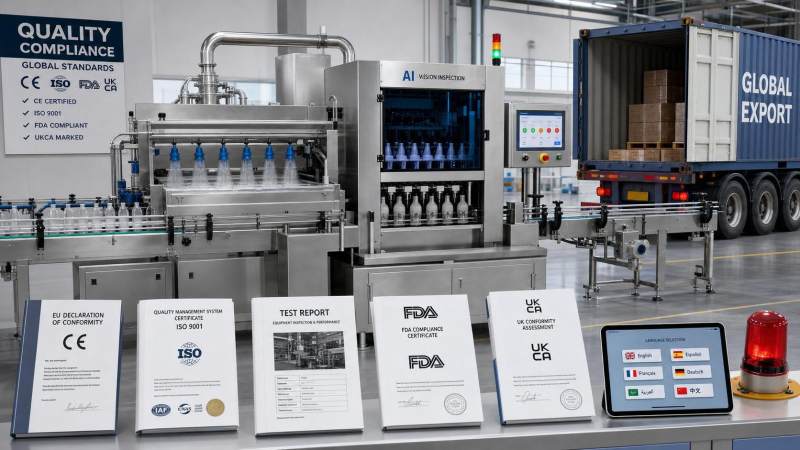
On July 1, 2026, a new export inspection requirement took effect for selected food processing machinery shipped from China to the EU, the United States, Canada, Australia, and ASEAN markets. The change deserves close attention from equipment manufacturers, exporters, compliance teams, overseas buyers, and supply chain service providers because export declaration can now be suspended if the required AI vision compliance filing is missing, turning documentation readiness into an immediate shipment issue rather than a secondary technical matter.
What the new requirement covers
According to the information provided, the General Administration of Customs of China issued the Notice on Strengthening Quality and Safety Supervision of Food Processing Machinery Exports on June 30, 2026, referenced as 署监发〔2026〕78号. From July 1, 2026, cleaning, sorting, cutting, and filling food processing machinery exported to the EU, the United States, Canada, Australia, and ASEAN countries must be accompanied by proof of AI visual inspection system compliance filing.
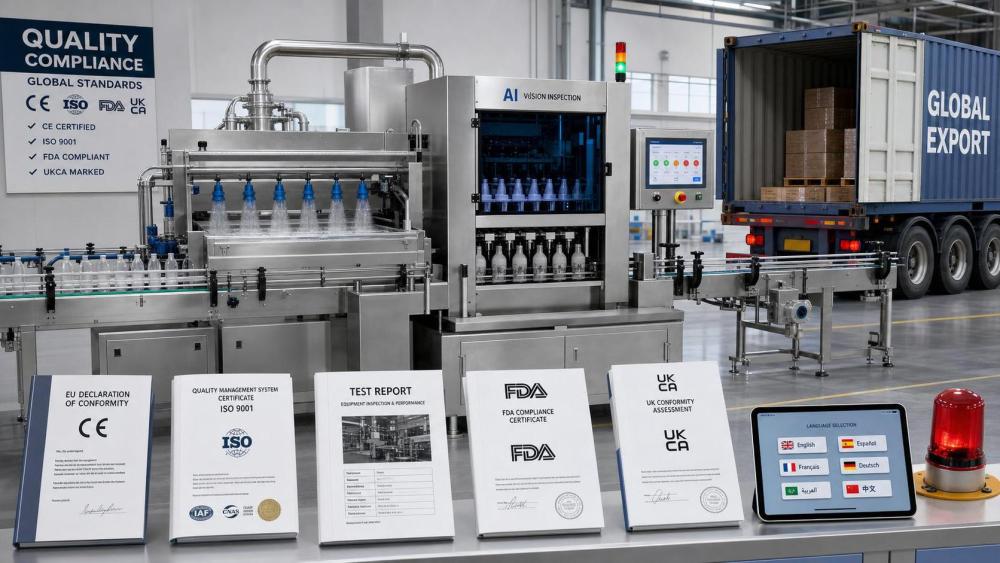
The filing is stated to be based on GB/T 42805-2023. The required materials include a declaration on the source of the algorithm training dataset, a false detection rate test report, and screenshots of the multilingual operating interface. The provided information also states that equipment without the filing will have export declaration suspended.
Why the impact reaches beyond customs clearance
Exporting equipment makers face a documentation-to-shipment link
From an industry perspective, the most direct impact falls on manufacturers and exporters of cleaning, sorting, cutting, and filling machinery. The reason is straightforward: the new requirement is tied to export declaration itself. In practice, that means product configuration, software documentation, testing records, and filing completeness may now affect whether goods can move on schedule.
Compliance and technical teams will need closer coordination
Analysis shows that this is not only a customs or trade paperwork issue. Because the filing requires dataset source declarations, false detection rate testing, and multilingual interface screenshots, technical, software, testing, and regulatory teams may all need to align their internal materials before shipment. The business impact is likely to appear in pre-shipment review, documentation preparation, and cross-functional signoff.
Overseas buyers and procurement functions may review delivery risk differently
Buyers in the covered destination markets may also be affected indirectly. Observably, when export declaration depends on filing completeness, procurement timelines, acceptance planning, and contract delivery expectations can become more sensitive to documentation readiness. What deserves closer attention is whether suppliers can present the required filing evidence early enough to support delivery confidence.
Logistics and trade service providers may need to adjust review checkpoints
For customs brokers, freight coordinators, and related trade service providers, the change may alter documentation screening at the booking and declaration stages. The practical issue is less about transport execution itself and more about whether shipments are held back before that stage because the filing package is incomplete or inconsistent with the covered machinery category.
What companies should check now
Confirm whether the product scope matches the covered machinery types
Companies should first verify whether their export portfolio includes cleaning, sorting, cutting, or filling food processing machinery destined for the listed markets. This is the threshold question, because the operational effect begins only when both product category and destination market fall within the scope described in the provided notice summary.
Review whether filing materials can be produced in usable form
The required materials named in the input are specific enough to warrant an immediate document review: dataset source declaration, false detection rate test report, and multilingual interface screenshots. Firms involved in design, software integration, or final assembly should check whether these materials already exist in a form suitable for filing, or whether internal rework may affect shipment timing.
Separate formal policy wording from internal assumptions
Analysis shows that one practical risk is treating the requirement as a general AI feature discussion rather than a filing condition linked to export declaration. Companies should focus on the exact materials described in the notice summary and avoid relying on broader internal interpretations that are not stated in the provided information.
Prepare customer and delivery communication around compliance status
Where covered equipment is already in order pipelines, sales and project teams may need to communicate clearly with customers about filing status and documentation readiness. The key issue is not market messaging but delivery certainty, especially where shipment windows, acceptance schedules, or handover milestones depend on customs declaration proceeding without suspension.
How this should be read at this stage
Observably, this development can be read as more than a narrow paperwork update because it connects export supervision with the documented compliance of AI visual inspection systems used in food processing machinery. At the same time, it would be premature to treat it as a complete industry restructuring signal based only on the information provided here. It is more appropriate to understand this as an immediate compliance change with broader policy significance that still requires continued observation in actual implementation.
Analysis shows that the strongest current signal lies in the move from general equipment export control toward more explicit review of AI-related documentation within specific machinery categories. Whether this remains limited to the listed equipment and markets, or develops into a wider compliance pattern, is not established by the provided facts and should therefore be watched rather than assumed.
A near-term rule change with longer-term policy weight
In summary, the July 1 implementation matters because it changes the threshold for export readiness in covered food processing machinery: compliant product delivery now depends not only on the machine itself but also on whether the AI visual inspection system filing package is complete. For the industry, the immediate significance is operational and document-driven, while the broader significance lies in the policy direction signaled by the requirement.
At this stage, it is more appropriate to understand the development as a short-term compliance change that may also serve as a longer-term regulatory signal. The direct consequence is clear from the provided information, but the broader scope of impact still needs to be assessed through follow-up implementation and any later official clarification.
Basis of this article and points to keep verifying
This article is based on the user-provided news title, event date, and event summary concerning the June 30, 2026 notice issued by the General Administration of Customs of China and its July 1, 2026 implementation timeline. For this type of industry update, commonly relevant source categories may include official notices, company disclosures, industry association updates, authoritative media reporting, and standard-related documents.
No specific official source link was provided in the input, so the exact official publication path still needs continued verification. Follow-up attention should remain on any further official wording, implementation clarifications, and practical filing requirements affecting covered food processing machinery exports to the listed destination markets.