




Search
Related News
- 00
0000-00
How to Select Agricultural Irrigation Solutions for Water-Limited Farms - 00
0000-00
How to Select Food Plant Sanitation Equipment for High-Risk Processing Areas - 00
0000-00
Selecting Meat Packaging Technology to Extend Shelf Life and Control Leakage - 00
0000-00
Selecting Secondary Dairy Packaging Systems for Hygienic, High-Speed Distribution - 00
0000-00
How to Design Greenhouse Irrigation Zones for Uniform Watering and Lower Waste
How to Troubleshoot Inconsistent Results in Food Fermentation Batches




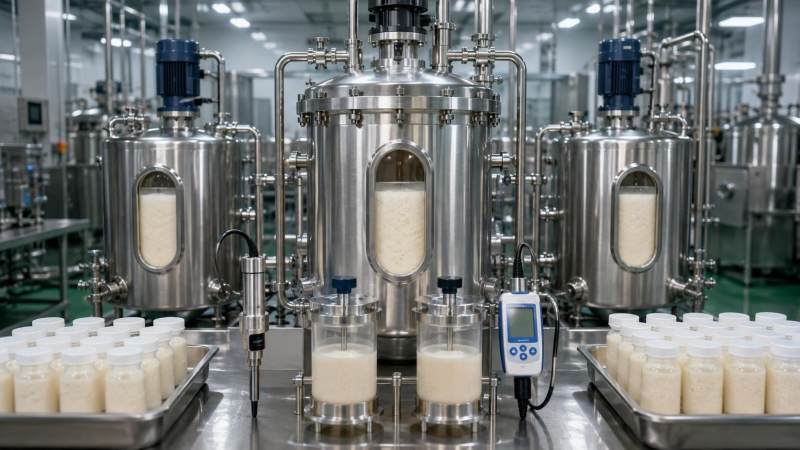
How to Troubleshoot Inconsistent Results in Food Fermentation Batches
Inconsistent fermentation outcomes can disrupt product quality, production schedules, and food safety control. Learning how to troubleshoot inconsistent results from food fermentation batches helps manufacturers identify critical variables and protect commercial performance.
The fastest route to improvement is rarely changing one visible parameter. Reliable troubleshooting requires comparing batches, verifying measurements, isolating variation, and confirming corrective actions through controlled production trials.
For food manufacturers, fermentation variability is both a technical and business issue. It can affect flavor, texture, yield, shelf life, regulatory compliance, product claims, and customer confidence.
This guide explains how production, quality, R&D, and plant management teams can investigate inconsistent fermentation results and build a more dependable process control system.
Start by Defining What “Inconsistent” Means
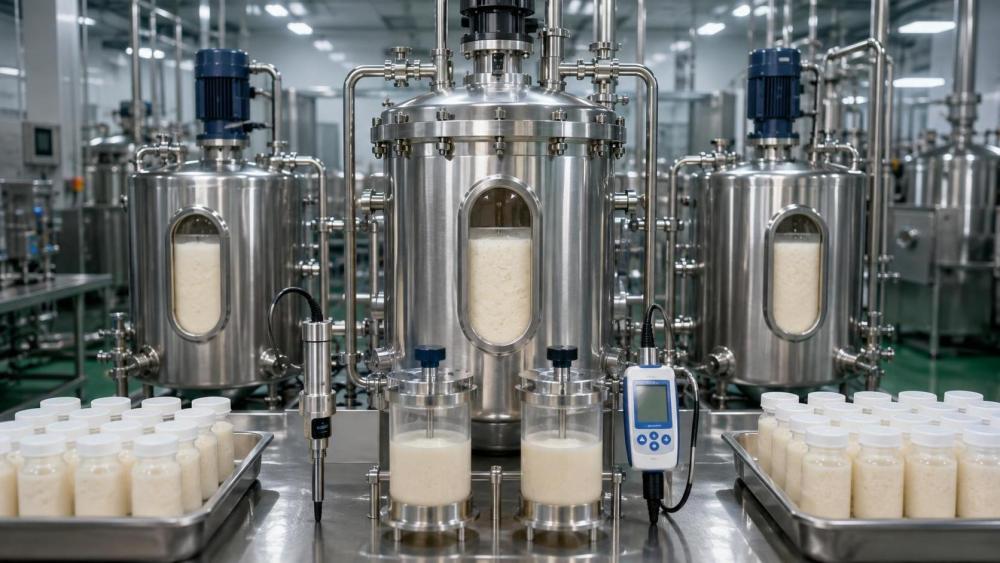
Before investigating causes, define the exact failure pattern. “Inconsistent fermentation” may describe slow acidification, different flavor intensity, gas formation, texture defects, low cell counts, or premature spoilage.
Teams often lose time because different departments describe the same problem differently. Production may report delayed batches, while quality control records pH variation and sales receives texture complaints.
Create a standardized batch comparison sheet covering raw materials, starter culture lot, inoculation rate, temperature profile, pH curve, processing time, packaging data, and final sensory results.
Use measurable acceptance limits whenever possible. Examples include time to target pH, final titratable acidity, microbial counts, viscosity, alcohol content, salt concentration, moisture level, and sensory panel scores.
Separate normal biological variation from commercially unacceptable variation. Fermentation is inherently biological, but a controlled process should remain within defined ranges that protect product specifications.
Review whether the issue affects all batches, a single product line, one shift, one facility, or only a specific raw material season. The pattern narrows the investigation.
For example, recurring problems during night shifts may indicate operating practice, calibration, or cleaning differences. Seasonal variation may point to ingredients, ambient conditions, or supply-chain changes.
Do not begin with assumptions about culture failure. The apparent cause is frequently downstream of the actual problem, especially when several process variables changed at once.
Check the Batch Record Before Changing the Process
A complete batch record is the most valuable troubleshooting tool. It allows teams to compare successful and unsuccessful runs using evidence rather than memory or informal observations.
Start with the most recent good batch and the most recent failed batch. Compare every available process variable, including values that initially appear unrelated to fermentation performance.
Look for changes in ingredient suppliers, receiving temperatures, storage duration, water treatment, cleaning chemicals, packaging materials, equipment settings, and operator interventions.
Confirm that all timestamps are reliable. A missing or incorrect time entry can hide an extended hold period that changed microbial growth, enzyme activity, or product temperature.
Pay particular attention to deviations that occurred before inoculation. Many fermentation problems originate in preparation stages, where heat treatment, mixing, cooling, and contamination control determine culture conditions.
Review trend data rather than isolated readings. A final pH may appear acceptable, while a slower-than-normal pH decline can still increase contamination risk and alter texture development.
Where digital records exist, compare temperature curves, agitation speeds, dosing events, and alarm histories. Automation data can reveal short interruptions that manual records never captured.
If records are incomplete, treat documentation quality as a corrective action. A plant cannot consistently troubleshoot inconsistent results from food fermentation batches without traceable operating data.
Verify Starter Culture Performance and Handling
Starter cultures are often blamed first because they directly drive fermentation. However, culture performance must be verified systematically rather than judged only by the final product outcome.
Check the culture identity, supplier certificate, lot number, expiration date, storage temperature, and time outside recommended storage conditions. Small handling failures can reduce viability significantly.
Confirm whether the inoculation rate was calculated correctly. Errors can occur when operators use different concentration assumptions, inaccurate scales, incomplete rehydration, or incorrect batch-volume calculations.
For freeze-dried cultures, follow supplier instructions for direct vat inoculation or rehydration precisely. Water temperature, contact time, agitation, and sanitation can influence recovery and activity.
For propagated cultures, assess the health of the mother culture and transfer history. Repeated propagation may cause contamination, strain drift, phage exposure, or declining functional performance.
Run a controlled side-by-side trial when possible. Inoculate the same prepared substrate with the suspect culture lot and a retained reference lot under identical laboratory conditions.
Measure acidification, gas production, viable counts, sensory characteristics, and target metabolite formation. This distinguishes a culture issue from raw material or process conditions.
Maintain retained samples of each culture lot and finished production batch. These samples support investigations when complaints emerge after product distribution or shelf-life testing.
Control Temperature, Time, and Cooling More Closely
Temperature is one of the strongest drivers of microbial growth, acidification, enzyme activity, and flavor formation. Even minor deviations can create meaningful batch-to-batch differences.
Verify actual product temperature, not only the setpoint shown on the control panel. Sensor placement, jacket performance, load size, and mixing can create temperature gradients within a vessel.
Calibrate probes against a traceable reference on a defined schedule. A sensor reading that is consistently wrong by two degrees can cause repeated fermentation inconsistency without triggering alarms.
Check heating and cooling performance at different production volumes. A vessel may perform correctly when full but cool too rapidly or heat unevenly during smaller development or partial batches.
Examine the period between heat treatment and inoculation. Extended cooling time can permit environmental contamination, while inoculation at an unsuitable temperature may stress the starter culture.
Time should be treated as a controlled parameter, not simply a production schedule marker. Holding a product after it reaches its target can increase acidity, alter texture, or create excess gas.
Establish action limits for temperature slope, time to inoculation, time to target pH, and time before refrigeration. These process indicators often detect variation earlier than finished-product testing.
Where equipment allows, use automated data logging and alarm notification. Continuous records make it easier to identify a recurring drift before it becomes a costly product-quality event.
Investigate Raw Material and Formulation Variation
Raw materials can change fermentation behavior even when supplier specifications remain technically compliant. Natural variation in protein, sugar, moisture, minerals, acidity, and microbial load matters.
In dairy fermentation, seasonal shifts in milk composition can influence acidification and gel formation. In vegetable fermentation, salt distribution, sugar content, and tissue integrity may vary widely.
For cereal, beverage, and alternative-protein applications, review carbohydrate availability, particle size, viscosity, heat history, and enzyme activity. These factors influence microbial access to nutrients.
Compare certificates of analysis with actual incoming test data. A material within its approved range may still sit near a limit that changes fermentation kinetics or finished-product texture.
Water quality also deserves attention. Changes in hardness, chlorine residuals, filtration performance, or sanitation-system crossover can inhibit cultures or modify mineral balance in the substrate.
Review formulation calculations and ingredient addition order. Incorrect dosing, incomplete mixing, delayed salt addition, or variation in stabilizer hydration can look like a microbial fermentation problem.
Assess storage conditions and age for sensitive ingredients. Oxidized oils, damaged produce, degraded sugars, and improperly stored protein ingredients can affect flavor, growth, and product stability.
Set higher-risk receiving controls for materials with a known fermentation impact. This may include rapid pH, brix, moisture, microbial load, salt, or functional-property testing.
Rule Out Sanitation Failures and Unwanted Microorganisms
Unexpected microorganisms can compete with the intended culture, generate off-flavors, produce gas, slow acidification, or create food safety concerns. Sanitation verification is therefore central to troubleshooting.
Investigate whether the problem follows a specific tank, filler, hose, pump, valve cluster, drain, or packaging line. Equipment-specific patterns are strong indicators of harborage or cleaning failures.
Review cleaning-in-place records for concentration, temperature, flow, circulation time, and return conductivity. A completed cycle is not automatically an effective cycle.
Confirm that cleaning chemicals are compatible with the process and are fully rinsed where required. Residual sanitizer can suppress starter culture performance in subsequent batches.
Use environmental monitoring strategically. Swabbing high-risk contact surfaces before production and after sanitation helps identify recurring contamination zones that visual inspection cannot reveal.
When product contamination is suspected, use appropriate microbiological testing to identify yeast, mold, coliforms, lactic acid bacteria, spore-formers, or other relevant organisms.
Compare isolates from affected product, environmental samples, and retained materials where laboratory capability permits. Matching patterns can identify whether contamination originated from ingredients, equipment, or handling.
Do not rely on corrective cleaning alone after repeated events. Investigate equipment design, worn seals, dead legs, damaged hoses, drainage, condensate, and hygienic zoning practices.
Confirm Measurement Accuracy Before Drawing Conclusions
Inconsistent measurements can create the illusion of inconsistent fermentation. Before changing formulations or equipment settings, confirm that instruments and sampling methods produce reliable data.
Calibrate pH meters daily or according to documented risk-based procedures. Check probe condition, buffer validity, sample temperature compensation, cleaning method, and electrode response time.
Validate titration methods, scales, thermometers, refractometers, dissolved oxygen meters, and microbiological enumeration procedures. Measurement error can send a root-cause investigation in the wrong direction.
Sampling must also be representative. A sample drawn from the surface of an unmixed vessel may differ significantly from material near the outlet or from the vessel center.
Define sampling points, sample volumes, timing, containers, transport conditions, and analysis deadlines. This is especially important when microbial counts continue changing after collection.
Use duplicate samples or split samples during investigations. Agreement between analysts and instruments provides confidence that observed variation is real rather than analytical noise.
For sensory inconsistencies, use trained assessors and controlled evaluation conditions. Unstructured tasting discussions can identify a concern but rarely provide evidence for process decisions.
Link laboratory findings to process data. A pH result becomes more useful when assessed alongside temperature history, culture lot, raw material characteristics, and timing records.
Use Structured Root-Cause Analysis Instead of Quick Fixes
Once the evidence is assembled, use a structured root-cause process. The goal is to identify the mechanism causing inconsistency, not simply select the most convenient correction.
A fishbone analysis can organize potential causes under materials, methods, machines, measurements, people, environment, and microbiology. This prevents important categories from being overlooked.
Apply the five-whys method carefully. It is useful only when each answer is supported by evidence, rather than becoming a chain of assumptions about operator behavior.
Prioritize causes based on probability, impact, and ease of verification. High-risk food safety issues and frequent production disruptions should receive immediate attention and documented escalation.
Test one meaningful corrective action at a time whenever operationally possible. Simultaneous changes may improve a batch but make it impossible to determine why performance improved.
Use pilot trials, split batches, or controlled validation runs to confirm causality. The preferred action should improve consistency without introducing unacceptable cost, throughput, or quality tradeoffs.
Document the final root cause, evidence, action owner, deadline, verification method, and preventive control. This turns an isolated investigation into organizational learning.
Management should review recurring deviation categories monthly. Repeated small failures often indicate that process capability, maintenance planning, training, or supplier controls need improvement.
Build a Fermentation Control System That Prevents Repeat Failures
The long-term solution is a control system that detects variation early. Strong fermentation operations combine defined specifications, capable equipment, trained staff, monitoring, and disciplined corrective action.
Identify critical control parameters for each product. These commonly include raw material condition, inoculation rate, culture storage, fermentation temperature, pH trajectory, hold time, and cooling performance.
Set operating ranges and escalation limits rather than relying only on final release specifications. Early intervention reduces waste and avoids producing product that must later be downgraded or discarded.
Standard operating procedures should explain why each control matters, not merely list steps. Operators make better decisions when they understand how deviations affect microbial activity and finished quality.
Use supplier agreements to define fermentation-relevant specifications where necessary. Generic ingredient specifications may not adequately control variables that affect a sensitive biological process.
Evaluate digital tools according to the production risk. Automated temperature logging, batch genealogy, electronic checklists, laboratory integration, and trend dashboards can improve traceability and investigation speed.
However, technology cannot replace process discipline. Reliable data depend on maintained sensors, clear ownership, qualified staff, verified procedures, and timely review of deviations.
For growing manufacturers, a practical first investment is often better batch records and calibration control. These improvements create the evidence needed to justify larger automation investments later.
Conclusion: Treat Fermentation Consistency as a Managed Capability
Knowing how to troubleshoot inconsistent results from food fermentation batches begins with defining the defect clearly and comparing reliable records from good and poor-performing batches.
Starter culture health, temperature control, timing, raw material variability, sanitation, unwanted microorganisms, and measurement accuracy should be investigated as connected process factors rather than isolated issues.
The most effective manufacturers move beyond one-off corrective actions. They use root-cause evidence to improve specifications, operating procedures, supplier controls, equipment maintenance, and employee training.
Consistent fermentation supports more than product uniformity. It improves yield, protects food safety, reduces rework, strengthens production planning, and gives commercial teams greater confidence in product performance.
When fermentation is managed as a measurable, traceable capability, production teams can respond faster to deviations and build a stronger foundation for quality growth and innovation.