




Search
Related News
- 00
0000-00
How Food Contamination Prevention Systems Reduce Risks Across Processing Lines - 00
0000-00
How to Evaluate Livestock Automation Manufacturers for Reliable Farm Deployment - 00
0000-00
How to Evaluate a Modular Livestock Housing Supplier for Climate, Scale, and Biosecurity - 00
0000-00
How to Select Agricultural Irrigation Solutions for Water-Limited Farms - 00
0000-00
How to Select Food Plant Sanitation Equipment for High-Risk Processing Areas
Nitrogen Blanketing for Storage Tanks: Practical Design Considerations




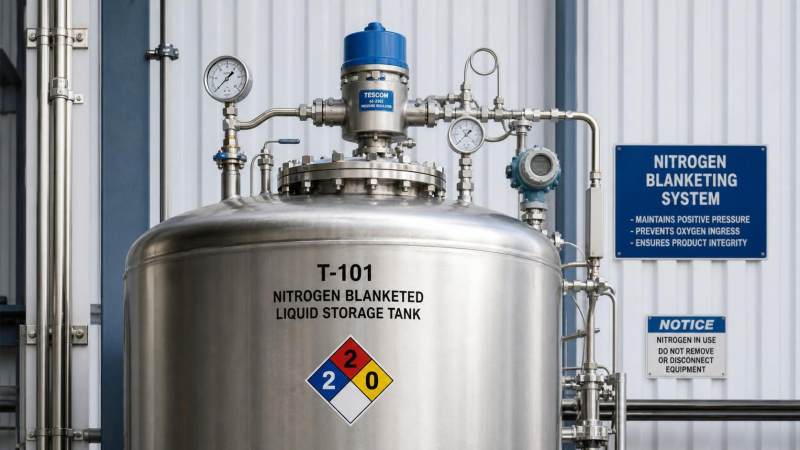
Nitrogen blanketing is used when a processor needs to limit oxygen contact inside a storage tank. In edible oil, beverage, chemical, and other liquid-processing environments, the headspace above the product can influence oxidation, aroma stability, moisture exposure, and process safety. Buyers searching for inertage de réservoirs are usually trying to understand more than a gas connection on the tank roof. They need to know how the blanketing method fits the tank, product, pressure setting, venting arrangement, instrumentation, and daily operating routine.
A nitrogen blanketing system is not a universal add-on that can be selected by tank volume alone. The correct configuration depends on product sensitivity, turnover rate, filling and discharge pattern, operating temperature, tank pressure limits, and the plant's available utilities. A system designed without these details can waste nitrogen, create unstable pressure control, or leave operators unsure about what to do during filling, cleaning, or maintenance.
This article explains practical design considerations for storage tank nitrogen blanketing. It is written for procurement teams, plant engineers, process managers, and equipment buyers who need a clear review framework before discussing specifications with suppliers. The focus is buyer-facing: what to confirm, what to ask, and what risks to avoid before ordering or modifying a tank system.
What Nitrogen Blanketing Actually Does
Nitrogen blanketing replaces or dilutes oxygen-rich air in the tank headspace with nitrogen. The goal is usually to create a more controlled atmosphere above the stored product. In edible oil service, this can help reduce oxidation risk during holding. In other liquid storage applications, blanketing may also reduce moisture exposure, protect flavor or aroma, and support a safer handling environment when the process requires oxygen reduction.
The concept is simple, but the operating behavior is dynamic. When product enters the tank, headspace gas must leave through a vent or control path. When product is discharged, nitrogen may need to enter so the tank does not pull excessive vacuum. When temperature changes, the gas expands or contracts. When cleaning starts, the blanketing routine may need to be isolated or adjusted. Each of these moments affects pressure and gas use.
Buyers should therefore evaluate blanketing as a pressure and gas-management method, not just a quality-protection feature. The tank, gas supply, regulator, venting equipment, relief device, pressure measurement, and operating procedure all work together. If one part is poorly matched, the system may not perform as intended.
Product Sensitivity and Storage Conditions
The first design question is whether the product truly needs blanketing and under what conditions. A product held for a short time before filling may have different requirements from a product held for several days. A low-temperature storage process may behave differently from a heated tank. A product that is repeatedly topped up and drawn down has a different headspace pattern from a tank filled and emptied in larger batches.
Edible oils can be sensitive to oxygen, light, moisture, heat, and metal contamination. Nitrogen blanketing addresses only part of that picture. It does not replace good material selection, sanitary design, controlled heating, drainage, or cleaning discipline. A buyer should define the complete quality-control goal, then decide how nitrogen fits into it.
For large-capacity tanks, product turnover becomes especially important. A tank that stores oil for longer periods may need more deliberate headspace control, while a high-turnover tank may need a simpler arrangement focused on pressure stability during rapid filling and discharge. These operating details should be shared with the supplier before the system is sized.
Pressure Control and Tank Protection
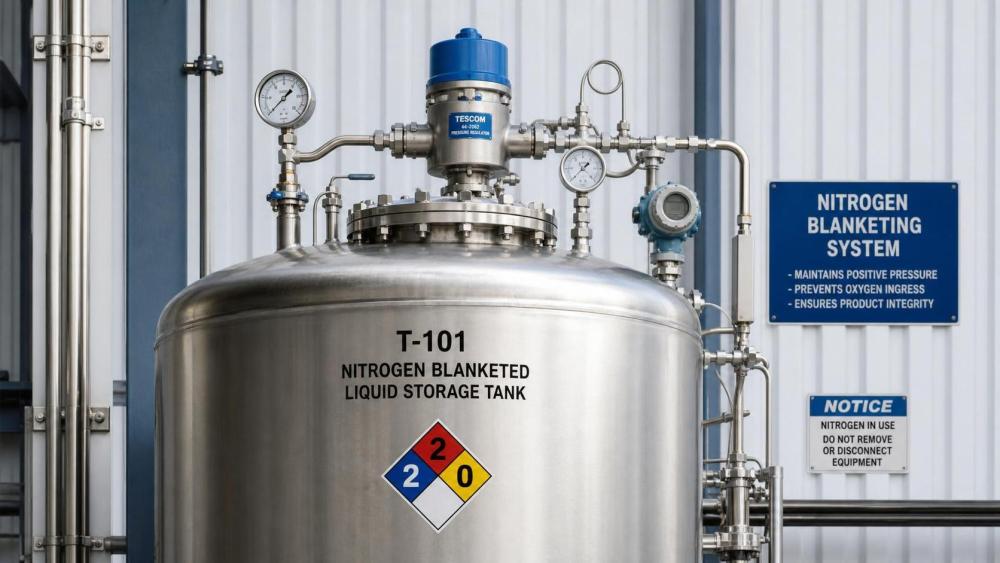
A blanketed tank must be protected against both overpressure and vacuum. Nitrogen enters the tank under controlled conditions, and gas exits when pressure rises. If the pressure-control devices are not selected for the tank's operating pattern, the system can become unstable. The plant may see unnecessary nitrogen use, repeated venting, pressure alarms, or operator intervention.
Buyers should confirm the tank's design pressure, normal operating pressure, vacuum resistance, venting method, and relief protection. These values should come from actual tank design information, not assumptions. Atmospheric and low-pressure storage tanks may have very different limits from pressure vessels. The blanketing system must respect those limits.
Pressure control should also be understandable to operators. They should know the normal setpoint, what readings indicate a problem, when nitrogen is expected to flow, and how the system behaves during filling or discharge. A technically correct system that operators do not understand can still create avoidable downtime.
Key Components Buyers Should Review
A basic nitrogen blanketing arrangement may include a nitrogen source, pressure regulator or blanketing valve, tank connection, pressure indicator or transmitter, venting device, relief device, and piping. Some plants may need additional control instruments, alarms, flow indication, filters, or safety interlocks. The correct package depends on the tank and process.
Suppliers should explain what is included in their proposal and what must be supplied by the plant. Nitrogen generation, bottled nitrogen, or bulk nitrogen supply may each affect pressure stability, operating cost, and maintenance. Pipe size, connection type, valve access, and instrumentation location also matter because they influence installation and future service.
Nitrogen Use During Filling and Discharge
Filling and discharge are the moments when blanketing control is most visible. During filling, incoming liquid reduces headspace volume and pushes gas out. During discharge, headspace volume increases and nitrogen may need to enter. If flow rates are high, the system must respond quickly enough to maintain pressure within the intended range. If the system responds too slowly, vacuum or pressure swings may occur.
Buyers should provide suppliers with realistic maximum filling and discharge rates. Average daily transfer rates may be too low for design work because peak moments determine venting and nitrogen demand. If the plant uses pumps with variable speed control, batch transfers, or truck unloading, those operating modes should be discussed separately.
In edible oil processing, the tank may be linked to heating, filtration, blending, or filling equipment. That means nitrogen control should be considered alongside the broader line. When reviewing industrial edible oil tanks, buyers should ask how blanketing connections, vents, instruments, and access points can be coordinated with the complete storage and transfer layout.
Installation and Layout Considerations
Nitrogen blanketing equipment is often installed above or near the tank, but maintenance access should still be practical. Regulators, valves, gauges, transmitters, vents, and relief devices must be reachable for inspection. If the tank is tall, the plant may need platforms, ladders, or safe access points. Poor access can turn routine checks into inconvenient work, and inconvenient work is more likely to be skipped.
The location of the nitrogen supply also matters. Long piping runs may affect pressure drop and installation cost. Outdoor tanks may need weather protection for instruments. Indoor tanks require careful routing so gas lines do not interfere with operators, forklifts, cleaning paths, or maintenance zones. All of these points should be reviewed during layout planning rather than left to installation day.
Cleaning interactions are another practical detail. If the tank is cleaned with hot water, steam, or chemical media, the blanketing system may need isolation points and clear operating instructions. Operators should know when the nitrogen line is active, when it is isolated, and how the tank is safely vented before inspection.
Procurement Checklist Before Ordering
Procurement teams can reduce specification risk by preparing a structured information package before requesting a quotation. The package does not need to be complex, but it should be specific enough for the supplier to understand the process. At minimum, it should describe product type, tank capacity, storage temperature, transfer rates, holding time, nitrogen source, installation location, and cleaning method.
- Confirm the tank's pressure and vacuum limits from drawings or supplier documentation.
- Define product sensitivity and whether nitrogen is needed for quality protection, pressure control, or both.
- Share maximum filling and discharge rates, not only average daily output.
- Ask what blanketing valve, regulator, venting device, and relief protection are included.
- Check whether the plant must provide nitrogen generation, bottled nitrogen, or bulk supply separately.
- Review maintenance access, platform needs, instrument visibility, and safe isolation points.
- Request operating notes for filling, discharge, cleaning, shutdown, and restart.
Common Specification Mistakes
One common mistake is selecting a blanketing device without confirming tank limits. Another is using average flow rates instead of peak filling and discharge rates. A third mistake is ignoring the venting side of the system. Nitrogen entry receives attention, but gas exit and relief protection are just as important for stable operation.
Buyers should also avoid assuming that blanketing alone solves all quality problems. Oxygen control can be helpful, but edible oil quality also depends on raw material handling, tank material, heating discipline, cleaning quality, water control, and packaging conditions. A blanketing system should support the overall quality plan, not distract from other requirements.
FAQ
Is nitrogen blanketing always required for edible oil tanks?
No. It depends on product sensitivity, storage time, turnover rate, temperature, and the plant's quality-control plan. Some tanks need it, while others may operate safely with shorter holding times and controlled handling.
What does inertage de réservoirs mean in practical tank design?
In practical terms, inertage de réservoirs refers to using an inert gas such as nitrogen to manage the tank headspace and reduce oxygen exposure. The design must still account for pressure control, venting, relief protection, and operating procedures.
Can nitrogen blanketing be added to an existing tank?
Sometimes, but the existing tank must be reviewed first. Pressure limits, venting, fittings, relief devices, access, and cleaning routines all affect whether a retrofit is practical and safe.
What information should a buyer give a supplier?
Provide product type, tank volume, temperature range, fill and discharge rates, storage duration, nitrogen source, installation environment, and cleaning method. These details help the supplier recommend a suitable blanketing arrangement.
Editorial Review Note
This article is buyer-facing guidance for storage tank and food processing equipment selection. It avoids fabricated prices, unsupported performance claims, invented case numbers, and unverified certification statements. Final upload should be checked against the destination portal's house style and formatting rules.