




Search
Related News
- 00
0000-00
Animal Nutrition Premix: How to Choose a Formula for Livestock - 00
0000-00
USDA Cuts US Corn Output and Stocks, Raises Soybean Yield in November WASDE - 00
0000-00
Choosing Dairy Farm Systems: Milking, Feeding, and Herd Management - 00
0000-00
Rabobank: Climate Change and Heat Stress Threaten European Dairy Competitiveness - 00
0000-00
Planning Feeder and Drinker Layouts in a 1,000-Broiler House
Tags
Choosing Dairy Farm Systems: Milking, Feeding, and Herd Management




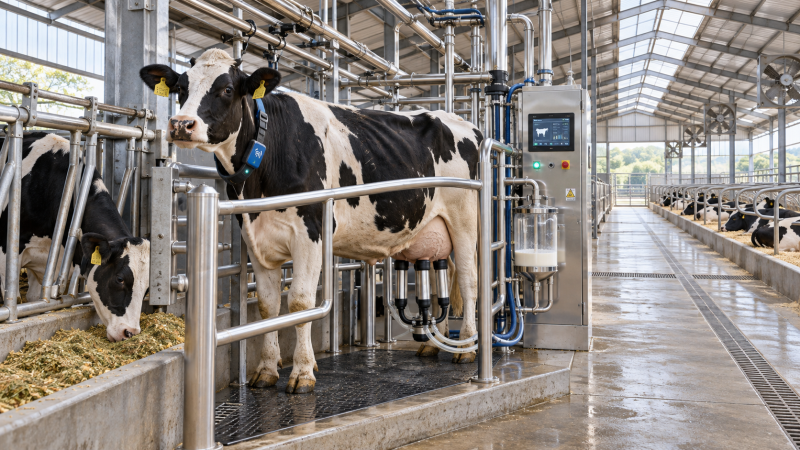
Choose dairy farm systems by testing how milking, feeding, and herd-management functions work together under the farm’s actual constraints. A high-capacity milking installation is a poor fit if cows cannot reach it efficiently, feed delivery cannot support the routine, or staff cannot act on health alerts. Start with the herd, labor schedule, buildings, and utilities; then compare equipment against a defined operating plan rather than against specifications alone.
The most useful choice is not necessarily the most automated one. A conventional parlor may fit a farm with available milking staff and established cow-flow routes, while robotic milking may suit a different labor model and barn layout. Both require reliable cleaning, maintenance, animal handling, and records. Feeding and monitoring decisions should be evaluated alongside the milking system because they affect the same cows, staff, and daily schedule.
Establish the operating conditions before requesting quotes
Describe the herd in groups, not just as a total head count. Record the number of lactating and dry cows, expected calvings, likely changes in herd size, and any separate groups for fresh, sick, or treated animals. For milking equipment, the relevant design load is the number of cows that must pass through during the busiest routine period, including the time needed to move cows and clean the system.
Map the present workflow from feed storage to feed delivery, and from the resting area to milking, separation, and return. Include gates, passages, water points, manure handling, and access for service vehicles. A system that fits on a drawing can still create congestion at a narrow return lane or leave no practical route for separating a treated cow.
Set out the resources available on a normal day and during an interruption: trained staff by shift, electrical supply, water quality and pressure, network coverage, milk cooling capacity, and backup power. Document which facilities can be changed and which must remain in use during installation. These constraints give suppliers a common basis for proposing layouts and make their capacity claims easier to compare.
Milking: compare the whole operating cycle
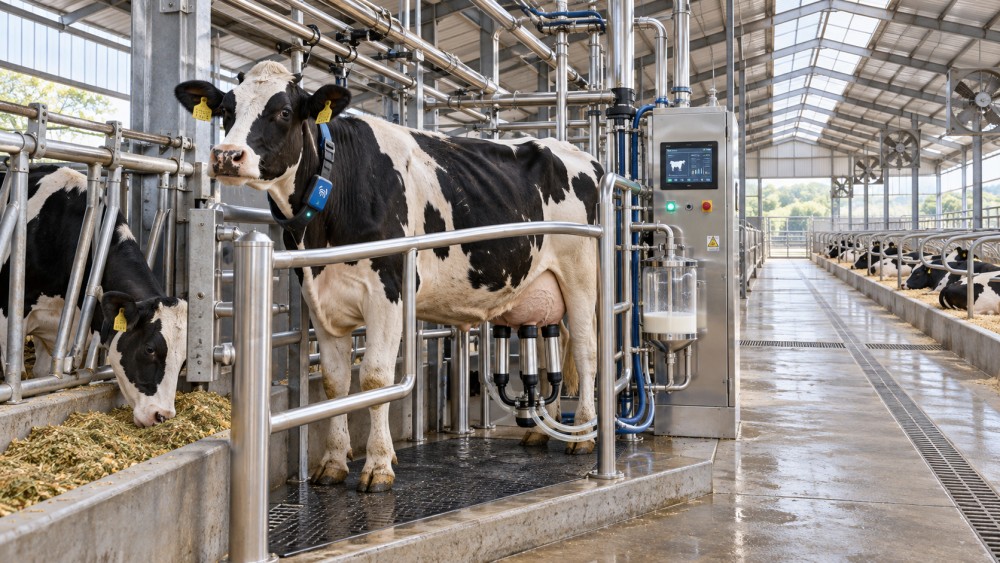
Parlors and robotic systems differ in how labor and cow movement are organized. A parlor concentrates milking into scheduled sessions and requires sufficient people and holding space at those times. A robotic system allows cows to visit individual units throughout the day, but staff still need to fetch some cows, review exceptions, clean equipment, and respond to faults. The decision is therefore a change in work pattern, not simply a choice between labor and no labor.
Ask suppliers to show capacity assumptions, not only a headline cows-per-hour or cows-per-unit figure. The calculation should account for attachment or box time, cow movement, preparation, failed attachments where applicable, cleaning, and routine maintenance. Check whether the proposed schedule leaves usable capacity for herd changes and unexpected delays without extending holding times beyond the farm’s welfare objectives.
Milk quality controls also need to fit the workflow. Review teat preparation, milk diversion for treated cows, equipment cleaning, cooling interfaces, and alarms for abnormal operation. Confirm who is responsible for checking a diversion setting and how the system prevents milk from an animal under treatment entering the bulk tank. Automation can support the process, but records and staff verification remain important.
Feeding equipment must match the ration and the cows’ access
Begin with the feeding strategy: which groups receive a total mixed ration, which receive additional concentrate, and how often fresh feed is delivered or pushed up. A mixer wagon with manual loading may be appropriate where ingredients, labor, and travel routes are straightforward. Automated loading and delivery can change labor timing, but require dependable ingredient storage, equipment access, and routines for refilling and cleaning.
Compare equipment on its ability to produce the intended mix consistently. Examine weighing resolution, ingredient loading sequence, mixing time, discharge uniformity, and how the system handles long or variable forage. Ask how operators detect scale drift, incorrect ingredient selection, or material bridging in storage. A precise ration on a screen is not evidence that every group receives the intended ration.
Physical access matters as much as the mixer. Check bunk space, feed barrier design, lane width, turning clearance, and whether dominant cows can restrict access for other animals. For automated feed pushers, verify that the route remains clear and that the device can reach all relevant areas. Feed refusal measurement can help adjust delivery, but its usefulness depends on consistent weighing and recording practices.
Robotic milking introduces a specific coordination issue: feed offered in the milking unit can influence visits, while the base ration still has to meet the needs of the group. Evaluate the proposed feeding and milking settings together, including the process for changing allowances and checking cows that visit too infrequently. Involve the farm’s nutrition adviser when assessing ration and transition-group implications.
Choose monitoring around decisions, not sensor counts
Herd-management platforms may combine identification, milk yield, activity, rumination, reproduction, treatment, and location information. These inputs can help staff identify cows that warrant attention, but an alert is not a diagnosis. Ask what event triggers each alert, how it appears to staff, and what information is available when the animal is examined.
For example, an activity alert may prompt an estrus check; a change in rumination may prompt a health assessment. Both depend on functioning tags, correct animal identification, and a person assigned to review the exception. A system producing more alerts than the team can investigate may obscure urgent cases rather than improve response.
Test the proposed workflow for fresh cows, suspected illness, treatment, and return to the milking herd. Can the system identify the animal at a sorting gate? Can staff enter a treatment at the point of care? Are milk-withholding instructions visible to the people responsible for milking? Confirm how corrections are made when an animal is misidentified or a record is entered late.
Check interfaces before committing to separate suppliers
Integration is often the point at which individually capable systems become difficult to operate. Request an interface description for the milking controller, feeding software, animal identification equipment, sorting gates, and herd database. The description should identify which system owns each record, which direction data moves, how often it updates, and what happens when a connection fails.
- Animal identity: Check how electronic tag numbers, farm IDs, replacements, and retired animals are synchronized.
- Event data: Confirm whether milkings, feed allocations, treatments, and alerts transfer automatically or require manual entry.
- Control boundaries: Distinguish data displayed in another system from commands that can actually change a gate, ration, or milk-diversion setting.
- Access and export: Review user permissions, available export formats, recurring fees, and access to historical records if a service ends.
- Recovery: Establish whether missing events are queued during an outage and how duplicates or conflicts are resolved after reconnection.
Ask for a demonstration using representative workflows rather than accepting “compatible” as a complete answer. For a treatment event, follow the record from entry through identification and milking restrictions, then check how the restriction is removed. Record any manual steps and assign responsibility for them. Where suppliers depend on a third-party interface, identify who will diagnose failures across the boundary.
Compare lifetime commitments and failure modes
Prepare a common cost model for each option. Include buildings and civil work, installation, electrical and water upgrades, milk cooling changes, software access, consumables, scheduled service, replacement parts, training, and disposal or adaptation of existing equipment. Separate one-time costs from recurring costs, and make assumptions about operating hours and staffing visible. A lower equipment quote can be misleading if it excludes enabling work or requires a different staffing pattern.
Service capacity deserves the same scrutiny as purchase cost. Confirm local parts availability, support hours, response arrangements, remote-access requirements, and what the farm can safely maintain itself. Identify components whose failure stops milking or feeding, and ask what fallback procedure is practical. Backup power must be sized for the equipment that must run together, including relevant controls and supporting utilities, not just a single machine.
For the preferred option, agree on acceptance tests before installation. These should cover safe operation, cleaning, identification, data transfer, alarms, and performance against the operating assumptions in the proposal. Specify the test conditions and responsibilities for resolving deficiencies. Training should cover ordinary routines as well as power loss, network interruption, manual operation, and recovery; otherwise, the first real interruption becomes the first test of the farm’s fallback plan.