




Search
Related News
- 00
0000-00
Process Validation Supplier Qualification: Evidence Food Manufacturers Should Require - 00
0000-00
How to Build a Crop Input Strategy That Improves Yield and Controls Farm Costs - 00
0000-00
How Does Coated Seed Technology Improve Seed Protection and Field Performance? - 00
0000-00
How to Choose Industrial Food Processing Equipment for Your Production Line - 00
0000-00
What Drives Functional Food Ingredients Cost in Commercial Food Production?
What Determines Poultry Farm Equipment Cost? A Practical Cost Breakdown




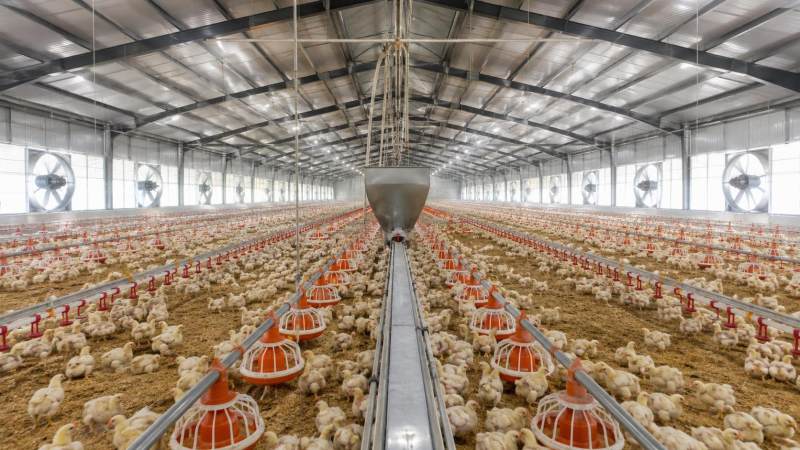
A poultry equipment budget can look straightforward until the proposal is separated into its working parts. A feeder line has a price, a ventilation fan has a price, and a cage or floor-rearing system has a price. Yet the capital request that reaches a finance team often includes much more: building interfaces, controls, electrical work, freight, installation, commissioning, spare parts, training, and the risk allowance needed when site conditions are uncertain.
For financial approvers, the central question is rarely “Which quotation is cheapest?” It is whether the proposed system is appropriately specified for the farm’s production model and whether its full ownership cost is visible before approval. Under-specification can create recurring labor, maintenance, welfare, or production risks. Over-specification can tie up capital in capacity, automation, or materials that the farm may not use.
A useful cost review starts by treating poultry equipment as a system rather than a collection of individual machines. Feed delivery, drinking, climate control, manure handling, lighting, power supply, and controls interact. A weakness in one area may reduce the value of spending in another.
Start with the production system, not the equipment list
The intended poultry operation sets the first and often largest boundary around cost. Broiler houses, layer farms, breeder facilities, pullet houses, and hatchery-related operations have different equipment demands. A broiler house may emphasize rapid environmental response, litter conditions, feed and water access, and turnaround cleaning. A commercial layer installation may require a more extensive structure of housing equipment, egg collection, manure removal, and often higher levels of coordinated automation.
Farm scale matters, but bird numbers alone do not tell the full story. Two houses with similar flock capacity may need different investments because of climate, house width, building height, local utility reliability, labor availability, stocking plan, and the degree of automation required. A site in a hot and humid region may need a more robust ventilation and cooling arrangement than a comparable house in a milder climate. A farm with unreliable grid power may need electrical protection, backup generation interfaces, alarms, and control strategies that materially alter the project budget.
Financial approval should therefore be based on a written operating brief. Before comparing suppliers, the farm should be able to state:
- the bird type and planned capacity by house;
- the housing approach, such as floor, aviary, colony, or cage-based production where permitted and appropriate;
- the target number of production cycles or flock turns;
- the local temperature, humidity, dust, water-quality, and corrosion conditions;
- the available utilities and the required backup arrangements;
- the labor model and which routine tasks are expected to be automated; and
- which construction, electrical, environmental, animal-health, and welfare requirements apply at the location.
Without this brief, a lower quotation may simply omit the operating conditions that make the equipment viable.
The main cost layers in a poultry equipment project
Equipment invoices are only one layer of the capital requirement. Finance teams can obtain a clearer view by separating the budget into equipment, project-enabling work, and ownership-related costs.
The distinction is important because a quotation that includes only delivered equipment can appear materially cheaper than one that includes installation supervision, controls integration, commissioning, and spare parts. Neither scope is automatically better; the approval team needs to compare like with like.
What drives the price of the core equipment?
Automation is a labor-and-risk decision
Automation commonly accounts for a large share of cost variation. Manual or semi-automatic feeding, egg collection, manure handling, and environmental adjustment may reduce initial expenditure, but they introduce recurring labor demand and greater dependence on consistent routines. Fully integrated systems require more motors, sensors, controls, protection devices, and installation work. Their financial case depends on the farm’s scale, labor cost, staffing reliability, and the operational consequences of delayed intervention.
Approvers should avoid assuming that “more automated” always means “more economical.” A modestly automated system that staff can operate, inspect, and repair may be a better fit than a complex arrangement with limited local technical support. Conversely, a large farm with multiple houses may find that centralized monitoring and automated material movement reduce exposure to missed feeding, water interruptions, poor ventilation response, or inconsistent recordkeeping.
Materials reflect the environment as much as the design
Galvanized steel, stainless steel, plastic components, coated fasteners, and corrosion-resistant fittings differ in upfront cost and service behavior. The right choice depends on exposure. Wet cleaning routines, saline or mineral-heavy water, high humidity, manure gases, disinfectants, and abrasive dust can shorten the life of poorly matched components. A lower material grade may be acceptable in a protected, dry area but create a premature replacement risk in a wet or corrosive zone.
Material comparisons should be specific. “Corrosion resistant” is not a complete procurement requirement. The buyer can ask which components are galvanized, coated, stainless, or polymer-based; whether cut edges and fasteners receive comparable protection; and which parts are expected to be routinely replaced. This helps distinguish a durable system from one that merely has a durable-looking main frame.
Capacity must be matched to actual loading
Higher-capacity equipment generally costs more, but excess capacity can be expensive in less obvious ways. Oversized fans, augers, pumps, or conveying systems may require larger electrical infrastructure and may operate inefficiently if control logic is poorly matched to partial loads. Undersized equipment can become a bottleneck during peak demand, heat events, cleaning periods, or egg collection windows.
A useful review asks suppliers to show the design basis behind their selection: house dimensions, bird population, feed route lengths, water demand assumptions, ventilation layout, and equipment duty cycle. This is more informative than accepting a model number without the conditions under which it was selected.
Why installation and controls often upset the original budget
Many poultry projects encounter cost pressure after equipment selection, when installation details become visible. A ventilation package may require supports, shutters, air inlets, wiring, controller programming, and changes to the building envelope. Feeding lines may need suspension points, feed storage arrangements, transfer equipment, and accurate leveling. Drinking systems may depend on filtration, pressure regulation, flushing arrangements, and water testing suited to the site.
Controls are another frequent source of scope gaps. A basic controller can operate selected devices on schedules or sensor inputs. A more developed arrangement may coordinate stages of ventilation, cooling, heating, alarms, remote notifications, and data recording. The value of those functions depends on who will respond to alerts, how quickly corrective action is possible, and whether connectivity at the farm is dependable. Buying advanced controls without assigning responsibility for alarm response can create a false sense of protection.
When evaluating poultry farm equipment cost, finance teams should request a scope map that identifies every boundary between the equipment supplier, building contractor, electrical contractor, and farm operator. The map should state who provides anchors, supports, wiring, pipework, control panels, sensors, commissioning labor, and test materials. Unassigned items tend to reappear as change orders or rushed local purchases.
Retrofit projects carry different risks than new builds
New construction allows equipment layout, utility routing, drainage, access, and structural loads to be planned together. Retrofits can look less expensive because the building already exists, but hidden constraints may reverse that assumption. Older houses may have inadequate roof support, uneven floors, limited electrical capacity, incompatible ventilation openings, poor insulation, or pipework that cannot support modern cleaning and flushing practices.
A retrofit budget should include a site survey before final approval. The survey does not need to be elaborate to be useful, but it should record accurate dimensions, building condition, power availability, water pressure and quality concerns, access for delivery, drainage, and the location of existing equipment that will remain in service. Photographs and drawings reduce interpretation errors when suppliers prepare proposals remotely.
There is also a transition cost. If a house must be empty while equipment is removed and installed, the financial impact is not limited to contractor invoices. The farm may lose a production window or need a temporary operating arrangement. This should be visible in the approval paper rather than treated as an operational issue outside the capital budget.
Questions that reveal whether a supplier quotation is comparable
Supplier questions are most useful when they seek evidence rather than broad assurances. The objective is not to force every supplier into identical terms; it is to expose differences in technical scope, project responsibility, and future support.
- What is included and excluded? Request an itemized schedule covering equipment, controls, installation materials, freight, taxes or duties where relevant, commissioning, and training.
- What operating assumptions support the design? Ask for the house dimensions, flock capacity, climate assumptions, and utility conditions used for sizing.
- Which components are critical to continued operation? Identify parts whose failure could interrupt water, feed, air movement, cooling, heating, egg handling, or manure removal.
- What spare parts are recommended for startup? The answer should distinguish consumable parts from operationally critical items that may have long replenishment times.
- Who performs commissioning, and what does acceptance involve? The scope should clarify functional tests, calibration, operator handover, and responsibility for correcting defects found during startup.
- What documentation is supplied? Drawings, wiring diagrams, operating instructions, parts lists, and maintenance schedules affect both installation quality and long-term serviceability.
- How are warranty responsibilities handled? Ask what is covered, what conditions may limit coverage, how claims are submitted, and whether labor, travel, or shipping are excluded.
Use total cost of ownership without pretending to forecast perfectly
Total cost of ownership is useful because it shifts attention beyond the purchase order. It should not be treated as a precision exercise when future flock performance, labor rates, energy prices, repair needs, and production schedules remain uncertain. A practical model can compare reasonable scenarios rather than promise a single exact result.
For each option, estimate the initial project cost, expected maintenance needs, likely replacement exposure for wear items, electricity and water implications where equipment choices affect them, staffing requirements, and downtime risk. The aim is to identify cost drivers that differ substantially between options. A system with a higher initial price may be justified when it reduces a clearly defined operational exposure; it is not justified merely because it carries more features.
Approvers can also separate “required for safe and workable operation” from “optional capacity or convenience.” That distinction supports phased investment. For example, a farm may build in electrical capacity, physical space, or control compatibility for later expansion while postponing equipment that is not required for the initial flock plan. The approach can preserve options without paying for unused production capability too early.
Build the approval around scope, evidence, and accountability
A sound capital request does not need to claim certainty where none exists. It should show the production need, the selected technical basis, the complete installed cost, the assumptions behind operating costs, and the risks that remain. It should also identify the owner of each unresolved action: confirming power capacity, checking structural readiness, validating water treatment needs, obtaining required local approvals, or finalizing commissioning responsibilities.
The most defensible equipment decision is usually the one with the clearest fit between flock requirements, site conditions, supplier scope, and the farm’s ability to operate and maintain the system after installation. Price matters, but the approval decision is stronger when it explains what the price actually buys—and what it does not.