




Search
Related News
- 00
0000-00
Process Hygiene Control: Building a Risk-Based Plan for Food Production Lines - 00
0000-00
How Often Should Lab Equipment Be Calibrated for Food Safety Testing? - 00
0000-00
10,000-Bird Poultry Farm Cost: Equipment, Housing, and Setup Factors - 00
0000-00
How to Evaluate a Food Filling Systems Supplier for Hygienic, Scalable Production - 00
0000-00
What to Consider When Choosing Greenhouse Humidity Sensors for Climate Control
FDA Sets New Testing Rule for China Food Packaging




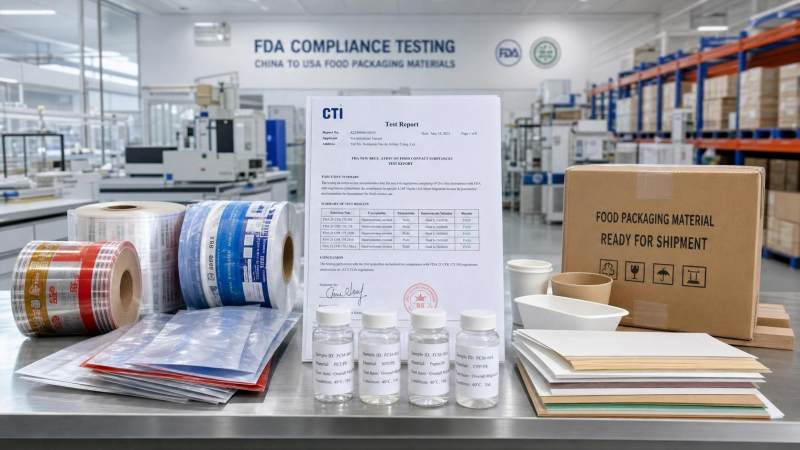
On July 19, 2026, the U.S. Food and Drug Administration released a notice updating its approach to food contact substances, with a new documentation requirement that will apply from September 1, 2026 to food packaging materials exported from China to the U.S. The development matters because it shifts compliance from a general materials claim to shipment-linked chemical migration evidence, directly affecting packaging manufacturers, composite material suppliers, OEM exporters, and the customs and delivery processes tied to U.S.-bound orders.
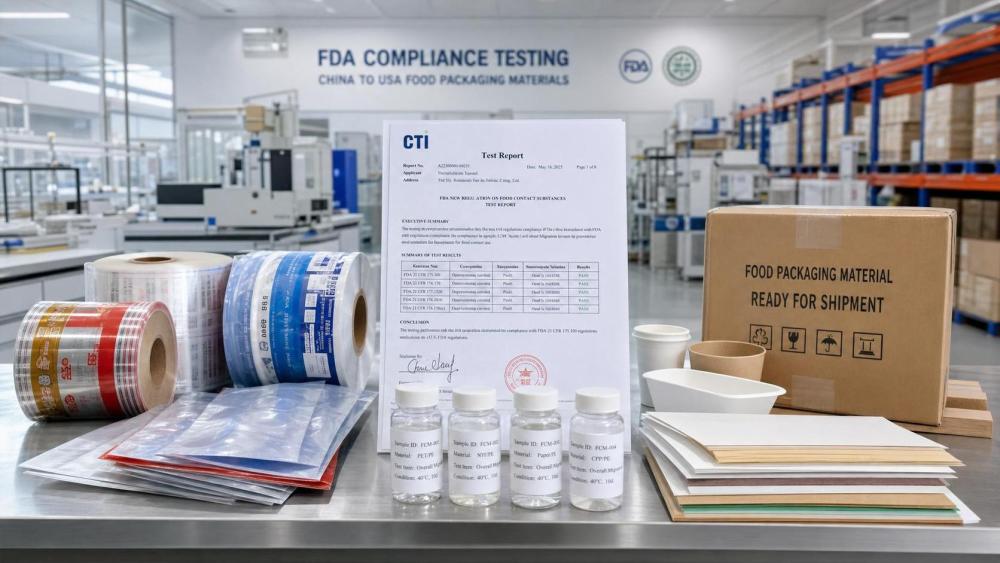
What the FDA Notice Confirms
According to the information provided, the FDA issued the Food Contact Substance Notification (FCN) Modernization Notice on July 19, 2026. The notice states that, starting on September 1, 2026, all food packaging materials exported to the United States, including plastics, composite films, and coated paper, must be accompanied by a full-component chemical migration test report.
The report must be issued by a laboratory accredited under ISO/IEC 17025. The documentation must also clearly identify the migration amount of each additive and the corresponding compliance threshold. The policy is described as having a direct impact on customs clearance and delivery workflows for Chinese packaging machinery manufacturers, composite material suppliers, and OEM export enterprises.
Where the Immediate Pressure Is Likely to Appear
Export packaging suppliers face a document threshold, not only a product threshold
From an industry perspective, suppliers of plastic packaging, composite films, and coated paper are likely to feel the impact first because the new requirement is tied to accompanying documentation for U.S.-bound shipments. The main business effect is likely to appear in pre-shipment compliance preparation, customer submission packages, and coordination around whether test reports fully match the materials and additives used in the exported product.
Composite material providers may see greater scrutiny across formulations
Analysis shows that suppliers involved in multilayer or additive-containing materials may need to pay closer attention to how each additive is identified and reported. The requirement to show migration amounts and compliance thresholds for each additive suggests that formulation-related information will matter more in export execution, especially where several components are combined into one packaging structure.
OEM exporters may face tighter delivery coordination
For OEM export enterprises, the operational issue is likely to center on timing and document completeness. If a shipment requires an ISO/IEC 17025-accredited laboratory report as an accompanying file, then order release, customs handling, and delivery scheduling may become more sensitive to testing lead times and document review cycles.
Packaging machinery manufacturers are affected through customer delivery chains
Although the notice focuses on food packaging materials, the provided information indicates that Chinese packaging machinery manufacturers are also directly affected. Observably, the impact here is less about the machinery itself and more about how packaging compliance requirements may influence downstream customer delivery plans, acceptance standards, and project coordination linked to export packaging output.
What Companies Should Watch Now
Whether operational guidance becomes more detailed
What deserves closer attention is whether follow-up official wording further clarifies report format, submission expectations, or interpretation of the testing scope. The current information confirms the requirement itself, but businesses still need to distinguish between the policy signal and the practical details needed for day-to-day shipment handling.
Which product lines and orders need priority review
Companies with U.S.-bound business should focus first on packaging categories explicitly covered in the provided information, namely plastics, composite films, and coated paper. In practical terms, the most relevant review point is which active orders, customer programs, or recurring export materials will be exposed to the September 1, 2026 timeline.
How supplier qualifications and reports will be checked
Analysis shows that supplier management is likely to become more document-sensitive. Businesses should pay attention to whether laboratory accreditation, additive-level reporting, and compliance-threshold labeling can be verified in a consistent way across upstream suppliers and outsourced manufacturing partners.
How delivery commitments are communicated to customers
For sales, export, and supply chain teams, customer communication may become a practical priority. If test reports must accompany shipments, then contract timing, document readiness, and contingency planning for customs clearance may require earlier confirmation than before, especially for orders already committed to U.S. delivery schedules.
Why This Looks Like More Than a One-Off Filing Change
As an editorial observation, this update is better understood as a compliance signal with immediate execution consequences rather than as a routine wording adjustment. The reason is that the requirement, as described, connects laboratory accreditation, additive-level migration disclosure, and export documentation in a way that can affect actual shipment flow.
At the same time, it would be premature to treat this as a fully settled operating framework beyond the facts provided here. Observably, the market still needs to watch how the notice is implemented in practice, how customers and service providers interpret documentation expectations, and whether further clarifications refine the compliance path.
How the Industry Should Read This Development
For now, it is more appropriate to understand this as a near-term rule change with longer-term compliance implications. The confirmed facts already point to a concrete deadline and a defined reporting requirement, which makes it relevant for current export planning. The broader industry meaning is not that every outcome is already fixed, but that testing documentation, supplier coordination, and shipment readiness are likely to move closer to the center of U.S.-bound packaging trade management.
Basis of This Article
This article is based on the user-provided news title, event date, and event summary concerning the FDA's July 19, 2026 notice and the September 1, 2026 testing-report requirement for food packaging materials exported from China to the United States.
For developments of this kind, commonly relevant source categories may include official regulatory notices, company disclosures, industry association updates, authoritative media coverage, and standards-related documents. A specific official source link was not provided in the input, so the exact source document path still requires ongoing verification. Areas that merit continued follow-up include any further official clarification on implementation details, documentation practice, and workflow expectations for affected exporters.