




Search
Related News
- 00
0000-00
How to Specify a Meat Processing Line for Throughput, Hygiene, and Product Mix - 00
0000-00
Technology Assessment Supplier Comparison: A Scorecard for Procurement Teams - 00
0000-00
How to Evaluate Automated Aquaculture Farming Systems for Recirculating Farms - 00
0000-00
What to Ask a Contamination Detection Systems Manufacturer Before Buying for Food Lines - 00
0000-00
How to Select a Greenhouse Temperature Monitoring System for Multi-Zone Climate Control
IAP Sets New Export Carbon Benchmarks for Packaging




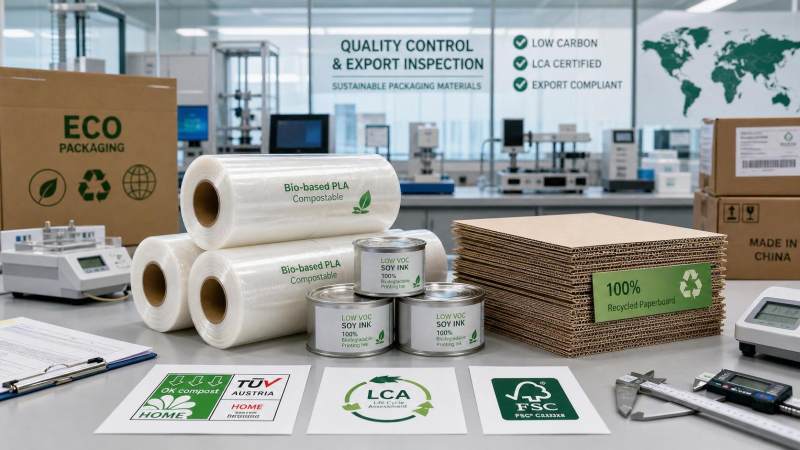
On July 16, 2026, the International Packaging Association (IAP) released its 2026 export guidance for sustainable packaging materials, introducing a clearer compliance baseline for selected packaging products entering the EU, South Korea, and Canada. The update matters because it does more than restate sustainability expectations: it ties export eligibility for new orders to carbon footprint thresholds and to ISO 14067-certified LCA documentation, which directly affects exporters, material suppliers, procurement teams, certification workflows, and delivery planning.
What the 2026 guidance formally changes
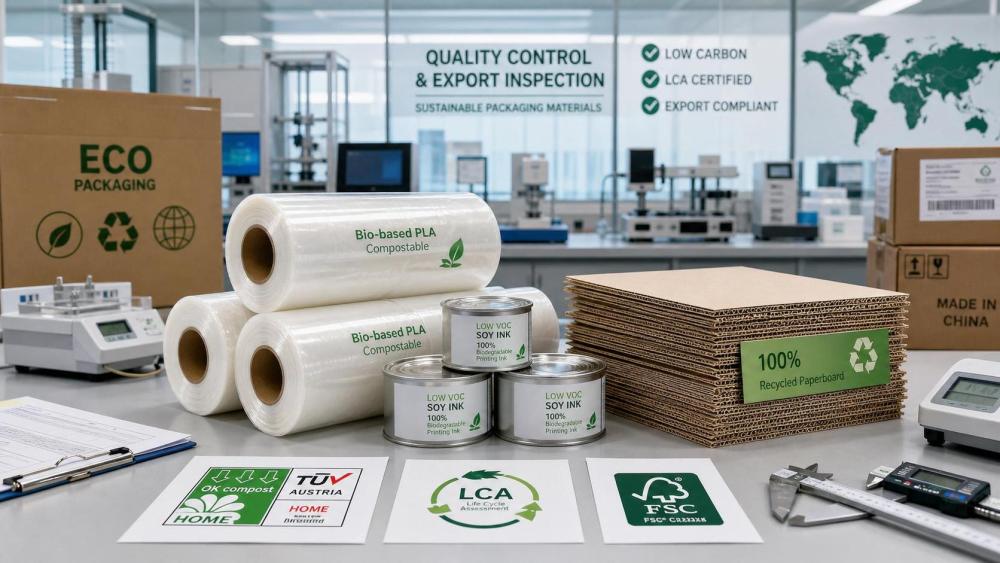
The confirmed information is limited but commercially significant. IAP published the Global Export Guidance for Sustainable Packaging Materials on July 16, 2026. The guidance brings biobased PLA film, hydrolyzable inks, and recycled paperboard into an export compliance framework that now includes carbon footprint thresholds. It also requires packaging material suppliers exporting to the EU, South Korea, and Canada to provide LCA reports certified under ISO 14067. The guidance took effect immediately and applies to all newly signed orders.
Where the pressure is likely to appear first
Export-facing suppliers may face a documentation gate at order intake
From an industry perspective, suppliers serving overseas packaging buyers are likely to feel the impact first because the guidance applies immediately to new contracts. The main pressure point is not only product formulation, but whether supporting LCA documentation can be presented in a compliant form at the time commercial commitments are made. What deserves closer attention is whether internal sales, compliance, and technical teams are aligned before accepting orders for the covered markets.
Procurement teams may need to recheck material eligibility before purchase confirmation
Buyers and sourcing teams involved in PLA film, hydrolyzable inks, and recycled paperboard may need to reassess supplier qualification criteria. Analysis shows that the rule change can influence supplier selection, purchase approvals, and contract documentation because carbon footprint thresholds are now part of the export compliance baseline for the named product categories and destinations. In practice, procurement attention is likely to shift toward whether suppliers can present ISO 14067-certified LCA reports without delaying supply commitments.
Manufacturing and conversion operations may need tighter file control
Converters and manufacturers using the covered materials may also be affected if customer orders are tied to export destinations covered by the guidance. Observably, the impact may appear in technical document management, product specification confirmation, and batch-level traceability support, especially where customers request proof that the supplied packaging materials match the compliance basis used in export documentation.
Certification and testing-related service providers may see more verification requests
Certification-related businesses and testing support organizations may become more involved because the guidance explicitly references ISO 14067-certified LCA reporting. Analysis shows that the practical burden may shift toward report readiness, document review, and consistency between commercial files and compliance submissions. That does not confirm any specific surge in demand, but it does indicate a more visible role for third-party verification in export preparation.
What companies should review now
Check whether covered products are already tied to new export orders
Companies handling biobased PLA film, hydrolyzable inks, or recycled paperboard should first identify whether these materials are being supplied into new orders bound for the EU, South Korea, or Canada. Because the guidance is already in effect for newly signed business, timing matters in contract review and shipment preparation.
Review the readiness of ISO 14067-certified LCA files
What deserves closer attention is whether existing LCA materials meet the form explicitly required by the guidance. If internal records, older assessments, or customer-facing technical documents are not aligned with ISO 14067-certified reporting, companies may need to examine the resulting compliance gap before confirming delivery schedules or bid commitments. This should be understood as a current review priority rather than proof of any established enforcement outcome.
Watch for contract, tender, and specification language changes
Analysis shows that one near-term area to monitor is the wording used in purchase orders, tender documents, and technical specifications for the covered markets. Even where the guidance itself is clear on the existence of the requirement, companies should continue tracking how customers and downstream trading parties translate that requirement into transactional documents.
Prepare for possible effects on lead times and supplier qualification
Observably, businesses may need to pay closer attention to lead-time risk where LCA certification files, compliance review, or supplier onboarding are incomplete. It is more appropriate to understand this as an operational preparation issue: document readiness, qualification timing, and cross-border order handling may matter as much as product availability.
Why this looks like an execution signal, not just a policy note
Analysis shows that this development is better read as an implementation-level trade and compliance signal than as a general sustainability statement. The reason is straightforward: the guidance identifies specific product categories, specific destination markets, a named certification basis, and immediate applicability to new orders. At the same time, it remains necessary to keep a distinction between confirmed facts and market interpretation. The available information does not yet describe detailed enforcement steps, buyer-by-buyer execution practice, or how commercial documentation will be checked across different transaction settings.
How the market should frame this update
It is more appropriate to understand this update as a live compliance change for affected new export business, with further market practice still worth watching. The immediate significance lies in the combination of carbon footprint thresholds and ISO 14067-certified LCA reporting for selected packaging materials. The broader industry implication is not that every outcome is already settled, but that exporters and supply-chain participants now have a clearer signal that sustainability documentation is moving closer to a transaction-level export condition in the covered markets.
Source basis and points that still need verification
This article is generated from the user-provided title, event date, and event summary concerning the IAP 2026 guidance. For events of this type, relevant source categories commonly include official association notices, regulator publications, customs or trade authority information, industry association releases, standards organization documents, and reporting by established trade media. No specific official source link was provided in the input, so the original publication link and any later interpretive materials still need to be verified on an ongoing basis. Further observation should focus on detailed implementation language, certification interpretation, tender document updates, industry feedback, and how companies execute the requirement in actual export transactions.