




Search
Related News
- 00
0000-00
How to Size a Livestock Waste Treatment System for Manure Volume and Farm Compliance - 00
0000-00
Meat Plant Hygiene Programs: Controls for Listeria, Cross-Contamination, and Audits - 00
0000-00
A Practical Guide to Planning Lettuce Greenhouse Production for Consistent Yields - 00
0000-00
How to Evaluate a Plant-Based Food Manufacturer for Scale, Quality, and Compliance - 00
0000-00
Evaluating Smart Poultry Farm Equipment for Mid-Scale Layer Farm Projects
Saudi SASO Tightens Food Packaging PET Rules





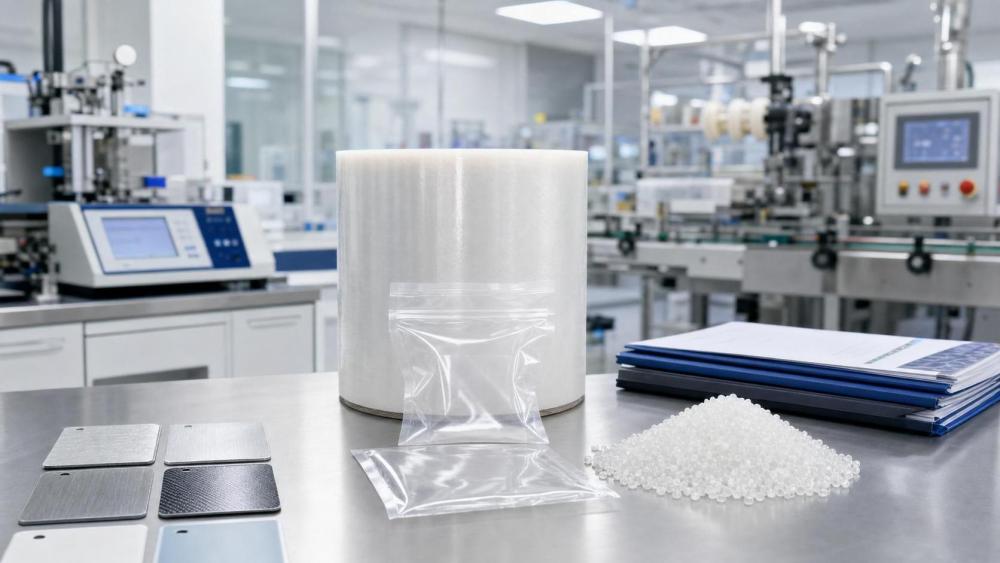
On July 13, 2026, Saudi Arabia's standards authority SASO issued an urgent update to SASO 2870:2026, 17th edition, introducing an immediate restriction on the use of recycled PET (rPET) in food-contact soft packaging and heat-seal layers. The change matters directly to packaging material exporters, converters, buyers, testing providers, and compliance teams working on supply to the Middle East, because it affects material eligibility, qualification pathways, and documentation prepared for shipment and market access.
What the updated standard now requires
The confirmed facts are limited but clear. SASO updated SASO 2870:2026, 17th edition, on July 13, 2026. Under the updated requirement, rPET is prohibited for use in soft packaging and heat-seal layers that directly contact food. The materials now allowed for those applications are virgin PET with both FDA and EFSA certification, or bio-based alternative materials recognized by SASO. The new rule takes effect immediately. The event summary also indicates that the change affects the supply qualification and testing arrangements of Chinese packaging material exporters serving the Middle East market.
Where the pressure is likely to appear first
Export supply qualification may tighten immediately
From an industry perspective, exporters of food packaging materials may face the most direct disruption because the rule is already in force. The practical impact is likely to appear in product eligibility reviews, shipment readiness checks, and customer-side acceptance of packaging structures that previously used rPET in direct food-contact layers. What deserves closer attention is whether existing qualification files, product declarations, and supporting compliance records still match the updated material requirement.
Material sourcing and conversion plans may need adjustment
Processors and packaging manufacturers that rely on rPET in food-contact soft packaging or heat-seal structures may need to reassess raw material choices. The issue is not only substitution at the resin level, but also whether the replacement route meets the stated path of dual FDA and EFSA certification for virgin PET, or falls within a SASO-recognized bio-based option. This may affect procurement alignment, internal specifications, and coordination between technical, sourcing, and export teams.
Testing and document preparation may become a bottleneck
Testing service providers and certification-related businesses may see increased demand for rechecking material compliance, reviewing test plans, and updating technical files. Analysis shows that the immediate enforcement element makes documentation timing especially important. For suppliers and buyers, the key business risk may lie in whether test reports, material declarations, and technical documents are still usable under the revised standard language.
Buyers and procurement teams may revise acceptance terms
For procurement teams and downstream buyers, the rule change may trigger a review of approved supplier lists, material specifications, and tender or purchase requirements. Observably, this is not only a material selection issue but also a contract execution and delivery issue, because compliance expectations may shift before procurement documents and supplier qualification processes are fully updated.
What companies should review now
Recheck whether affected product structures include direct food-contact rPET
Companies supplying soft packaging or heat-seal applications should first identify whether any food-contact layer currently uses rPET. This is the most immediate screening step because the restriction is tied to direct food contact and specific packaging functions rather than to PET use in general.
Verify the certification path behind replacement materials
Where substitution is required, companies should review whether the intended virgin PET route is supported by both FDA and EFSA certification, or whether a bio-based option has recognition from SASO. The input does not provide detailed execution procedures, so this should be treated as a compliance checkpoint that still requires careful confirmation rather than as a fully standardized operational path.
Review testing plans and technical files before shipment
Exporters and supply chain service teams should pay close attention to testing arrangements, declarations, and technical documentation linked to market access. Analysis shows that even where product composition can be adjusted, delivery may still be exposed if compliance files, laboratory support, or customer approval documents lag behind the new requirement.
Watch for changes in customer specifications and tender language
Because the rule is already effective, companies should monitor whether buyers, import-side partners, or project documents begin to reflect the updated standard wording. What deserves closer attention is not only formal regulation text but also how the requirement is translated into bid specifications, supplier onboarding criteria, and acceptance checks in actual transactions.
How this change is best understood at this stage
As an editorial observation, this update is more appropriate to understand as an implemented compliance signal rather than a distant policy discussion, because the rule is described as taking effect immediately. At the same time, the available facts remain narrow. That means the market still needs to observe how certification interpretation, document review standards, and customer enforcement practices develop in practice. The immediate prohibition is clear; the operational details around execution may still require continued verification.
Why the market should keep this on its active watchlist
The significance of this development lies less in headline value and more in its direct effect on material selection, export qualification, and testing preparation for food-contact packaging. A neutral reading is that the rule already changes the compliance baseline for affected applications, while the full commercial impact will depend on how buyers, testing bodies, and supply chains translate the requirement into day-to-day acceptance criteria. For now, it is more appropriate to treat this as a live compliance change with follow-on execution details still worth tracking closely.
Basis of this article and what still needs verification
This article is based on the user-provided news title, event date, and event summary. For developments of this type, relevant source categories commonly include official notices, regulatory releases, trade or customs information, industry association updates, standard organization documents, and reporting by established professional media. No specific official source link was provided in the input, so the exact official publication channel still needs to be verified on an ongoing basis. Continued attention should be paid to detailed implementation language, certification interpretation, tender document updates, industry feedback, and how companies are executing the requirement in actual export and supply arrangements.