




Search
Related News
- 00
0000-00
How to Choose Industrial Food Processing Equipment for Your Production Line - 00
0000-00
What Drives Functional Food Ingredients Cost in Commercial Food Production? - 00
0000-00
Process Hygiene Control: Building a Risk-Based Plan for Food Production Lines - 00
0000-00
Are Biological Pest Control Methods Reliable for Large Greenhouses? - 00
0000-00
How Often Should Lab Equipment Be Calibrated for Food Safety Testing?
Are Biological Pest Control Methods Reliable for Large Greenhouses?




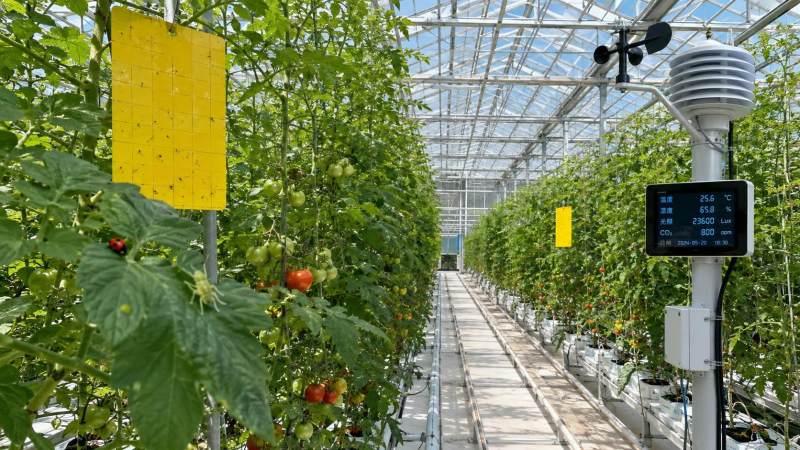
Are Biological Pest Control Methods Reliable for Large Greenhouses?
Are biological pest control methods reliable for large greenhouse operations? For commercial growers managing high-value crops at scale, the answer is yes—but only when biological control is treated as an operating system rather than a substitute that can simply be released into the crop. Its reliability depends on early detection, crop-stage planning, climate conditions, beneficial organism quality, sanitation, staff discipline, and a credible response plan when pest pressure rises faster than expected.
Large protected-cropping facilities have real advantages. The greenhouse is a more controllable environment than an open field, crop access is better, and monitoring can be organized by zone. At the same time, scale creates its own risks. A small hotspot can spread through connected compartments, labor teams may unintentionally carry pests between areas, and uneven climate conditions can make a biological program look inconsistent even when the selected beneficials are appropriate.
The practical question is not whether beneficial insects, predatory mites, parasitoids, microbial products, or biopesticides work. They do, within their intended conditions. The more useful question for a greenhouse manager is whether the operation can maintain the conditions that allow them to work predictably across seasons, production blocks, and changing market schedules.
Reliability starts with expectations, not releases
Biological control is often misunderstood as a “no intervention” approach. In commercial greenhouses, it is usually a carefully managed form of intervention. Natural enemies must arrive at the right time, establish in the crop, find the target pest, and remain active under the greenhouse temperature, humidity, light, and crop canopy conditions. A program can fail if any one of those links is weak.
For example, a preventive release strategy is fundamentally different from a curative strategy. Preventive programs introduce beneficial organisms before pest populations become visible or damaging. Curative programs attempt to suppress an established outbreak. The first approach generally gives the biological agent time to establish and is more compatible with large-scale consistency. The second may still be necessary, but it requires much faster scouting, localized action, and a realistic acceptance that crop quality may already be under pressure.
This is why a large greenhouse should not judge reliability by asking whether biologicals eliminate every pest immediately. A better benchmark is whether the system keeps pest populations below the operation’s economic and quality thresholds without creating unacceptable residue, resistance, labor, or market-access risks.
Why scale changes the management challenge
A large tomato, cucumber, pepper, leafy greens, ornamentals, or propagation facility is rarely one uniform biological environment. It may include multiple varieties, planting dates, crop ages, irrigation zones, roof conditions, airflow patterns, and labor routes. Pest pressure may begin near doors, vents, weeds outside the structure, propagation areas, packing access points, or a compartment with a different climate profile.
The operational challenge is therefore spatial. A biological control plan must work at whole-site level while allowing local decisions. Teams need to know where the issue is developing, whether it is spreading, what life stage is present, and whether the beneficial organism is performing in that particular zone. A weekly average for the entire greenhouse can hide a serious outbreak in one production bay.
Reliable programs tend to combine crop-walk observations with structured records: sticky-trap counts where relevant, plant inspections, hotspot maps, release records, climate data, and notes on crop protection actions. Digital scouting platforms can help organize this information, but the tool is not the decision-maker. A trap count does not automatically explain whether pests are breeding in the crop, entering from outside, or accumulating because a beneficial population has been disrupted.
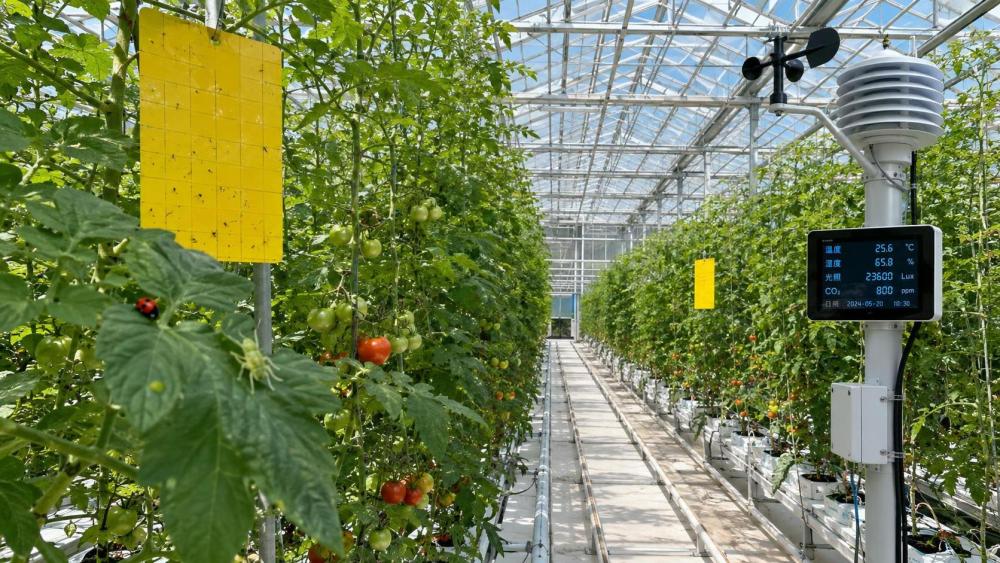
The biological control system is broader than beneficial insects
In practice, biological pest management in a large greenhouse usually combines several elements. Predators and parasitoids may target insects such as whiteflies, aphids, thrips, leafminers, or caterpillars. Predatory mites may be used where mite or thrips management is required. Microbial products, botanical materials, pheromone-based monitoring, physical exclusion, and targeted compatible treatments can also have a place in the wider program.
No single organism should be expected to solve every pest issue. A greenhouse may face overlapping problems: whiteflies in a mature crop, thrips entering from external vegetation, aphid pockets in young plants, and fungus gnats around persistently wet media. Each has a different biology, and each may require different monitoring and intervention timing. The most resilient programs are designed around the pest complex and the production system, not around a preferred input supplier or a single biological product.
Crop architecture matters as well. Dense foliage can offer shelter to pests and make scouting difficult. In high-wire crops, the lower canopy and upper growing points may tell different stories. In propagation, a small infestation can be distributed widely through plant movement. In ornamental production, the cosmetic tolerance for feeding damage can be much lower than in some edible crops. These differences affect release points, scouting intensity, and the threshold for corrective action.
Climate control can support—or undermine—the program
Biological control is closely connected to greenhouse climate management. Temperature influences pest reproduction and beneficial activity. Humidity, leaf wetness, air movement, light levels, and day length can also affect crop conditions and the performance of some biological tools. An operator does not normally set climate solely for natural enemies; crop physiology, disease prevention, energy cost, and production targets remain central. But the biological program must be evaluated against the climate regime actually being used.
This connection becomes especially important during seasonal transitions. A greenhouse may move from low-light winter conditions to rapid spring crop growth, or from a relatively stable cool period into summer heat stress. Pest development can accelerate quickly, while beneficial populations may need time to respond. Facilities relying on supplemental lighting, heating, cooling, screens, or dehumidification should include the biological control adviser in seasonal planning discussions rather than treating pest management as a separate downstream task.
Climate uniformity also deserves attention. Two areas with the same setpoints may not experience the same microclimate. Blocked airflow, irrigation leaks, shading differences, plant density, and equipment performance can create localized conditions that favor pests or reduce crop resilience. When a recurring hotspot appears, the answer may not be another release. It may be a ventilation, irrigation, sanitation, or structural issue that needs correction.
Quality, logistics, and compatibility are commercial risks
For large greenhouse operations, biological control is partly a supply-chain exercise. Beneficial organisms are living materials. Their quality can be affected by production, packaging, storage, transport time, handling at the site, and release method. Deliveries should be planned around crop development and anticipated pest risk, not simply around a procurement calendar. Delayed arrival or poor on-site handling can narrow the margin for success.
Buyers should ask suppliers practical questions: what is being supplied, at which life stage, how should it be stored before release, how is quality assessed, what documentation accompanies the shipment, and what release method is expected? The answers will vary by organism and local market. For cross-border operations, import requirements and local registration rules for biological products must also be checked rather than assumed.
Chemical compatibility is equally important. A greenhouse can unintentionally collapse a beneficial population by applying a treatment that is incompatible with the organisms already released. Even where a treatment is considered relatively selective, its effects may depend on application rate, coverage, environmental conditions, formulation, and timing. Compatibility information should be reviewed before treatment decisions, and the crop protection team should keep a clear record of what was applied, where, and when.
This does not mean conventional chemistry has no place in a biological program. Severe outbreaks, invasive pests, or quality-critical situations may require corrective measures. The point is to use them deliberately: isolate the affected area where possible, select the least disruptive viable option, understand re-entry or residue implications, and plan how the biological system will be rebuilt afterward.
What separates a robust IPM program from a fragile one
Integrated pest management, or IPM, gives biological control its structure. It connects exclusion, sanitation, scouting, biological releases, climate management, crop hygiene, and selective interventions. In a large facility, reliability is usually visible in routine behavior rather than dramatic emergency action.
- Incoming plant material is inspected, and propagation areas are treated as high-risk entry points.
- Weeds, crop residues, standing water, damaged screens, and unmanaged perimeter vegetation are not ignored as minor housekeeping issues.
- Scouting has defined routes, frequencies, records, and escalation rules rather than relying on informal observations.
- Release plans are adjusted by crop age, season, compartment history, and local hotspot patterns.
- The production, irrigation, climate, and crop-protection teams share information before problems become visible at harvest or packing.
Labor training is often underestimated. Staff do not need to become entomologists, but they should recognize warning signs, understand why certain areas are restricted, know how to report anomalies, and avoid practices that move pests or disrupt releases. A technically strong biological plan will still be unreliable if it is not workable for the people carrying it out every day.
How to evaluate reliability before scaling up
A sensible evaluation begins with the greenhouse’s own history. Which pests recur? When do they first appear? Are they introduced with plants, driven by outdoor pressure, or linked to particular production zones? Which prior treatments were used, and could residual effects influence a future beneficial population? The answers provide a more useful starting point than a generic release schedule.
For operations moving from conventional pesticide dependence toward biological control, a staged implementation can reduce risk. A grower may begin with one crop compartment, one seasonal cycle, or one targeted pest group while building scouting discipline and supplier coordination. The purpose is not to run a superficial trial; it is to test whether monitoring, logistics, climate practices, staff capacity, and corrective-action rules are adequate for wider adoption.
Decision-makers should also define what success means in advance. It may include stable crop quality, fewer broad-spectrum interventions, improved residue-management flexibility, more predictable harvest planning, or better alignment with buyer specifications. A program that lowers pesticide use but creates frequent crop losses is not reliable. Conversely, a program that occasionally requires selective corrective treatment may still be commercially robust if it protects the crop and preserves the wider biological system.
A business decision, not just a crop-protection choice
For greenhouse businesses supplying retailers, foodservice customers, processors, or export markets, pest management affects more than plant health. It can influence residue planning, labor allocation, harvest quality, customer confidence, traceability records, and the ability to meet specific market requirements. The commercial value of biological control is therefore linked to the whole production and supply-chain model.
This wider perspective is central to the work of the Global AgriFood & Bioscience Intelligence Alliance (AFBN). Greenhouse technology, biological crop inputs, irrigation, climate systems, food safety, post-harvest handling, and market expectations are connected decisions. Looking at them separately can lead to avoidable gaps: a greenhouse may invest in advanced automation while underinvesting in scouting, or it may adopt biological inputs without reviewing how packing schedules and quality standards affect pest-response choices.
Biological pest control can be reliable for large greenhouse operations, but it is rarely reliable by accident. The strongest programs are built before pest pressure becomes visible: with clean starting material, clear scouting data, compatible crop-protection decisions, dependable biological supply, and a management team willing to respond to signals early. Before expanding a program, operators should confirm the crop-pest profile, greenhouse climate conditions, supplier support, local regulatory requirements, and the practical capacity of the people expected to run it.