




Search
Related News
- 00
0000-00
How to Choose Industrial Food Processing Equipment for Your Production Line - 00
0000-00
What Drives Functional Food Ingredients Cost in Commercial Food Production? - 00
0000-00
Process Hygiene Control: Building a Risk-Based Plan for Food Production Lines - 00
0000-00
Which Irrigation System Minimizes Water Waste in Container Farming? - 00
0000-00
Are Biological Pest Control Methods Reliable for Large Greenhouses?
Which Irrigation System Minimizes Water Waste in Container Farming?




Which Irrigation System Minimizes Water Waste in Container Farming?
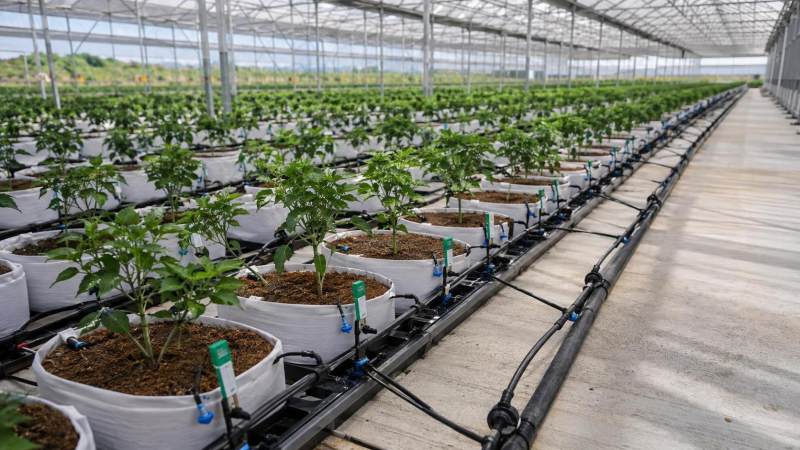
What irrigation system minimizes water waste in container farming? For most commercial greenhouse and nursery operations, pressure-compensating drip irrigation with moisture-based scheduling delivers the strongest overall result.
It applies water close to each container’s root zone, limiting runoff, evaporation, overspray, and variation between plants while making fertigation easier to manage and document.
However, the lowest-waste system is not simply the system with the smallest flow rate. It is the one that matches container size, substrate, crop stage, drainage design, labor capacity, and water-quality conditions.
For B2B growers, project teams, and investors, the practical question is whether the irrigation design can reduce water use without introducing uneven growth, nutrient losses, clogged emitters, or excessive maintenance.
Why Drip Irrigation Is Usually the Best Water-Saving Choice
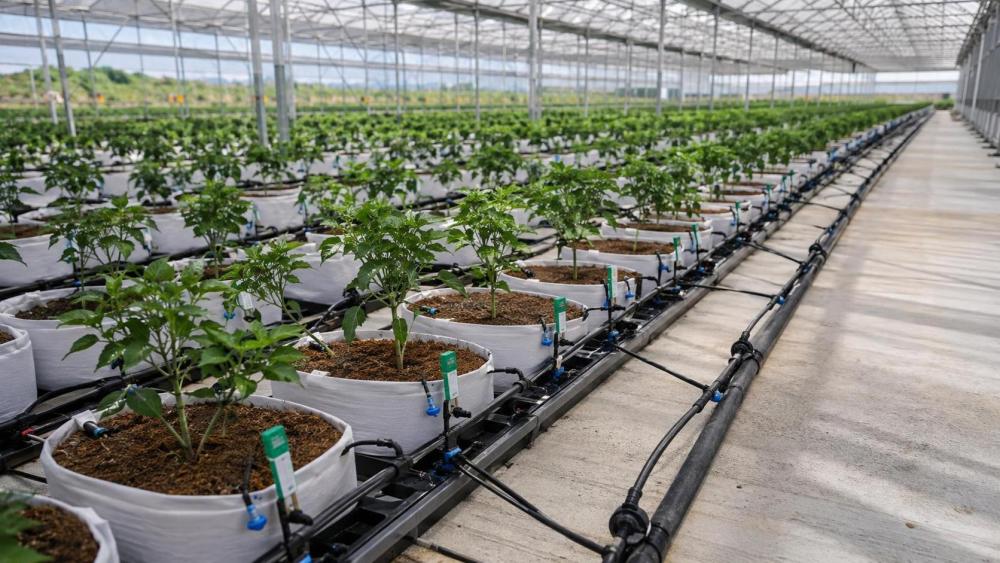
Drip irrigation is generally the leading option because it directs a controlled volume of water to the growing medium instead of wetting pathways, benches, foliage, and unused production areas.
In container production, that accuracy matters because substrates often have limited water-holding capacity and can drain rapidly when irrigation exceeds the container’s effective root-zone storage.
A properly selected emitter supplies water gradually enough for the substrate to absorb it. This lowers leachate volume and helps prevent soluble fertilizer from leaving the container.
Pressure-compensating emitters are especially useful on long runs, sloped greenhouse floors, or large nursery blocks. They maintain more consistent discharge despite modest pressure variation across the irrigation zone.
For growers producing herbs, ornamentals, berries, vegetables, young plants, or tree crops in containers, consistent application supports more uniform crop development and more predictable production planning.
Drip systems also work well with automated fertigation. Water and nutrients can be delivered in smaller, frequent doses that better reflect plant demand and reduce the risk of nutrient-rich drainage.
Unlike overhead sprinklers, drip irrigation keeps leaves drier. This may reduce humidity-related disease pressure, avoid foliar spotting, and lower the amount of water required for nonproductive surfaces.
Its main limitation is that emitters must be positioned and maintained correctly. A misplaced dripper can create dry zones, while a blocked emitter may remain unnoticed until plant quality declines.
How Other Irrigation Methods Compare in Container Operations
Overhead sprinklers remain common because they are simple, visible, and capable of covering large areas quickly. They can be appropriate for propagation, cooling, washing-in, or short-term crop establishment.
Yet overhead systems typically create more evaporation and overspray than root-zone delivery. Wind movement, nozzle wear, uneven spacing, and canopy differences can also reduce application uniformity.
For containers with widely spaced plants, overhead irrigation may deliver substantial water to aisles and empty bench areas. That makes it harder to control costs and drainage volumes.
Micro-sprinklers can offer an intermediate solution. They use less water than conventional overhead sprinklers and can cover grouped containers, but they still wet a larger surface area than drip.
Micro-sprinklers may suit larger containers, outdoor nursery stock, or crops requiring broader wetting patterns. Their performance depends heavily on pressure regulation, nozzle selection, and layout spacing.
Capillary mats and subirrigation systems can achieve very high water efficiency because they recapture or avoid runoff. They are particularly attractive for uniform container sizes and controlled bench production.
In ebb-and-flow benches, nutrient solution rises temporarily into the container base and is then returned to a storage tank. This can greatly reduce water discharge when managed correctly.
However, recirculating systems require robust sanitation, filtration, nutrient monitoring, and disease-risk management. A pathogen entering the shared solution may spread across a larger crop area.
For many facilities, drip irrigation provides the best balance between water efficiency, manageable capital cost, flexible crop handling, and lower operational complexity than fully recirculating systems.
Water Waste Often Comes From Scheduling, Not the Hardware
Even an efficient drip system wastes water when irrigation timing is based on habit rather than crop demand. Fixed daily schedules often ignore changes in weather, plant size, and substrate moisture.
Container crops need irrigation decisions that account for solar radiation, temperature, humidity, airflow, plant canopy, crop stage, and the physical properties of the selected growing medium.
A small liner in a cool greenhouse needs far less water than a mature fruiting plant under high light. Treating both crops the same creates either stress or unnecessary drainage.
Moisture sensors can improve decisions by indicating when containers are approaching a defined moisture threshold. They are most valuable when installed in representative locations and interpreted alongside crop observations.
Load cells, substrate sensors, drainage sensors, and climate-based controllers can provide progressively more detailed data. The appropriate level depends on crop value, production scale, and management capability.
Short pulse irrigation is often more efficient than one long irrigation event. Multiple smaller applications allow better infiltration and reduce the chance that water moves quickly through the substrate.
For high-value crops, growers can use daily light integral, solar radiation accumulation, or evapotranspiration models to trigger irrigation. These approaches better align water delivery with actual crop use.
Drainage measurement should be part of routine management. A modest leaching fraction may be necessary in some systems, but persistent high drainage usually signals excessive irrigation or poor nutrient strategy.
Water-saving performance should be evaluated by liters applied per marketable plant, not simply total irrigation volume. Lower water use is only beneficial when crop quality and uniformity remain commercially acceptable.
Select Emitters and Layouts for the Actual Container and Crop
Emitter selection begins with the container’s dimensions, substrate composition, and root distribution. A single low-flow emitter may be sufficient for small pots but inadequate for larger or irregular containers.
Large containers often need two emitters or a drip ring to achieve uniform wetting. Applying water at only one point can leave part of the root zone too dry.
Flow rate should be low enough to avoid surface channeling and overflow. Faster delivery does not necessarily shorten irrigation effectively when excess water simply exits through drainage holes.
Pressure-compensating drippers reduce variation between the first and last containers on a line. This becomes more important as zones become longer, elevation changes increase, or operational pressure fluctuates.
Use stakes, spaghetti tubing, clips, or drip rings that keep emitters in place. Labor-saving installation choices can become costly when emitters shift during routine crop movement or cleaning.
Zone design also matters. Group containers with similar water demand, such as the same crop, pot size, substrate, and growth stage, whenever practical within the production workflow.
Mixing young plugs, mature plants, and different species in one irrigation zone forces compromise. One group will often be overwatered while another receives less than its required volume.
For mobile benches and seasonal layouts, flexible drip assemblies can be worthwhile. They allow crop changes without rebuilding the entire system, helping facilities retain water-control precision over time.
Fertigation Control Is Essential for Reducing Water and Nutrient Losses
Water waste in container farming is closely connected to nutrient waste. Excess irrigation carries fertilizer out of the root zone, increasing input costs and creating wastewater management concerns.
Drip fertigation allows growers to apply nutrients in measured concentrations during irrigation events. This supports a more stable root-zone environment than infrequent, high-volume feeding programs.
Injection equipment should be calibrated regularly. Incorrect fertilizer dosing can lead managers to flush containers unnecessarily, using more water to correct avoidable conductivity or pH problems.
Monitoring electrical conductivity and pH in both irrigation water and drainage provides actionable feedback. It shows whether nutrient concentrations are accumulating, being depleted, or being lost through excessive leaching.
Source-water quality should be tested before system selection. High levels of iron, calcium, bicarbonate, sediment, or biological material can affect filtration requirements and emitter reliability.
Filtration is not an optional accessory for precision irrigation. Screen, disc, media, or sand filtration should be selected according to water source, particle size, flow demand, and system sensitivity.
Acidification, chlorine treatment, or other water-treatment methods may be required to manage mineral deposits and biological growth. The correct approach depends on water analysis and local compliance requirements.
A preventive maintenance program is usually cheaper than crop variability caused by partial clogging. Regular flushing, pressure checks, filter inspection, and emitter audits protect the expected efficiency gains.
When Subirrigation Can Outperform Drip Irrigation
For standardized indoor production, subirrigation can minimize water waste more effectively than drip because unused solution can be captured, treated, and reused rather than discharged.
Ebb-and-flow benches are often suitable for bedding plants, potted ornamentals, leafy greens, and uniform greenhouse crops. They can reduce labor associated with individual emitter placement.
Capillary mat systems can also be efficient for compatible container crops. They provide water from below, reducing evaporation from wetted foliage and lowering the chance of overspray.
The business case is strongest where crop layouts are stable, containers are consistent, and the facility can support cleaning protocols, nutrient analysis, and recirculated-water management.
Still, recirculation is not automatically the best option for every operation. The initial investment, sanitation burden, disease risk, and operational discipline may outweigh savings for diverse crops.
Growers using recirculated irrigation should establish clear procedures for tank cleaning, water disinfection, filtration, nutrient adjustment, and response to suspected root disease incidents.
Facilities with variable container sizes, frequent crop turnover, outdoor exposure, or highly mixed production often find drip easier to operate. The best solution depends on production consistency.
A hybrid approach can be commercially sensible. Use subirrigation for uniform high-density crops, then use drip zones for larger containers, specialty lines, trial crops, and flexible production areas.
How to Evaluate Return on Investment Before Buying Equipment
Decision-makers should compare systems using total operating value rather than purchase price alone. Water savings, fertilizer retention, labor needs, crop uniformity, maintenance, and drainage management all affect returns.
Start with a baseline. Measure current water use by zone, irrigation duration, drainage volume, fertilizer consumption, labor hours, rejected plants, and seasonal changes in crop performance.
Then estimate the expected impact of improved application uniformity. A system that saves water but increases uneven growth or staff workload may not create the desired commercial outcome.
Capital costs include pumps, filtration, valves, controllers, pipework, emitters, sensors, dosing equipment, drainage infrastructure, and installation. Include spare parts and commissioning in the project budget.
Operating costs include electricity, filter maintenance, replacement components, water treatment, sensor calibration, labor, and monitoring. These costs should be reviewed over several production cycles.
For projects in water-stressed regions, compliance and water-access risk may be as important as direct cost savings. Efficient irrigation can support permitting, customer requirements, and sustainability reporting.
Automation can improve results only when teams understand the control logic. Staff should know how to identify leaks, blocked emitters, abnormal drainage, pressure drops, and sensor readings that need action.
Supplier evaluation should include hydraulic design capability, technical support, component availability, water-treatment expertise, software usability, and experience with the operation’s specific crop and container format.
A Practical Implementation Roadmap for Commercial Growers
Begin by mapping production zones, container sizes, crop cycles, water sources, and drainage routes. This establishes where water is currently applied and where losses are most likely occurring.
Run a distribution-uniformity test before changing major equipment. Compare emitter output or sprinkler catch volumes across representative areas to identify pressure, clogging, or layout problems.
Review substrate behavior with the crop team. Coarse mixes, peat-based media, coco coir blends, and bark-based substrates differ significantly in infiltration, water retention, and drainage response.
Install water meters at meaningful zone levels, not only at the facility inlet. Zone-level data makes it possible to identify abnormal use, leaks, and crop areas requiring better scheduling.
Adopt a simple monitoring routine before investing in complex automation. Track irrigation events, substrate moisture, drainage percentage, EC, pH, plant appearance, and daily climate conditions.
Pilot the proposed irrigation method in a controlled section of the facility. Compare water use, crop uniformity, labor input, drainage, and disease observations against the existing production method.
Use pilot results to refine emitter numbers, pulse duration, scheduling thresholds, and fertigation recipes. This reduces the risk of scaling a design that is technically sound but operationally unsuitable.
Once implemented, review performance at regular intervals. Crops change, containers change, and equipment degrades, so water efficiency must be treated as an ongoing management target.
Conclusion: Choose Precision Delivery, Then Manage It Precisely
For most container farming businesses, drip irrigation with pressure-compensating emitters, moisture-informed scheduling, and disciplined fertigation is the most practical system for minimizing water waste.
It provides root-zone accuracy, reduces runoff, supports crop consistency, and can fit a wide range of greenhouse, nursery, vertical farming, and controlled-environment production models.
Subirrigation may achieve even lower water losses in highly standardized systems, particularly where recirculation and sanitation can be managed reliably. It is a stronger specialist solution than a universal one.
The most important decision is not choosing a technology label. It is designing irrigation around real crop demand, verifying uniformity, monitoring drainage, and maintaining the system consistently.
Growers that combine precision hardware with measurement and operational discipline can reduce water and fertilizer losses while improving production predictability, resource efficiency, and long-term business resilience.
- Last One:No more articles
- Next Article:How to Choose Industrial Food Processing Equipment for Your Production LineSep 05, 2026