



Search
Related News
- 00
0000-00
Probiotics Price Guide: What Drives the Cost of Bulk Ingredients? - 00
0000-00
Georgia’s Tomato Import Value Reaches Record for January–October 2026 - 00
0000-00
Health Attributes Drive Innovation in the Cereal Industry - 00
0000-00
French Tomato Output Forecast to Fall in 2026 as Prices Remain High - 00
0000-00
Choosing Food Packaging Lines: Capacity, Product Type and Automation
Probiotics Price Guide: What Drives the Cost of Bulk Ingredients?




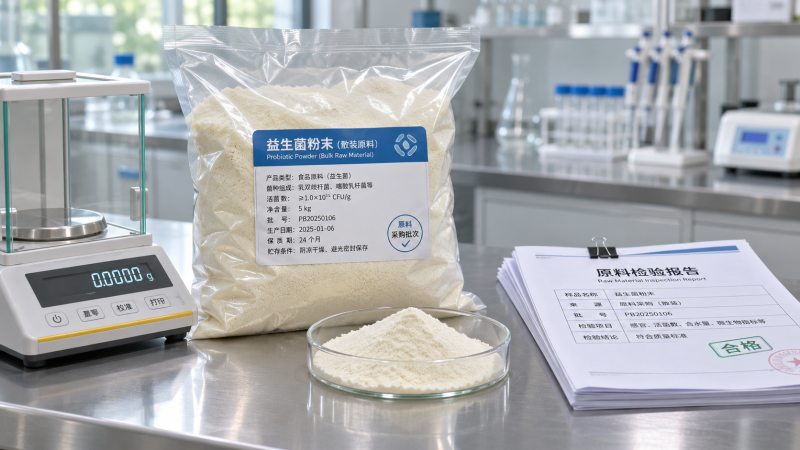
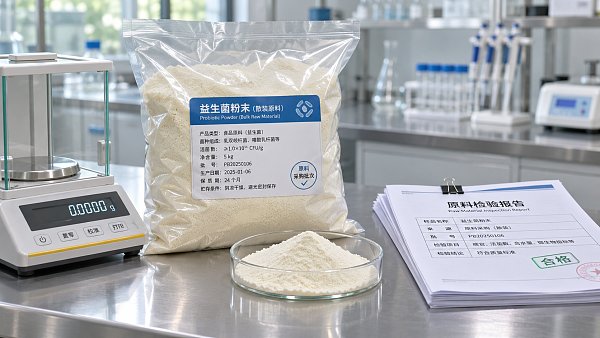
The most useful probiotics price is not the lowest quote per kilogram. It is the cost of delivering the required viable organisms, of the correct identity, in a finished product through its stated shelf life. Two powders with the same price and nominal cell count can have very different procurement value if their strains, stability, testing, or delivery terms differ.
For buyers of food, beverage, supplement, and other bioscience ingredients, a defensible comparison starts with a common specification and ends with a calculation of delivered cost per usable dose. No current market quotations are provided here, so this guide does not present price ranges. Instead, it explains which variables to put into an inquiry and how to assess competing offers.
Set the specification before comparing prices
Probiotics are live microorganisms selected for a particular application. Viable quantity is commonly expressed in colony-forming units, or CFU, although the suitability and interpretation of a count depend on the test method and organism. A buyer should establish whether the requirement applies to the bulk ingredient at manufacture, at receipt, or in the finished product at the end of shelf life. Those are different purchasing targets.
A request for quotation should specify the intended application, destination market, required organisms and strains, potency, formulation constraints, packaging, anticipated volume, and delivery schedule. It should also state which party is responsible for setting and verifying the finished-product shelf-life claim. Without these details, suppliers may price materially different products under the same description.
For a strain-specific product, ask for the full identity, including the strain designation, rather than accepting only a genus or species name. Substitution may affect suitability for the application, supporting evidence, labeling, and commercial rights. A lower-priced alternative is only a like-for-like offer if it meets the approved specification.
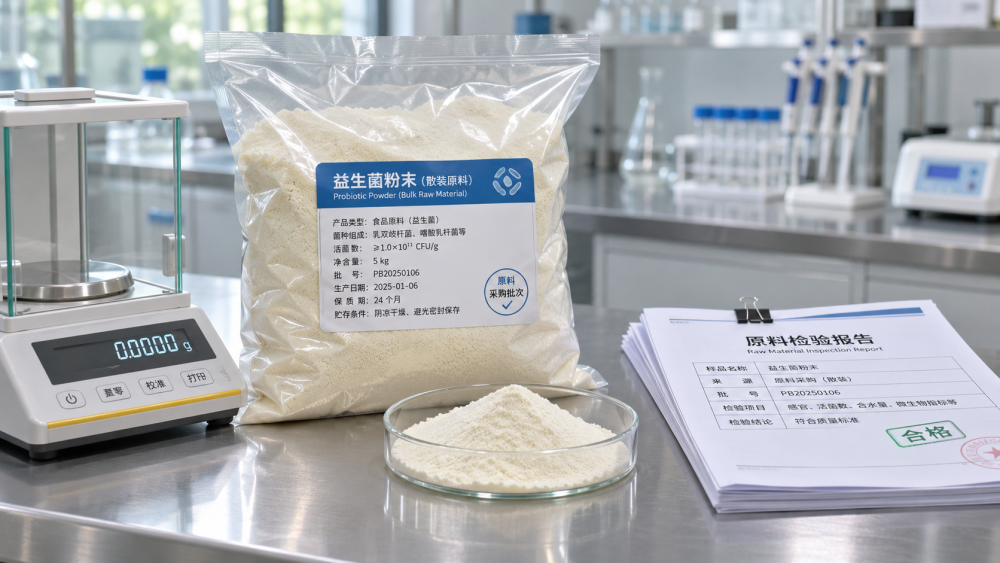
What drives the price of bulk probiotic ingredients?
Strain identity and access
Different strains can require different production and quality-control approaches. A supplier may also price a strain differently because of access rights, supporting research, or controls around its use. These features do not automatically make an ingredient better for every application: their value depends on whether the buyer needs that exact strain and can use the supporting documentation for the intended product and market.
Ask whether the quoted ingredient is strain-specific, whether substitution is permitted, and what evidence identifies the organism in the supplied lot. If a supplier offers a blend, request the identity and declared amount or proportion of each component, along with the basis on which those amounts are measured.
Viable concentration and the guarantee point
Higher stated concentration can reduce the mass needed per dose, but the number on a specification must be read with its conditions. A count stated at manufacture is not directly comparable with a count guaranteed through the ingredient’s shelf life. Likewise, an ingredient guarantee is not the same as a guarantee that cells will survive processing and storage in the finished product.
Confirm the unit—such as CFU per gram—the test method, the date or point at which the count is guaranteed, storage conditions, and the supplier’s acceptance limits. For blends, ask whether the count is for the total blend or for individual strains. A total count alone may not establish that every intended strain is present at its required level.
Manufacturing and formulation requirements
Fermentation, recovery, drying, blending, and packaging choices can affect production cost and ingredient performance. Protective carriers or encapsulation may be useful where a strain needs additional protection, but they also change the composition and potentially the amount of powder needed in a finished dose.
Buyers should disclose process conditions that may affect viability, including exposure to heat, moisture, acidity, and time before packing. An ingredient suitable for a dry capsule should not be assumed suitable for a beverage or a heat-treated food without application-specific evidence. If a more protective formulation is offered at a premium, ask what conditions it was tested under and whether those conditions resemble the intended process.
Stability, packaging, and logistics
Viable organisms can decline during storage and distribution. The rate depends on the strain, formulation, packaging, temperature, humidity, and time. A product with a lower initial price may therefore require more material per finished dose, tighter inventory controls, or more expensive transport.
Request the recommended storage and shipping conditions, unopened shelf life, packaging configuration, and any available stability data. Check whether the data relate to the offered formulation and pack, and whether the supplier guarantees the stated count at a defined point. If temperature-controlled freight is needed, include its cost and agree on how excursions are documented and handled.
Testing and documentation
Quality requirements influence both the quote and the buyer’s verification workload. Depending on the application and destination, a purchase specification may cover identity, viable count, purity, contaminants, allergens, and other attributes. The appropriate tests and limits need to be agreed for the ingredient and intended use; a generic certificate should not be assumed to satisfy every product or jurisdiction.
Ask for a sample certificate of analysis and confirm which results will be lot-specific. Establish the methods, sampling approach, acceptance limits, and whether testing is performed by the supplier or an external laboratory. If independent verification is required, include its cost and turnaround time in the procurement plan.
Order volume and supply commitments
Minimum order quantities, batch sizes, lead times, forecast commitments, and delivery frequency can change the quoted unit price. Larger orders may reduce the price per kilogram but also increase inventory exposure, particularly when remaining shelf life is limited or storage conditions are demanding.
Compare the cost of the volume the business can reasonably use, not just the supplier’s most attractive price tier. Clarify whether a quoted price depends on a firm annual commitment, a single shipment, a blanket order, or scheduled releases. Also ask what happens if forecasts change or a scheduled lot is delayed.
Convert quotes into a cost per usable dose
Begin by normalizing each offer to the same currency, delivered quantity, specification, and guarantee point. Include freight, insurance, import charges where applicable, storage, testing, and expected handling costs. Exclude recoverable taxes where appropriate to the buyer’s accounting treatment, and record the exchange-rate assumption for cross-currency comparisons.
A practical calculation is:
Ingredient cost per dose = delivered cost per gram × grams required per finished dose.
If the dose requirement is expressed as CFU, the starting calculation is the required CFU per dose divided by the usable CFU per gram of ingredient. Add any justified overage—the extra quantity included to allow for expected loss—before multiplying by delivered cost per gram. The usable count and overage should reflect the relevant guarantee point and evidence for the actual process and shelf life, rather than an assumed universal loss rate.
For illustration only, suppose a powder costs $100 per kilogram delivered and has a usable count of 100 billion CFU per gram at the comparison point. A dose requiring 10 billion CFU would use 0.1 gram, for an ingredient cost of $0.01 per dose before overage and other manufacturing costs. This is arithmetic, not a market quotation. If the count applies only at manufacture, the result cannot be treated as the cost of meeting a finished-product end-of-shelf-life claim without additional stability information.
For a multi-strain product, repeat the calculation against each required strain where the specification demands individual amounts. A blend’s total CFU may appear economical while still requiring reformulation or additional ingredient to meet a strain-specific target.
Use a common quote-comparison sheet
Where a field remains open, mark the uncertainty rather than assigning both offers the same value. For example, an unconfirmed shipping condition could materially change landed cost. Request a revised quote or a written assumption before ranking suppliers.
Verify the offer before committing to volume
- Review the technical package. Match the specification, sample certificate of analysis, storage instructions, and available stability information to the proposed ingredient. Check that documents refer to the same strain, formulation, and packaging as the quote.
- Assess application fit. Arrange appropriate trials in the intended formulation and process. Agree internally on the test plan, sampling points, methods, and pass criteria; a supplier’s ingredient data alone may not predict finished-product performance.
- Confirm commercial and change controls. Document minimum remaining shelf life at delivery, lead time, shipment conditions, notification of formulation or manufacturing changes, and procedures for nonconforming lots.
- Agree on receipt and release. Define identity, count, documentation, packaging, and temperature-record checks as applicable. Specify how discrepancies are investigated, which retained samples or records are used, and who bears the cost of retesting or replacement.
For continuity-sensitive products, ask about production capacity, alternative sites or sources, and recovery arrangements. These are supplier claims until supported by suitable documentation or qualification. A backup source is only useful if its strain, formulation, quality package, and performance have been approved for the intended product.
Choose the lowest defensible total cost, not the lowest headline quote
The preferred offer is the one that meets the defined technical and regulatory needs at the lowest acceptable total cost and supply risk. A premium may be justified by a required strain, stronger stability evidence, a useful shelf-life guarantee, or lower logistics and verification costs. Equally, features that do not serve the product specification should not be paid for solely because they appear on a supplier’s technical sheet.
Before awarding the order, retain the comparison assumptions alongside the quotations: required dose, CFU guarantee point, overage basis, delivered-cost scope, forecast volume, and acceptance criteria. That record makes the probiotics price decision reviewable when a formulation, supplier, route, or shelf-life requirement changes.
- Last One:No more articles
- Next Article:Georgia’s Tomato Import Value Reaches Record for January–October 2026Nov 28, 2026
Want to dive deeper into these market dynamics, or need data-driven support for your next business move? Drop a line below and let the analysts at AFBN provide customized insights.
We respect your privacy. Your information is strictly confidential.
相关推荐
 Probiotics Price Guide: What Drives the Cost of Bulk Ingredients?Compare probiotics price quotes with confidence. Discover the factors driving bulk ingredient costs and calculate the true cost per usable dose.
 Health Attributes Drive Innovation in the Cereal IndustryHealth attributes are driving cereal industry innovation. Explore what this trend could mean for product claims, ingredient sourcing and buyers.
 New York Governor Vetoes Food Safety Bill, Halting Proposed Ban on Three AdditivesNew York food safety bill veto: Explore the proposed additive ban, GRAS disclosure rules and what food businesses should review next.
 China’s New Food Labeling Standard to Ban ‘Zero Addition’ ClaimsChina’s new food labeling standard will ban certain “zero addition” claims from March 16, 2027. Discover what businesses and consumers need to know.