




Search
Related News
- 00
0000-00
Animal Nutrition Premix: How to Choose a Formula for Livestock - 00
0000-00
USDA Cuts US Corn Output and Stocks, Raises Soybean Yield in November WASDE - 00
0000-00
Choosing Dairy Farm Systems: Milking, Feeding, and Herd Management - 00
0000-00
Rabobank: Climate Change and Heat Stress Threaten European Dairy Competitiveness - 00
0000-00
Planning Feeder and Drinker Layouts in a 1,000-Broiler House
Tags
Using Powder Seasonings in Snack Coatings: What to Check




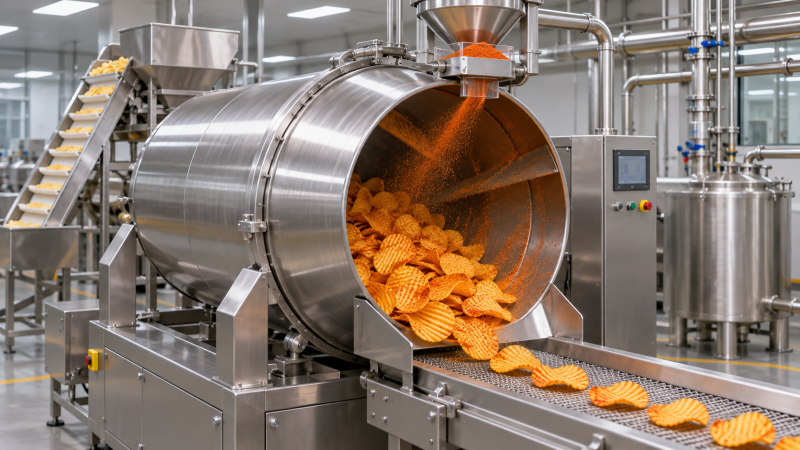
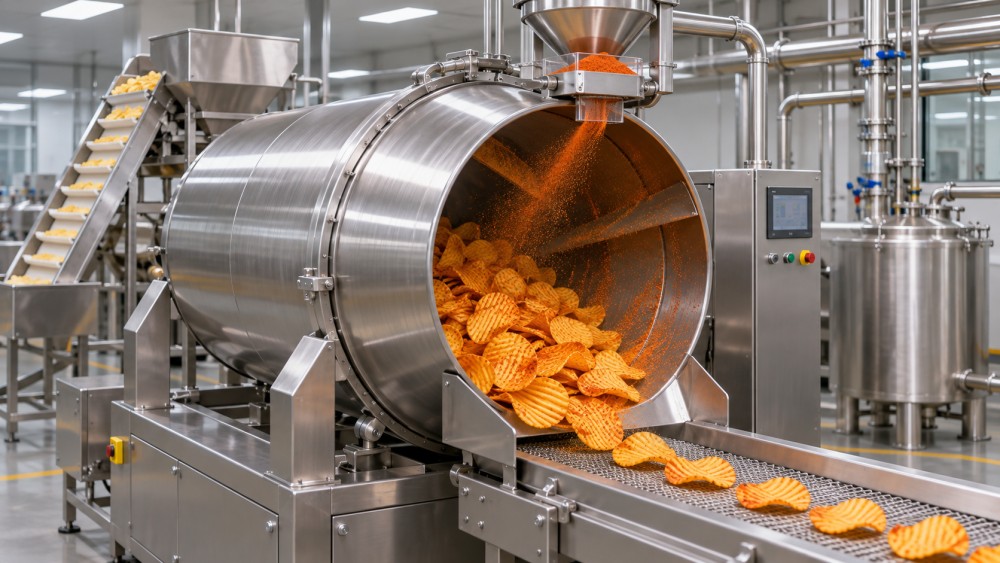
A snack can leave a coating drum looking evenly seasoned and still produce complaints about weak flavor, dusty packaging, or inconsistent color. The cause may be the seasoning itself, but it may also be the oil application, product temperature, feeder setting, or the way material moves through the drum. Checking the powder without checking the process can send operators in the wrong direction.
For a useful assessment, compare incoming batches against an agreed reference, then observe how each batch behaves on the actual snack. Appearance, flow, adhesion, flavor distribution, and finished-pack condition all matter. A seasoning that tastes correct in a bench sample may behave differently when applied to a warm, irregularly shaped product at production speed.
Start with the snack and the application method
The surface being coated determines what the seasoning must do. A relatively smooth cracker may retain powder differently from a porous extruded snack. A ridged chip presents more surface area and recesses, while fragile products can shed crumbs during tumbling. Those crumbs may collect in the coating system or be mistaken for excess seasoning in a package.
Many lines apply oil or another suitable liquid before adding dry seasoning. The liquid provides a surface to which particles can adhere, but the result depends on where and how evenly it is applied. Too little or unevenly distributed oil can leave pale patches and loose powder. Excessive application may produce dark or wet-looking areas, clumps, and an unbalanced eating experience. The appropriate amount is product-specific; an adjustment that helps a porous snack may overwhelm a thinner product.
Check whether the snack reaches the seasoning point at a stable temperature and condition. Changes in upstream cooking, cooling, or conveying can alter surface oil and the way a coating adheres. Before changing the seasoning recipe, compare the current product with a retained reference from a satisfactory run.
Define what batch consistency means on your line
Consistency is more useful as a set of observable limits than as a general request for “the same quality.” For powder seasonings, a purchasing specification can describe flavor profile, appearance, particle characteristics, flow behavior, packaging, and required documentation. The most useful limits are those connected to performance on the intended equipment and snack.
Ask the supplier how the blend is identified and what information accompanies each lot. The production team should be able to match the delivery label, purchase specification, and certificate of analysis where one is required. A certificate is useful only when its listed tests and acceptance criteria correspond to the agreed specification; it does not replace an application trial.
Set aside an approved reference sample under suitable storage conditions and agree on how long it remains appropriate for comparison. Color and aroma can change during storage, so an old reference should not automatically be treated as the correct target. Record the sample’s identity and date, and replace it through the site’s approval process when needed.
A practical receiving check can cover the following:
- Identity and traceability: Confirm product name, lot code, quantity, date information, and packaging against the order and site requirements.
- Pack condition: Look for damaged seals, contamination, wetting, or signs that the contents may have been exposed during transport.
- Appearance and odor: Compare a representative sample with the agreed reference using the same lighting, container, and evaluation conditions.
- Physical condition: Note hard lumps, separation, unusual dustiness, or material that does not flow as expected.
- Documents: Check the specification, ingredient and allergen information, and any lot-specific documentation required by the purchase agreement.
Do not infer that a blend is safe or unsuitable from smell or appearance alone. Hold material that fails the site’s acceptance procedure and refer it to the responsible quality team. Sampling should follow the facility’s written method: taking a small scoop from the top of a container may miss variation elsewhere in the lot.
Check particle behavior before changing the feeder
Particle size distribution influences how a blend feeds, separates, and settles on a snack. Finer material may provide broad surface coverage but can generate airborne dust or collect in equipment. Coarser particles may create a visible, textured finish, yet can bounce off smooth surfaces or settle away from finer ingredients during handling. The desired balance depends on the recipe and the appearance the finished product is meant to have.
Segregation is especially relevant in blends containing ingredients with different particle sizes or densities. Vibration in transport, transfer between containers, and repeated handling may cause the material presented to the feeder to differ from the average blend. If color or flavor changes during a run, compare samples from different points in the feed path rather than assuming the drum is mixing poorly.
Bridging or inconsistent discharge can also cause alternating heavy and light coverage. Inspect the hopper and feeder for buildup, blocked openings, and inconsistent material flow, following lockout and cleaning procedures. Avoid breaking lumps or adding material to a running system in a way that exposes operators to moving equipment. If an intervention is allowed by site procedure, record it; an undocumented adjustment can obscure the cause of a later defect.
Run a controlled coating check
A trial is most informative when the operators keep the snack, equipment, and operating conditions as stable as practical. Record the seasoning lot, snack lot or production period, oil application settings, feeder setting, line speed, and relevant product conditions. Note any pauses, restarts, or adjustments. Without that context, a difference between two samples may be attributed to the wrong cause.
Collect finished product after the line has reached a stable condition and repeat the check during the run. Examine samples from separate times rather than combining everything into one container: a composite can conceal short periods of over- or under-application. Use the site’s approved sampling plan and scales or other measuring equipment appropriate to the task.
Where the process permits, compare the mass of product before and after application to estimate coating pickup. Treat the result as a process indicator, not a direct measure of seasoning alone, unless the method distinguishes oil, powder, and product loss. Crumbs, evaporation, sampling differences, and retained material in equipment can affect the apparent change.
Visual coverage should be assessed alongside flavor. A brightly colored blend can look heavy while tasting weak; a pale blend may be correctly applied. Use a defined tasting method, with trained or authorized assessors where the facility requires them, and compare samples under similar conditions. Check for uneven saltiness, concentrated flavor spots, missing notes, and unwanted aftertaste. Food safety and allergen controls still apply during sensory checks.
Look beyond the drum discharge
Coating performance continues to be tested as product travels through conveyors, weighs into packages, and is handled. Examine the same batch after those steps for bare surfaces, clumps, and loose material at the bottom of the pack. Some loose seasoning may be expected for a particular product; the useful question is whether the amount and appearance remain within the site’s agreed standard.
If the product looks acceptable at discharge but loses coating later, investigate transfer points and mechanical abrasion before increasing the feeder rate. Adding more powder may only create more loose material. Conversely, if coverage is already patchy at discharge, check oil distribution, feeder stability, and drum loading before focusing on downstream handling.
Troubleshoot by symptom, then verify the cause
Change one controllable variable at a time where production conditions allow, and document both the adjustment and the result. If a line is already producing material outside specification, follow the site’s hold and disposition process rather than continuing an uncontrolled experiment. Keep samples and records that allow the quality team to determine which product was affected.
Storage, changeovers, and release decisions
Follow the seasoning supplier’s documented storage instructions and the facility’s inventory controls. Protect opened containers from moisture, foreign material, and unintended ingredient contact. Close and identify partially used packs, record their lot codes, and use them according to site rules. A blend that flowed well on arrival may behave differently after exposure to an unsuitable environment, so check its condition again before use.
At changeover, identify residual seasoning in hoppers, feeders, drums, conveyors, and collection points. The cleaning method and verification should match the ingredients involved, equipment design, and facility risk assessment. This is particularly relevant when a previous blend contains an allergen not intended in the next product. Do not assume that a visible inspection alone is sufficient for every changeover; use the site’s validated or otherwise approved procedure and applicable local requirements.
Before releasing a new lot or returning to routine production after an adjustment, compare the finished snack with the agreed acceptance criteria, not just the seasoning in its container. A useful handover tells the next shift which lot is in use, what was changed, when acceptable product resumed, and whether any material remains on hold. That record helps distinguish a genuine batch difference from a process condition that can recur with any lot.