




Search
Related News
- 00
0000-00
How to Select Agricultural Irrigation Solutions for Water-Limited Farms - 00
0000-00
How to Select Food Plant Sanitation Equipment for High-Risk Processing Areas - 00
0000-00
Selecting Meat Packaging Technology to Extend Shelf Life and Control Leakage - 00
0000-00
Selecting Secondary Dairy Packaging Systems for Hygienic, High-Speed Distribution - 00
0000-00
How to Design Greenhouse Irrigation Zones for Uniform Watering and Lower Waste
Which Food Additives Qualify as Clean Label in 2026?




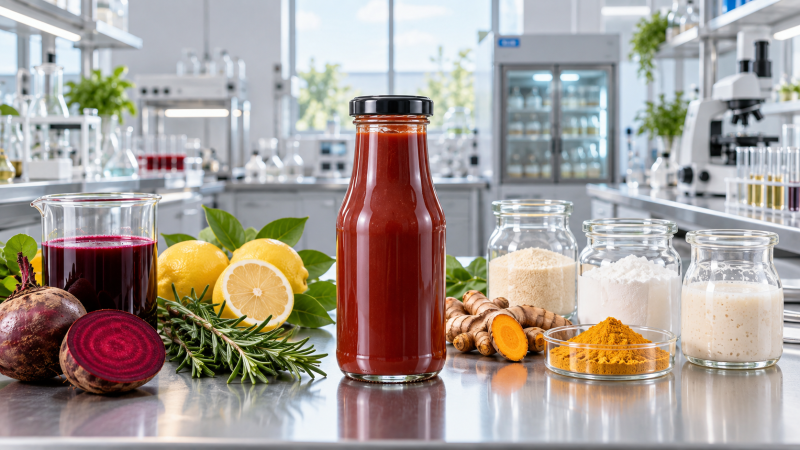
For food manufacturers, the useful 2026 answer is not a single approved list of “clean-label additives.” Clean label remains a market and formulation judgment rather than a universal legal classification. An additive can be permitted, technically effective, and familiar to food scientists while still creating a declaration that consumers see as overly synthetic or difficult to understand.
In practice, additives are more likely to support a clean-label position when they have a recognizable source, a straightforward functional story, an ingredient name consumers can reasonably understand, and a processing history that fits the product’s brand promise. The same ingredient may work well in one category and be a poor fit in another. A cultured dextrose ingredient, for example, may be acceptable in a refrigerated dip positioned around fermentation, while it may invite questions in a minimally processed fruit product.
The practical question is therefore: can this ingredient deliver the required safety, shelf life, texture, color, or processing performance without creating a label that conflicts with how the finished food is presented?
What usually qualifies in a clean-label formulation?
Several additive groups are regularly evaluated for clean-label reformulation. Qualification depends on source, processing route, local labeling requirements, dosage, finished-product performance, and consumer interpretation. Still, the following categories are common starting points for development teams.
Fruit, vegetable, and botanical color systems
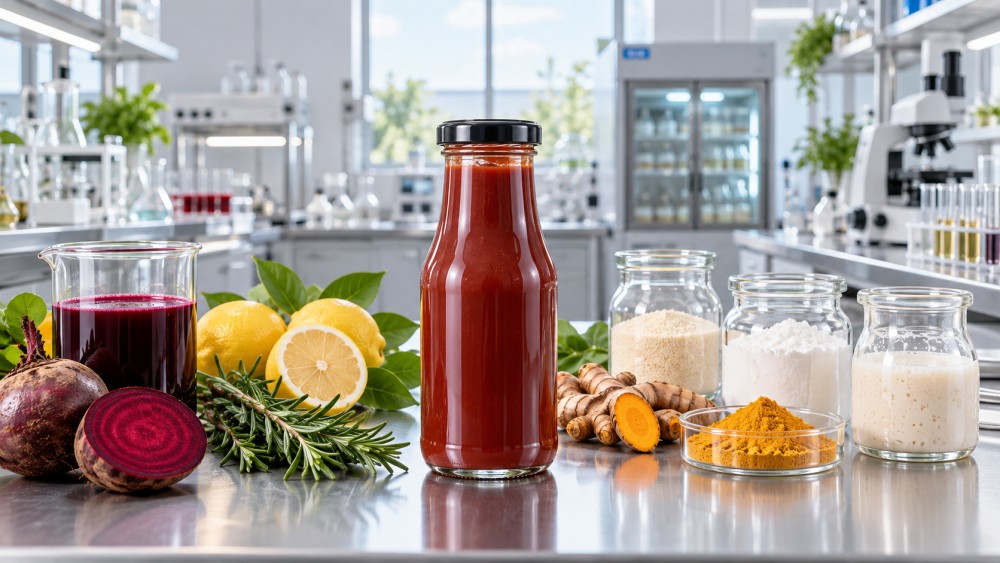
Colorants derived from foods and plants are among the clearest clean-label candidates when the color source can be described in familiar terms. Beetroot concentrates, carrot concentrates, pumpkin preparations, spirulina-derived blue ingredients, paprika extracts, turmeric, safflower, and fruit or vegetable juices may replace some conventional synthetic colors.
“Natural” does not automatically mean easy to use. Plant-based colors can be sensitive to heat, light, oxygen, pH, metal ions, and storage time. Beet-based red systems may perform differently in a neutral bakery filling than in an acidic beverage. Turmeric can be attractive for yellow shades but may fade under light exposure. A supplier’s color sample is therefore not enough: the color should be validated after the actual thermal process, through target shelf life, and in the intended package.
The declaration also matters. A label that says “beetroot juice concentrate” may be more intuitively understood than a technical ingredient name, though the permitted wording depends on the product category and market. Product developers should resist treating color-source familiarity as a substitute for regulatory review.
Acids, juices, and naturally sourced preservation tools
Acidification remains one of the most practical routes to a simpler preservative strategy. Citric acid, lemon juice concentrate, vinegar, acetic acid, lactic acid, and certain fruit-based acidulants can support microbial control, flavor balance, and pH management. These ingredients are especially relevant in sauces, dressings, pickled products, beverages, bakery fillings, and refrigerated prepared foods.
Whether an acid sounds “clean” depends heavily on the label language and brand positioning. Vinegar and lemon juice are usually easy for consumers to recognize. Citric acid has broad familiarity, but some brands may still prefer a food-derived source story where technically and economically feasible. The more important formulation issue is that preservation cannot be assessed by ingredient identity alone. Water activity, pH, heat treatment, hygiene, package oxygen level, cold-chain control, and expected abuse conditions all affect the outcome.
Plant extracts may also be considered where oxidation control or antimicrobial support is needed. Rosemary extract is widely used for antioxidant protection in fats, oils, meat products, snacks, and prepared foods. Green tea extracts and certain spice extracts may have a role in selected systems. Their sensory impact, batch-to-batch variation, allergen status where relevant, and local permission for the intended function require close attention.
Fermentation-derived ingredients
Fermentation has become a useful bridge between functional performance and cleaner ingredient narratives. Cultured sugar, cultured dextrose, fermented flour, vinegar fermentates, and fermentation-derived organic-acid systems may help manufacturers manage spoilage pressure or extend usable shelf life. They are particularly relevant when a conventional preservative declaration does not fit the desired label approach.
These materials should not be treated as automatic replacements for direct preservatives. Their antimicrobial effect can vary with the food matrix, microbial challenge, dosage, and storage temperature. They may also add flavor notes, change dough behavior, or affect product color. A cultured ingredient can be an effective component of a hurdle strategy, but it rarely removes the need for disciplined sanitation, validated thermal processing, or proper temperature control.
Fermentation-derived ingredients also create a communication question. “Fermented” can be a positive and familiar concept in yogurt, sourdough, kimchi-style products, or functional foods. In other categories, consumers may not connect the term with the product. The final declaration should be reviewed alongside front-of-pack claims, since a simple ingredient deck and a confusing claim set can undermine each other.
Hydrocolloids and texture ingredients with recognizable origins
Texture is often where clean-label reformulation becomes difficult. Removing modified starches, phosphates, emulsifiers, or synthetic stabilizer systems can affect viscosity, freeze-thaw stability, moisture retention, suspension, sliceability, and eating quality. Common alternatives include pectin, agar, gelatin, guar gum, locust bean gum, citrus fiber, oat fiber, fruit fibers, rice starch, tapioca starch, and native starches.
Some of these ingredients are highly familiar; others have names that consumers may not immediately recognize. Familiarity is only one factor. Pectin may fit naturally in fruit spreads and confectionery, while citrus fiber may help bind water in sauces or meat alternatives but can introduce texture changes at higher use levels. Native starch can support a simpler declaration, yet it may not withstand the heat, shear, or freeze-thaw cycles managed by a modified starch.
Manufacturers should assess texture systems as a whole. Replacing one stabilizer with three “cleaner” ingredients may improve individual ingredient perception while producing a longer, more complicated label. The better outcome is often a smaller formulation change combined with process adjustments, such as altered homogenization, solids content, heating profile, or packaging format.
Enzymes and processing aids
Enzymes can reduce reliance on certain additives by modifying ingredients during production. Examples include enzymes used in baking, dairy processing, juice clarification, brewing, and protein processing. Their relevance to clean label depends on how they are used, whether they remain active or present in the finished food, and how the applicable market treats processing aids for labeling purposes.
This is an area where assumptions can cause avoidable problems. An enzyme may be described internally as a processing aid, but that does not eliminate the need to examine its source, carrier system, residual components, allergen implications, and market-specific declaration requirements. A processing aid that is technically invisible to the consumer can still affect a clean-label assessment if its use creates questions about production methods or ingredient transparency.
Ingredients that need a more careful clean-label review
Many widely used additives sit in a gray area. Their suitability depends less on a simple natural-versus-synthetic distinction and more on the finished label, market, and product promise.
The lesson is that clean label is not synonymous with “free from all additives.” Foods need functional ingredients for valid reasons: preventing microbial growth, maintaining texture, protecting fats from oxidation, delivering consistent color, and ensuring processing reliability. Removing an additive without preserving its function can shorten shelf life, increase waste, create food-safety risk, or make the product inconsistent from batch to batch.
Three tests before calling an additive clean label
A useful internal review applies three tests at the same time.
- Function test: Does the ingredient provide a necessary, validated function in this specific formulation, process, package, and shelf-life target?
- Transparency test: Can the ingredient be declared in a way that is clear and consistent with the product’s positioning, without relying on vague or misleading language?
- Compliance test: Is the ingredient permitted for the intended use, at the planned level, and under the labeling rules of every target market?
Failure in any one of these tests can weaken the project. A botanical extract may pass consumer perception but fail to provide sufficient shelf-life protection. A technically excellent fermentation ingredient may create an unfamiliar declaration. A familiar ingredient may be permitted in one destination market but subject to a different category rule or naming convention elsewhere.
For international food businesses, a single “global clean-label formula” can be unrealistic. Product composition, additive authorization, label wording, organic rules, flavor definitions, and claims expectations can differ by market. Teams should separate the broader brand standard from the local regulatory label decision. The brand standard may say, for example, that certain artificial colors or direct preservatives will be avoided. The local assessment determines what can legally appear on the ingredient list and which claims are supportable.
Why a shorter ingredient list can be misleading
Ingredient-count reduction is attractive because it is easy to measure and easy to communicate internally. It is not a complete clean-label strategy. Replacing several ingredients with a compound preparation can make the consumer-facing label shorter while leaving sourcing, processing, carrier ingredients, or functional equivalence insufficiently examined.
Likewise, a long label is not automatically a poor label. A product containing fruit preparations, fibers, cultures, spices, starch, pectin, and salt may have more declared ingredients than a highly simplified formula, yet each can be recognizable and purposefully used. Consumer reaction depends on the words used, the product category, the brand’s promise, and the broader context of the package.
Food developers should also consider the trade-offs behind “free-from” decisions. Removing emulsifiers may change aeration or stability in frozen desserts. Removing nitrite from a cured-meat style product raises safety and preservation questions that cannot be answered by swapping in a vegetable powder alone. Replacing a high-performance stabilizer can demand changes to equipment settings, ingredient order of addition, mixing energy, filling temperatures, or distribution conditions. A label decision can therefore become a process-engineering decision.
A practical development sequence for 2026
Start with the finished product claim and the consumer expectation it creates. A premium soup, a children’s snack, a plant-based beverage, and a shelf-stable sauce will not use the same clean-label threshold. Define which ingredients are unacceptable for the brand, which are acceptable with a clear explanation, and which functional outcomes cannot be compromised.
Then map each additive to its job: preservation, oxidation control, color, sweetness, viscosity, emulsification, moisture management, leavening, or process support. This often reveals that an additive is compensating for a formulation or process issue that could be addressed elsewhere. A mild heat-treatment change, higher solids level, adjusted pH, improved barrier packaging, or different distribution temperature may reduce dependence on a controversial ingredient.
Screen alternatives on more than label appearance. Include sensory quality, microbiological stability, shelf-life performance, process tolerance, supply continuity, allergen implications, cost volatility, and declaration language. A clean-label alternative that performs only under ideal production conditions can create far greater risk than the ingredient it replaces.
Finally, review the finished formula rather than approving additives one by one. Consumers encounter the complete ingredient list, not the technical rationale for each component. The strongest clean-label formulations are those in which function, safety, ingredient language, and product expectation remain aligned after scale-up, distribution, and normal shelf-life variation.
In 2026, food additives considered clean label will usually include familiar food-derived colors, acids, fibers, native starches, hydrocolloids, botanical antioxidants, and selected fermentation-derived ingredients. But no additive earns that position solely because it comes from a plant, a culture, or a natural source. It earns it when its origin is credible, its function is necessary, its declaration is clear, and the food still performs safely and consistently in the real supply chain.