




Search
Related News
- 00
0000-00
How to Select Agricultural Irrigation Solutions for Water-Limited Farms - 00
0000-00
How to Select Food Plant Sanitation Equipment for High-Risk Processing Areas - 00
0000-00
Selecting Meat Packaging Technology to Extend Shelf Life and Control Leakage - 00
0000-00
Selecting Secondary Dairy Packaging Systems for Hygienic, High-Speed Distribution - 00
0000-00
How to Design Greenhouse Irrigation Zones for Uniform Watering and Lower Waste
Tags
Does Swine Farm Waste Treatment Meet Current Environmental Rules?




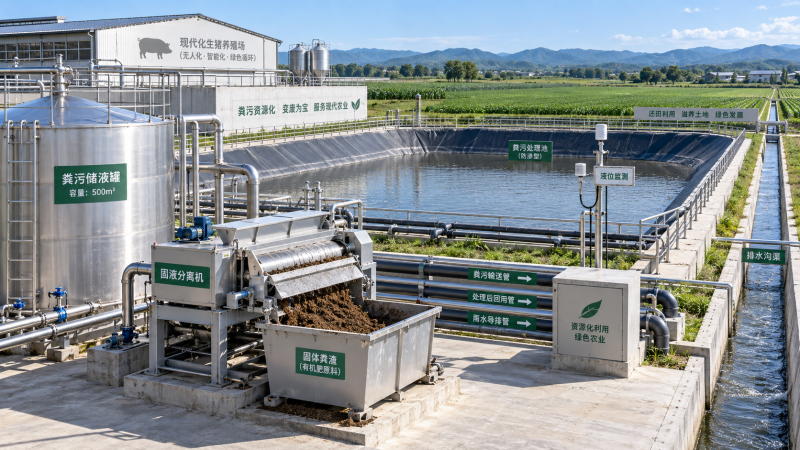
Swine farm waste treatment meets current environmental rules only when the whole manure pathway is controlled, documented, and suited to the site. A lagoon, separator, digester, storage tank, or land-application plan does not establish compliance by itself. The result is determined by how manure is collected, how liquids and solids are managed, whether nutrients are applied at an agronomic rate, how runoff and odors are limited, and whether records demonstrate that the system is performing as intended.
Environmental requirements differ by jurisdiction, permit type, animal inventory, drainage conditions, and proximity to water resources or neighboring properties. Yet most regulatory programs examine the same practical outcomes: preventing uncontrolled discharges, protecting surface water and groundwater, managing nitrogen and phosphorus responsibly, controlling air emissions and odor where required, and maintaining reliable operating records. A treatment system should therefore be evaluated as an operating system rather than as a single piece of equipment.
Compliance begins before treatment
The most important compliance question is often missed: what actually enters the waste stream? Manure volume is influenced by drinking-water losses, washdown practices, cooling systems, feed composition, bedding, rainfall entering collection areas, and leakage from pipes or troughs. A treatment unit designed around manure alone can be overloaded when clean water or stormwater is allowed into pits and channels.
That distinction matters because excess water changes hydraulic loading without reducing nutrient loading. A lagoon or tank may appear to have enough volume on paper, while its usable storage is consumed earlier than expected. High liquid flow can also reduce settling performance, shorten retention time, increase pumping frequency, and make nutrient concentration less predictable. Where a permit limits discharge or requires a defined storage period, poor water separation can turn an otherwise adequate system into a recurring compliance problem.
Collection areas need clear physical boundaries. Roof runoff, yard runoff, and clean drainage should be diverted away from manure handling zones. Channels, pits, transfer lines, and reception points require inspection for cracks, blockages, backflow, and unintended connections. During heavy rainfall, the critical issue is not simply whether water is present; it is whether contaminated water can leave the controlled area through an overflow, drain, culvert, or low point in the site grading.
Nutrients are the central test
Most swine manure contains valuable nitrogen, phosphorus, potassium, organic matter, and micronutrients. Treatment changes the form, concentration, and handling characteristics of these nutrients, but it does not make the nutrient obligation disappear. Separation moves a meaningful share of phosphorus and organic solids into the solid fraction. Biological treatment may reduce readily degradable organic load. Anaerobic digestion produces biogas and changes the manure matrix. None of these steps automatically proves that the remaining liquid or solids can be applied without restriction.
Land application is usually judged against crop demand, soil conditions, field location, timing, and the nutrient content of the material being applied. The common mistake is to use a fixed application rate based on tank volume, pump hours, or past practice. Those measures are operationally convenient but do not show how much nitrogen or phosphorus reached a field.
A defensible nutrient-management approach connects recent manure analysis with soil test information, expected crop uptake, field acreage, and application records. The analysis should reflect the material actually being moved. Samples from a well-mixed liquid pit, a settled lagoon, separated solids, and digestate can produce very different nutrient values. If agitation is incomplete, sampling near the surface can understate solids and phosphorus. If a sample is taken after a dilution event, nitrogen concentration may look low while the total nutrient mass delivered over many loads remains substantial.
Fields close to streams, drainage ditches, wells, sinkholes, tile inlets, or steep slopes need additional attention. A setback distance is only one control. Frozen ground, saturated soil, forecast rainfall, irrigation, and soil compaction can all affect whether nutrients stay in the crop root zone or move with runoff and drainage water. A field may be large enough in acreage but still unsuitable on the intended day because the ground cannot safely receive the material.
Treatment technology must match the failure mode
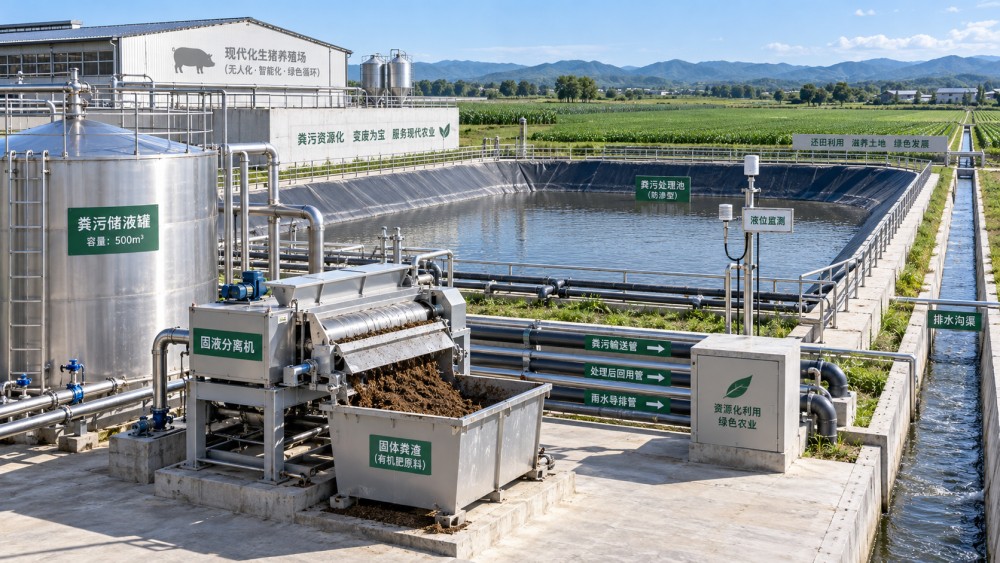
Mechanical separation is useful when solids storage, composting, transport, or phosphorus redistribution is needed. Its performance depends on screen size, screw press condition, polymer use where applicable, feed consistency, and maintenance of wear parts. A separator that operates intermittently or bypasses during peak flow leaves a variable liquid stream and weakens the assumed nutrient split. The separation rate used in planning should be based on actual operating performance, not only the equipment brochure.
Covered storage, anaerobic digestion, and gas capture can reduce odor intensity and methane release when properly designed and operated. However, covers need integrity, condensate management, pressure relief, and safe access arrangements. Digesters require stable feeding, temperature control, mixing appropriate to the substrate, and contingency handling when the unit is offline. A gas system does not excuse a liquid release, an overloaded storage structure, or poor digestate application practices.
Aeration systems can lower odor and organic strength in some wastewater streams, but they introduce energy demand and require reliable oxygen transfer. A unit that appears to be running may still perform poorly if diffusers foul, airflow is insufficient, or solids accumulation changes the basin volume. Aeration is also not a universal answer for ammonia. Nitrogen can be converted, retained, or lost through several pathways, and the environmental significance depends on the treatment sequence and local air and water requirements.
Advanced nutrient-recovery systems can be appropriate where phosphorus removal, ammonia capture, concentrated fertilizer products, or reduced hauling volume is a defined need. Their value is highly site-specific. Chemical addition, pH control, filtration, membrane cleaning, residual streams, storage of recovered material, and laboratory verification create new operating obligations. A recovery process should be assessed against the outlet it produces and the management route for every fraction, including reject water and filter cake.
Storage capacity is a compliance control, not spare inventory
Storage must bridge periods when manure cannot be safely or legally applied. Capacity calculations need to include manure production, washwater, precipitation falling directly on open structures, expected freeboard, sludge accumulation, emergency reserve, and the time needed to repair a pump or arrange transport. Using the nominal volume of a lagoon or tank without subtracting unusable volume produces a false margin.
Freeboard should be visible and measured against a fixed reference point. Informal observations such as “the level looks normal” are unreliable after rainfall, pumping, or agitation. Level sensors can improve oversight, but they do not replace manual verification when sensors foul, lose calibration, or report an unrepresentative location. A simple record of level, weather event, pumping activity, and destination field often reveals emerging storage pressure before an overflow becomes likely.
Structural condition also matters. Berm erosion, rodent damage, liner exposure, leaking valves, corroded fittings, and settlement around concrete structures can create pathways for releases that are not obvious during routine pumping. Inspections should focus on changes over time rather than only on dramatic failures. Small wet areas, unexplained drops in liquid level, persistent seepage, or vegetation changes around a structure deserve investigation.
Odor and air emissions require source-specific control
Odor complaints do not always indicate the same underlying problem. Fresh manure odor from a reception area, anaerobic odor from long retention, ammonia odor from ventilation exhaust, and hydrogen sulfide released during agitation have different causes and controls. Treating all odor as a ventilation issue can lead to ineffective investment.
House ventilation, pit management, feed formulation, solids removal frequency, covered storage, biofilters, scrubbers, and application timing can each affect emissions, but their suitability depends on the source. A biofilter attached to an exhaust fan will not control odor from an uncovered loading area. A storage cover may reduce emissions from the surface while requiring careful management of displaced gas and access safety. During agitation, hazardous gases can rise quickly; worker safety procedures and exclusion controls are inseparable from environmental management.
Air-related compliance often relies on operating evidence as well as measured results. Fan maintenance, cover inspections, odor-control media condition, chemical-use logs, complaint response records, and documented corrective actions can demonstrate whether controls were active when needed. A monitor is useful only when its location, calibration, alarm response, and data review process fit the parameter being monitored.
Records reveal whether the system is real
A waste treatment plan is credible when written records match physical conditions. Useful documentation includes manure and soil analyses, storage levels, transfer dates, field maps, weather notes, application rates, equipment calibration, maintenance work, inspection findings, and corrective actions after unusual events. These records should be internally consistent. For example, reported application volume should align with storage-level changes, tanker capacity, pump flow estimates, and field area.
Calibration is frequently underestimated. A flow meter can drift, a spreader can discharge unevenly, and a pump-hour estimate changes when hose length, elevation, impeller wear, or solids content changes. Verifying actual output under normal operating conditions is more meaningful than relying on a nameplate capacity. Where application is injection-based, injector depth, spacing, soil disturbance, and line pressure affect both nutrient placement and odor performance.
Contracted hauling or land application adds a coordination point that should be documented clearly. The destination, material type, volume, date, field conditions, and receiving party’s acceptance need to be traceable. Moving manure off site shifts its location; it does not remove responsibility for knowing where it went or whether the receiving arrangement fits applicable nutrient controls.
How to judge the present condition
The practical answer to whether a swine farm meets current environmental rules is rarely found in a single permit clause or laboratory result. Start with the highest-consequence pathways: an overflow route, a field application near water, insufficient storage before wet weather, a transfer line that leaks, or an odor-control device that has not been maintained. Then compare the written plan with actual manure volumes, current animal numbers, treatment uptime, field availability, and recent nutrient analyses.
Compliance is strongest when treatment capacity, storage capacity, nutrient planning, runoff control, emissions controls, and records support the same operating reality. When one part changes, such as herd size, feed program, water use, separator performance, or available acreage, the rest of the system should be reviewed rather than assumed to remain adequate.