




Search
Related News
- 00
0000-00
How to Select Agricultural Irrigation Solutions for Water-Limited Farms - 00
0000-00
How to Select Food Plant Sanitation Equipment for High-Risk Processing Areas - 00
0000-00
Selecting Meat Packaging Technology to Extend Shelf Life and Control Leakage - 00
0000-00
Selecting Secondary Dairy Packaging Systems for Hygienic, High-Speed Distribution - 00
0000-00
How to Design Greenhouse Irrigation Zones for Uniform Watering and Lower Waste
Tags
- food engineering
- inspection equipment
- cold storage
- laboratory testing
- traceability
- compliance
- plant extracts
- functional ingredients
- agricultural inputs
- food manufacturing
- cold-chain infrastructure
- process hygiene
- plant-based food
- packaging equipment
- alternative protein
- hygienic design
- plant-based processing
- plant-based food processing
- plant-based food manufacturing
- Does plant-based food processing require different hygiene protocols than meat
Do Plant-Based Foods Require Different Hygiene Protocols Than Meat?




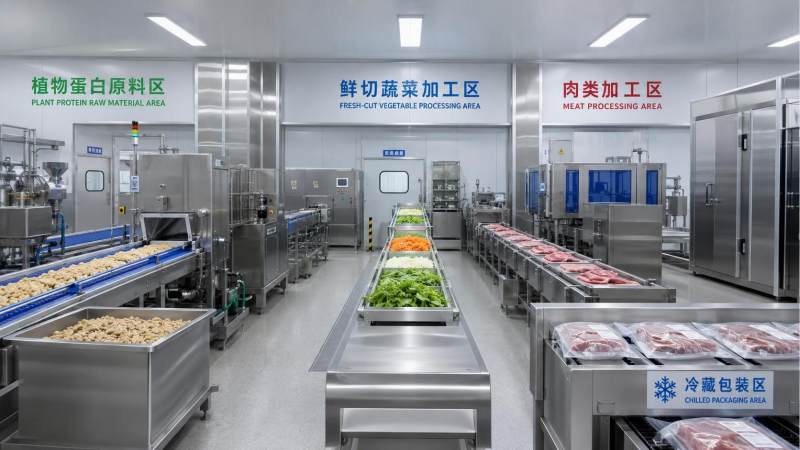
Do Plant-Based Foods Require Different Hygiene Protocols Than Meat?
Does plant-based food processing require different hygiene protocols than meat? The practical answer is yes—but not because plant-based foods are automatically lower risk. They require a different risk assessment, and in many facilities they need equally disciplined hygiene systems. Meat processors often focus heavily on hazards associated with raw animal materials, while plant-based operations may need to manage a broader mix of risks linked to agricultural inputs, allergens, water activity, post-process contamination, fermentation, and chilled ready-to-eat handling.
The common mistake is to frame the comparison as “meat is high risk, plants are clean.” That assumption can create blind spots. Fresh vegetables can carry soil, irrigation-water residues, and environmental microorganisms. Dry ingredients such as flours, starches, pulses, spices, nuts, and protein powders can introduce hazards that survive in low-moisture conditions. Plant-based burgers, dairy alternatives, sauces, dips, and refrigerated meals may also have complex formulations that support microbial growth after hydration, mixing, or opening.
For manufacturers, the better question is not whether one sector needs “more” hygiene than the other. It is whether the hygiene plan matches the product’s ingredients, process flow, intended use, shelf-life conditions, and consumer handling assumptions.
The Core Difference: Hazard Profiles Change Across the Process
Raw meat facilities commonly design sanitation and zoning around controlling cross-contamination from animal tissue, raw juices, and pathogens associated with livestock and poultry. Segregation between raw and cooked areas is usually central. Equipment design must support rapid removal of organic residues, and sanitation must address drains, conveyors, slicers, handling tools, employee movement, and high-touch surfaces.
Plant-based processing may use many of the same hygiene foundations: hygienic design, cleaning validation, pest control, personnel practices, supplier approval, traceability, environmental monitoring, and documented corrective action. Yet the emphasis shifts according to the product. A dry extruded snack, a chilled oat-based beverage, a fermented alternative protein ingredient, and a washed leafy-green salad are all “plant-based,” but they do not belong in the same hygiene category.
A low-moisture powder operation may prioritize dust control, dry-cleaning methods, ingredient segregation, and prevention of moisture introduction into equipment. A chilled hummus or plant-based dip line may require close attention to wet cleaning, post-process exposure, refrigeration discipline, filling hygiene, and shelf-life validation. A meat analogue made from hydrated proteins may be closer operationally to a conventional prepared-food process than to a dry ingredient plant.
In other words, “plant-based” is a market category, not a complete food safety classification.
Raw Materials Can Introduce Risks That Are Easy to Underestimate
Meat processors generally recognize raw materials as a major source of contamination and build receiving controls accordingly. Plant-based businesses should apply the same discipline. Pulses, cereals, vegetables, herbs, oils, plant extracts, cultures, and functional ingredients may arrive from different geographies and supply chains, each with distinct storage, handling, and microbiological considerations.
Agricultural materials can be exposed to soil, water, wildlife, harvesting equipment, drying yards, storage environments, and multiple handling points before they reach a factory. This does not mean every ingredient is unsafe. It means supplier specifications and verification activities should be based on realistic sourcing conditions rather than on a “natural equals low-risk” assumption.
For fresh produce, washing systems deserve particular scrutiny. Water quality, recirculation practices, sanitizer management where permitted and appropriate, wash-bath turnover, equipment cleaning, and separation of incoming produce from finished product all affect the outcome. Washing can reduce surface contamination, but it is not a universal kill step. Once produce is cut, moisture release and increased surface area can further change shelf-life behavior.
Dry ingredients present a different challenge. Their low water activity may limit growth, but it does not guarantee the absence of microorganisms. A dry processing environment also changes cleaning strategy: excessive water can create niches, promote residue buildup, or lead to extended drying periods. Plants handling powders often need a carefully managed combination of vacuuming, controlled dry cleaning, planned wet-cleaning intervals, and verification that the equipment is fully dry before production resumes.
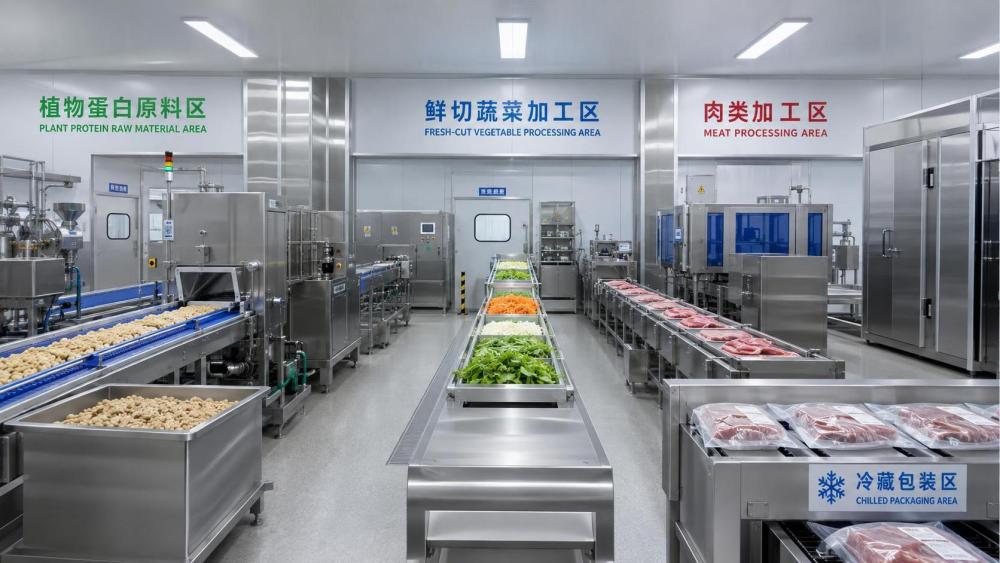
Allergen Control Is Often More Complex Than the Meat Comparison Suggests
One major distinction in plant-based food manufacturing is allergen management. Many products rely on soy, wheat, pea, nuts, sesame, oat, or other ingredients that may create allergen-control obligations depending on the formula and destination market. A factory making several plant-based products can still have a demanding allergen profile, particularly when it shares equipment across products or processes both allergen-containing and allergen-free formulations.
This affects more than labeling. It influences production scheduling, storage layout, utensil identification, rework rules, changeover design, cleaning validation, and finished-product release. A sanitation procedure that removes visible food residue may not necessarily demonstrate adequate allergen removal. Operations need to determine what evidence is appropriate for their own product risk, cleaning method, equipment geometry, and market requirements.
The issue becomes especially important when a manufacturer positions products as free from a specific allergen, or when contract manufacturing introduces frequent formulation changes. In those cases, a technically clean line can still create a commercial and compliance problem if scheduling and documentation are weak.
Ready-to-Eat Products Need Stronger Post-Process Discipline
The most important hygiene dividing line is often not plant versus meat, but raw versus ready-to-eat. Products that receive a validated heat treatment and are then exposed to the environment before packaging require close control of post-process contamination. This applies to cooked meat products and to plant-based burgers, vegan cheeses, prepared meals, refrigerated sauces, beverage bases, and other foods consumed without further cooking.
A thermal step can reduce a defined hazard only if time, temperature, product characteristics, equipment performance, and process uniformity are understood. It does not protect food from contamination introduced during cooling, transfer, slicing, filling, or packaging. That is why hygienic zoning, airflow management, personnel controls, cleanable equipment, and environmental monitoring should be considered as a connected system rather than separate quality tasks.
Environmental monitoring should be risk-based. Sampling plans typically need to consider food-contact surfaces, adjacent equipment areas, drains, floors, cleaning tools, and locations where water, product debris, or traffic patterns can create persistent contamination sites. The right design depends on the facility and product; simply copying a swab schedule from a meat plant or another plant-based factory is rarely sufficient.
Cleaning Is Not the Same as Validation
Food plants often describe sanitation programs in terms of chemicals, frequencies, and standard operating procedures. Those elements matter, but they are only the starting point. A credible hygiene system also asks whether the procedure works under actual production conditions. Are difficult surfaces accessible? Does a plant protein gel adhere inside valves or dead ends? Does a high-fat formulation leave a film that normal rinsing does not remove? Are cleaning personnel able to dismantle and reassemble equipment consistently?
Plant-based formulations can complicate these questions. Starches, hydrocolloids, oils, protein concentrates, fibers, and emulsions can behave very differently during heating and cleaning. A formula change may alter deposits on a heat exchanger, filler, mixer, extruder, or conveyor. Product development and sanitation teams therefore need to communicate early, rather than treating hygiene as a final check before launch.
This is also where equipment selection matters. Hygienic design is not a premium feature added after the fact. Drainability, surface finish, accessibility, seal design, clean-in-place capability, sensor placement, and the ability to inspect critical areas affect both cleaning time and confidence in the result. A line that is difficult to inspect will eventually be difficult to manage.
Shared Facilities Require a More Careful Decision Than “Separate or Not”
Some manufacturers process meat and plant-based products in the same building, while others use shared cold rooms, packaging equipment, utilities, or staff. Separation can reduce risk, but the appropriate level of separation depends on product type, process stage, allergen profile, labeling claims, cleaning capability, and traffic patterns. A shared warehouse for sealed ambient ingredients presents a different challenge from a shared high-care slicing or packing room.
Where shared processing is considered, decision-makers should map material, people, waste, packaging, rework, tools, and air movement—not merely the main production line. The overlooked routes are often the ones that undermine a well-written procedure. Color-coded tools may help operational discipline, but they cannot compensate for poor zoning, rushed changeovers, inadequate cleaning access, or ambiguous accountability.
There is also a brand issue. A product marketed as plant-based may be acceptable to one customer segment but unacceptable to another if it is made on shared equipment. That question involves commercial positioning and customer expectations as well as food safety. Procurement, quality, operations, and commercial teams should resolve it before production commitments are made.
A Better Way to Build the Hygiene Plan
The most reliable approach is to start with the actual process map. Identify every raw material, each water addition, heat or non-heat treatment, transfer point, cooling step, packaging operation, and expected storage condition. Then examine where hazards may enter, survive, grow, or be transferred. This process should include normal production as well as changeovers, shutdowns, maintenance, rework, deviations, and cleaning periods.
Key questions include:
- Is the product sold raw, cooked, pasteurized, fermented, frozen, shelf-stable, or chilled ready to eat?
- Which ingredients create microbiological, allergen, foreign-material, or chemical-control concerns?
- Does the formulation support microbial growth after mixing or opening?
- Are equipment surfaces fully accessible and suitable for the selected cleaning method?
- What evidence is needed to verify cleaning, environmental control, and shelf-life assumptions?
- Do customer specifications or destination-market rules require additional controls or documentation?
This framework avoids a false choice between meat-style and plant-style hygiene. It treats sanitation as an operational control system tied to the product and the facility.
The Business Implication for Agri-Food Projects
For equipment suppliers, ingredient companies, processors, and investors, hygiene planning should be considered early in project development. Decisions about factory layout, water systems, drainage, cold storage, packaging format, automation, inspection equipment, and cleaning access can shape future risk long before commercial production begins. Retrofitting after a shelf-life failure, recurring environmental finding, or customer audit concern is usually more disruptive than designing appropriately at the outset.
Global AgriFood & Bioscience Intelligence Alliance (AFBN) approaches these questions across the wider agri-food value chain: from production environments and ingredient sourcing to food engineering, cold-chain infrastructure, laboratory testing, fermentation applications, packaging, and inspection systems. That wider view is useful because hygiene outcomes rarely depend on one machine or one cleaning chemical. They depend on how raw materials, process design, people, verification methods, and supply-chain conditions work together.
Plant-based foods do not need weaker hygiene protocols than meat, and they do not always need entirely separate ones. They need controls that fit their real risk profile. Before selecting equipment, approving a co-manufacturer, or scaling a new formulation, teams should confirm the intended product category, process parameters, cleaning method, allergen strategy, environmental monitoring approach, and storage conditions. That is where a defensible hygiene program begins.