




Search
Related News
- 00
0000-00
How to Select Agricultural Irrigation Solutions for Water-Limited Farms - 00
0000-00
How to Select Food Plant Sanitation Equipment for High-Risk Processing Areas - 00
0000-00
Selecting Meat Packaging Technology to Extend Shelf Life and Control Leakage - 00
0000-00
Selecting Secondary Dairy Packaging Systems for Hygienic, High-Speed Distribution - 00
0000-00
How to Design Greenhouse Irrigation Zones for Uniform Watering and Lower Waste
Dairy Farming Trends 2026: Automation, Yield, and Compliance




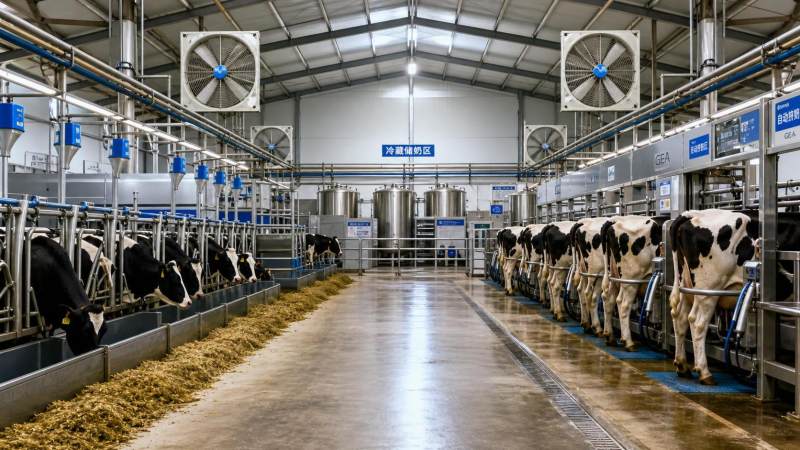
Dairy farming in 2026 is no longer defined only by herd size or milk volume. It is increasingly shaped by automation, tighter compliance, and the search for more predictable biological performance across the broader agri-food chain.
That shift matters because milk production now connects directly with processing efficiency, traceability, food safety, labor planning, energy use, and investment risk. What happens in the barn affects the plant, the cold chain, and the final product.
For that reason, dairy farming is becoming a systems decision rather than a single-farm decision. Operators, investors, and supply chain planners increasingly evaluate it through data quality, compliance readiness, and long-term operating resilience.
Why dairy farming is getting more strategic
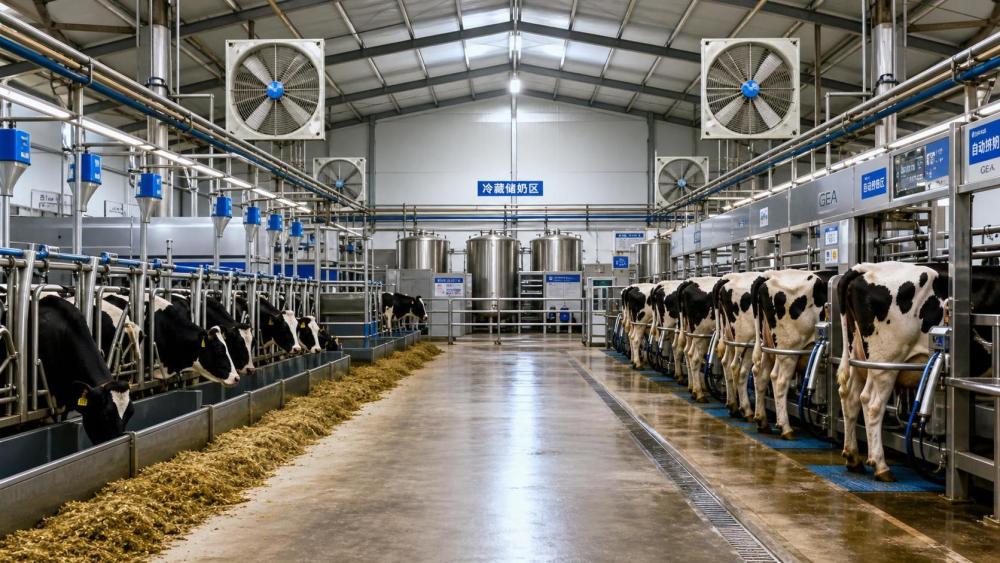
The dairy sector sits between biological variability and industrial expectations. Cows do not produce like machines, yet processors need stable raw milk quality, reliable delivery schedules, and tighter control over contamination risks.
This is why dairy farming trends now attract attention beyond livestock circles. Feed systems, milking technology, barn ventilation, animal health monitoring, manure handling, and cleaning protocols all influence downstream business performance.
In practical terms, modern dairy farming supports more than milk output. It supports consistency for cheese, yogurt, infant nutrition, powdered milk, and ingredient manufacturing, where composition and hygiene standards are commercially critical.
AFBN’s broader industry lens is useful here because dairy operations are linked to equipment benchmarking, food engineering, bioscience inputs, laboratory testing, and cold-chain reliability. The farm is only one part of the value equation.
Automation is moving from optional to operational
Automation in dairy farming used to signal scale. In 2026, it is increasingly a response to labor pressure, repeatability demands, and the need to make faster management decisions from real-time data.
The most visible change remains automated milking, but the larger story is wider integration. Sensors, feeders, cow activity tracking, environmental controls, and herd software now work best when connected rather than purchased separately.
That integration helps reduce blind spots. When feeding behavior, rumination, milk conductivity, barn temperature, and reproduction signals are linked, operators can detect problems earlier and respond before yield drops become expensive.
Where automation creates measurable value
Not every technology adds equal value. The strongest results usually come from systems that improve daily decision quality and reduce variation in routine tasks.
- Automated milking improves milking consistency, captures cow-level data, and can support flexible labor allocation.
- Precision feeding systems help control ration delivery, dry matter consistency, and feed conversion efficiency.
- Environmental controls support cow comfort through ventilation, cooling, and humidity management.
- Health monitoring tools help identify lameness, mastitis risk, and metabolic stress earlier.
- Automated cleaning and manure handling reduce hygiene variability and biosecurity exposure.
The key point is that automation should serve herd outcomes, not just equipment modernization. A disconnected digital layer can create more dashboards without improving dairy farming performance on the ground.
Yield is being redefined around stability
In many markets, the conversation has shifted from chasing maximum liters to protecting consistent yield under tighter margins. Stable production is often more valuable than peak production followed by health setbacks or quality losses.
That makes dairy farming more dependent on balanced inputs. Genetics still matter, but so do feed quality, water availability, transition management, heat stress control, hoof care, and dry cow protocols.
Yield also has to be read alongside milk composition. Butterfat, protein, somatic cell counts, and bacterial load affect how much value processors can extract. Volume alone no longer tells the full business story.
What drives stable herd performance
From an investment perspective, the most resilient dairy farming models are those that combine biological management with process discipline. That approach usually creates fewer surprises across supply contracts and processing schedules.
Compliance is now part of operational design
Compliance in dairy farming is becoming broader and more continuous. It no longer refers only to passing inspections. It increasingly involves daily record integrity, traceability, welfare standards, residue control, and environmental accountability.
Different markets apply different rules, yet the direction is clear. Buyers want better proof of animal care, safer milk handling, transparent medicine use, and more defensible sustainability claims.
This affects facility design and equipment selection. Milking lines, storage tanks, wash systems, ventilation layouts, waste treatment, and digital logs all influence whether a site can maintain compliance without adding constant manual correction.
The areas under the closest review
- Milk hygiene records and cleaning verification.
- Antibiotic use, withdrawal tracking, and residue prevention.
- Animal welfare indicators, including housing and mobility.
- Manure management, runoff control, and odor mitigation.
- Digital traceability from herd events to milk shipment.
When these areas are handled well, compliance becomes less of a reactive burden. It turns into a business asset that supports processor confidence, export readiness, and lower disruption risk.
How dairy farming links to the wider agri-food system
One reason dairy farming deserves closer attention is its direct connection to industrial food performance. Raw milk variability affects standardization, fermentation behavior, shelf life, and factory planning.
This is where AFBN’s cross-sector perspective becomes relevant. Dairy decisions are not isolated from food processing equipment, cold-chain design, quality inspection, laboratory testing, or ingredient strategy.
For example, a farm-level improvement in udder health may reduce bacterial load and processing losses. A stronger traceability system may support certification demands. Better cooling performance may protect both compliance and product value.
In other words, dairy farming trends in 2026 should be read across the whole supply chain, from barn conditions to packaged dairy products. That broader view often leads to better capital decisions.
What to evaluate before investing
The biggest mistake in dairy farming investment is treating technology as a standalone purchase. Equipment performs differently depending on herd flow, labor routines, building design, maintenance discipline, and data usability.
A practical review usually starts with operational bottlenecks rather than catalog features. The goal is to understand where instability begins and which intervention changes outcomes most effectively.
Useful decision criteria
- Check whether automation tools integrate with herd records and milk quality systems.
- Compare labor savings against maintenance complexity and training requirements.
- Review how the system supports hygiene verification and audit readiness.
- Measure value through yield stability, milk solids, and health outcomes, not headline output alone.
- Assess expansion flexibility, especially for cooling, manure handling, and data architecture.
This type of benchmarking is increasingly important in global livestock operations. It helps separate technologies that look advanced from those that actually improve dairy farming economics over time.
The next step is better comparison, not faster spending
The direction of dairy farming in 2026 is clear: more automation, more scrutiny, and more emphasis on repeatable yield. The harder question is how to translate those trends into site-specific decisions that hold up commercially.
A useful starting point is to map the operation as a connected system. Look at herd health, feeding, milking, ventilation, milk cooling, waste handling, and traceability as linked drivers rather than separate cost centers.
From there, compare technologies and suppliers against measurable operating goals, compliance demands, and downstream processing needs. That approach creates a stronger basis for investment than chasing isolated equipment upgrades.
As dairy farming becomes more integrated with food safety, bioscience, and industrial efficiency, the most valuable decisions will come from structured evaluation, not assumptions. Clear benchmarks and practical data remain the best guide for what to do next.