




Search
Related News
- 00
0000-00
Animal Nutrition Premix: How to Choose a Formula for Livestock - 00
0000-00
USDA Cuts US Corn Output and Stocks, Raises Soybean Yield in November WASDE - 00
0000-00
Choosing Dairy Farm Systems: Milking, Feeding, and Herd Management - 00
0000-00
Rabobank: Climate Change and Heat Stress Threaten European Dairy Competitiveness - 00
0000-00
Planning Feeder and Drinker Layouts in a 1,000-Broiler House
Galvanized Animal Waste Treatment Equipment: When Is Stainless Steel Better?




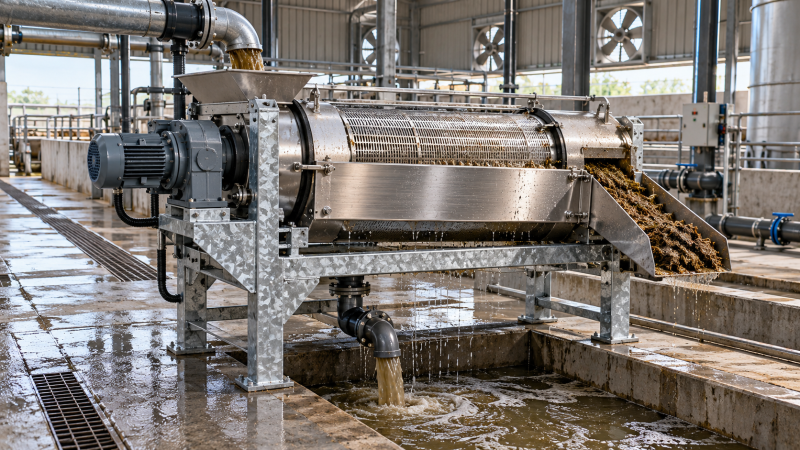
Choosing galvanized animal waste treatment equipment can lower the initial purchase cost, but the saving only matters if the material survives its assigned duty. A support frame above a manure separator faces a different environment from a submerged screen, a splash-zone chute, or a housing cleaned daily with disinfectant. Treating them as one material-selection problem often leads to unnecessary spending—or premature replacement.
For technical evaluators, the decision turns on manure chemistry, chloride exposure, cleaning procedures, abrasion, and the consequences of failure. Stainless steel becomes more attractive when these conditions threaten zinc coating life or make maintenance difficult. However, stainless steel also needs the right grade, fabrication quality, and drainage design. The useful question is not “Which metal is better?” but “Which material is reliable in each exposure zone?”
Start with the exposure map, not the equipment label
“Animal waste treatment” covers reception pits, conveyors, screw presses, screens, pumps, composting systems, digestate handling, and supporting structures. Even within one machine, the environment can change over a few centimeters.
A galvanized frame may remain mostly dry while its lower connections collect slurry. A stainless screen may resist the liquid phase yet experience rapid wear from sand bedding. The underside of a cover may receive more aggressive condensate than an adjacent, regularly rinsed surface.
Before comparing quotations, divide the installation into practical zones:
- Dry structural areas: platforms, guards, and supports protected from manure, condensation, and washdown.
- Splash and wet–dry areas: discharge chutes, tank rims, fasteners, and separator frames where deposits accumulate.
- Continuously wetted areas: wetted housings, screens, pipework, and submerged components.
- Abrasive contact areas: screw flights, scraper tracks, elbows, and grit-handling sections.
- Chemically cleaned areas: surfaces exposed to detergents, descalers, disinfectants, or sanitation chemicals.
Identify sheltered crevices and deposit traps within every zone. These details often explain why equipment with an apparently suitable material specification still develops localized failures.
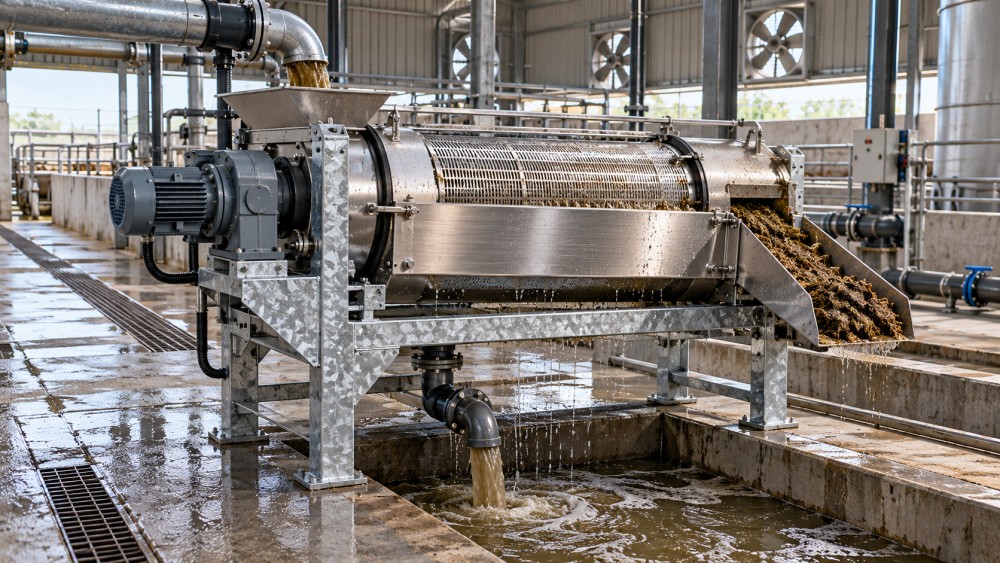
Where galvanized animal waste treatment equipment remains practical
Galvanized steel protects its carbon-steel substrate through a zinc coating that provides both a barrier and sacrificial protection. Hot-dip galvanizing after fabrication can protect complex steelwork, including accessible internal surfaces, provided the design allows proper venting and drainage.
It is often a reasonable choice for accessible structural components in relatively mild atmospheric service. On a livestock waste-handling installation, that may include elevated supports, external walkways, or guards outside regular splash and washdown zones. The financial case strengthens when inspection is easy and repairs do not interrupt the treatment process.
However, “galvanized” is not a complete specification. Hot-dip galvanized fabrications, continuously galvanized sheet, and electroplated parts can have substantially different coating characteristics. Welding, cutting, drilling, and field modifications also affect protection.
Ask suppliers to identify the galvanizing process, applicable coating standard, specified coating thickness, inspection method, and repair procedure. ISO 1461 or ASTM A123/A123M may be relevant to hot-dip galvanized fabricated steel, depending on the procurement jurisdiction and component type. Compliance establishes coating requirements; it does not establish suitability for a particular manure stream.
Galvanizing becomes a weaker proposition when the coating is repeatedly dissolved, worn away, or kept under aggressive deposits. A thicker coating provides more zinc reserve, but it cannot compensate indefinitely for incompatible chemistry or continuous abrasion.
The operating conditions that shift the decision toward stainless steel
Variable chemistry and aggressive cleaning
Manure is not a standardized process fluid. Animal diet, bedding, dilution water, storage time, biological activity, and added chemicals all influence its behavior. A single pH reading from fresh slurry may not represent an aged deposit, a fermenting pocket, or condensate above a tank.
Zinc generally performs poorly in strongly acidic or strongly alkaline environments. Organic acids generated during decomposition and incompatible cleaning solutions can therefore change the suitability of galvanized surfaces. Temperature, aeration, and dissolved species also matter; pH alone is not a reliable acceptance criterion.
Stainless steel often offers a stronger option where cleaning is frequent or chemically demanding, but the cleaning procedure must still match the alloy. Chloride-bearing disinfectants, particularly hypochlorite products used at excessive concentration, temperature, or contact time, can attack stainless steel. “Washdown resistant” should describe a verified operating procedure, not an assumption.
Chlorides, deposits, and wet–dry cycling
Chlorides may enter through water supplies, coastal exposure, feed-related salts, or cleaning products. Evaporation can concentrate them at splash lines and beneath deposits, making local exposure more severe than a bulk-liquid sample suggests.
For stainless steel, this creates a risk of pitting and crevice corrosion. Grade 316L generally provides better resistance to these mechanisms than 304L because of its molybdenum content, but neither grade is immune. Warm, chloride-rich service with stagnant crevices may require a more resistant alloy or a different material system.
Galvanized surfaces also need evaluation under these conditions. Persistent moisture, salts, and deposits can accelerate coating loss. Assess actual surface conditions rather than relying solely on the average chloride concentration in the incoming waste.
Condensation and corrosive atmospheres
Enclosed manure handling and anaerobic treatment areas can contain hydrogen sulfide, ammonia, high humidity, and condensate. Their effects depend on concentration, moisture, temperature, and associated chemistry. In some wastewater headspaces, biological oxidation of hydrogen sulfide can create highly acidic surface conditions.
Neither ordinary galvanizing nor standard stainless grades should be selected for such locations from a generic corrosion chart alone. Severe headspace exposure may justify specialist assessment of higher alloys, linings, nonmetallic materials, or isolation of structural steel from the atmosphere.
Abrasion that continually removes protection
Sand bedding, grit, and entrained mineral particles can strip zinc from contact surfaces. Once wear exposes the substrate over a substantial area, the remaining coating cannot provide unlimited protection.
Stainless steel avoids reliance on a zinc layer, but it is not automatically the best wear material. Screw flights and scraper edges may need replaceable wear parts, suitable hardfacing, abrasion-resistant alloys, or liners. Separate the corrosion problem from the wear problem before specifying an entire assembly in stainless steel.
Use a component-level comparison
A mixed-material system is often more rational than an all-galvanized or all-stainless purchase. The following comparison is a screening tool, not a substitute for service-specific assessment.
Mixed construction introduces interface risks. Stainless steel in electrical contact with galvanized steel can promote galvanic attack on zinc when an electrolyte is present. A large stainless surface connected to a small galvanized area is particularly unfavorable. Assess area ratios, drainage, electrical isolation, and connection details rather than simply upgrading individual bolts.
Specify stainless steel beyond “304 or 316”
A stainless quotation should identify the grade of each relevant component, including wetted internals, shafts, fasteners, and weld consumables. An assembly advertised as stainless steel may still contain lower-resistance parts at its most vulnerable points.
For welded assemblies, low-carbon grades such as 304L and 316L help reduce sensitization risk associated with welding. They do not eliminate chloride attack or poor fabrication practices. Weld heat tint, rough joints, embedded carbon-steel contamination, and narrow crevices can undermine otherwise suitable material selection.
Specify appropriate weld cleaning, heat-tint removal, and surface treatment. Passivation is not a substitute for removing heavy oxide scale or correcting defective welds. Drainable geometry, smooth transitions, and access for deposit removal frequently matter more than choosing an unnecessarily polished finish.
Where duplex or higher-alloy stainless steel is proposed, verify both the corrosion justification and the fabricator’s capability. More resistant material does not remove the need for controlled welding and inspection.
Compare lifecycle cost around the maintenance event
The practical cost of corrosion rarely ends with the replacement part. A failed screen housing may require shutdown, temporary waste storage, lifting equipment, cleaning, contractor access, and recommissioning. During peak livestock production, those disruptions can outweigh the original material saving.
Compare bids over a common evaluation period using:
- Installed purchase cost, including interfaces and supports.
- Inspection, cleaning, coating repair, and planned maintenance.
- Wear-part and corrosion-related replacement costs.
- Downtime, temporary handling, labor, and disposal requirements.
- Expected residual value and uncertainty in service-life assumptions.
Avoid assigning a universal lifespan to galvanized or stainless equipment. Instead, test several credible scenarios. If galvanized construction remains less expensive even with earlier repair, it may be defensible. If one inaccessible corrosion failure removes the saving, stainless steel or another corrosion-resistant system deserves closer consideration.
Keep wear-related replacements separate in the calculation. A stainless screw that still needs frequent renewal because of grit may not deliver the maintenance reduction assumed in a corrosion-only comparison.
What to request before approving the material schedule
A useful supplier discussion starts with representative operating data, including seasonal variation and upset conditions. Provide liquid temperature, pH range, chloride information where available, solids content, bedding type, cleaning chemicals, dosing instructions, and washdown frequency. Identify stagnant periods and whether equipment is emptied between runs.
Then request evidence tied to the proposed duty:
- A component-level material schedule: grades, coating systems, wear surfaces, and connection details.
- Comparable service references: similar manure composition, cleaning regime, temperature, and operating pattern—not merely the same animal species.
- Fabrication and inspection requirements: coating verification, material traceability where needed, weld treatment, and acceptance criteria.
- Maintenance access: how deposits are removed, hidden surfaces inspected, and damaged components replaced.
- Clear operating limits: chemical compatibility, cleaning restrictions, exclusions, and warranty conditions.
Where uncertainty remains high, representative exposure testing can support the decision. Include relevant welds, crevices, deposits, or abrasive conditions where practicable. Short-term coupons may help compare materials, but they should not be converted directly into confident service-life predictions.
The decision: spend where exposure and failure consequences justify it
Galvanized animal waste treatment equipment remains a credible option for suitably mild, accessible duties—especially structural areas kept away from persistent wetting and aggressive cleaning. Stainless steel becomes more compelling for repeatedly washed surfaces, corrosive wetted components, deposit-prone zones, and parts whose replacement would interrupt essential waste handling.
The strongest specification is rarely “stainless everywhere.” It assigns materials by exposure, verifies grade and fabrication quality, separates wear from corrosion, and accounts for maintenance disruption. That approach protects the budget without asking a low-cost coating—or a stainless label—to do more than the operating conditions allow.