




Search
Related News
- 00
0000-00
How to Select Agricultural Irrigation Solutions for Water-Limited Farms - 00
0000-00
How to Select Food Plant Sanitation Equipment for High-Risk Processing Areas - 00
0000-00
Selecting Meat Packaging Technology to Extend Shelf Life and Control Leakage - 00
0000-00
Selecting Secondary Dairy Packaging Systems for Hygienic, High-Speed Distribution - 00
0000-00
How to Design Greenhouse Irrigation Zones for Uniform Watering and Lower Waste
How can poultry farms reduce biosecurity risk during daily operations?




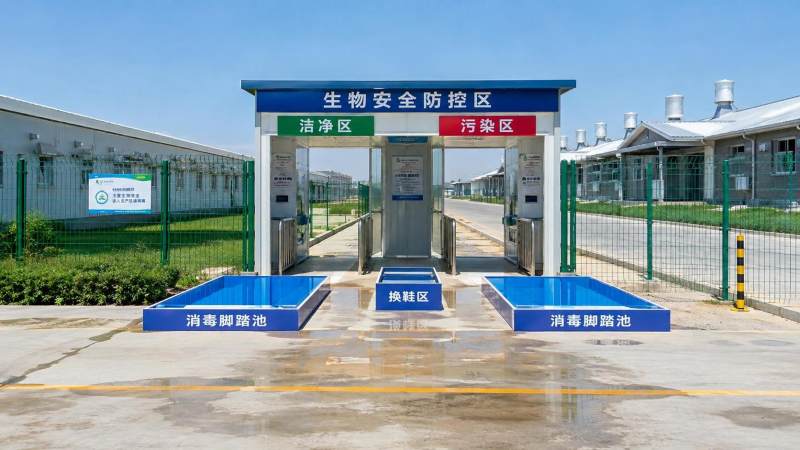
Daily biosecurity is strongest when routine work follows a deliberate order: begin with the youngest or healthiest flock, keep clean and dirty activities separate, and prevent people, vehicles, tools, water, feed, and birds from becoming untracked links between areas. A locked gate or disinfectant mat alone does not control biosecurity risk if the same boots enter several houses, a repair tool moves from a mortality area to a feed room, or a delivery driver crosses the farm boundary without a defined route.
The practical objective is to reduce opportunities for pathogens to enter the premises and to contain exposure quickly when an abnormal event occurs. That requires routines that are easy to perform correctly under normal work pressure. Procedures that depend on memory, improvised supplies, or a single person being present tend to fail at the busiest times.
Make the farm boundary meaningful
A biosecure site needs a visible transition between outside activity and poultry areas. The boundary may include a gate, perimeter fencing, controlled parking, marked walkways, and designated service points. Its value comes from how it changes movement. Visitors, service personnel, contractors, and delivery drivers should not be able to choose their own route through the site.
Separate the farm into practical zones. The outer zone includes public access, visitor parking, and vehicle turning areas. The controlled zone includes houses, feed storage, egg handling areas, and internal roads. Within each house, create a further line between the entrance area and the bird space. The exact layout varies with the site, but each boundary should have a clear purpose: stop contamination from travelling inward and stop material from one flock from travelling to another.
A line on the ground is not enough if clean and dirty traffic still cross at the same doorway. For example, a handwash point placed after the bird-room entrance is less useful than one positioned where hands can be cleaned before touching the door, logbook, handles, or protective clothing. Similarly, a footwear change point only works when outdoor footwear cannot be worn past it.
- Keep personal vehicles outside the controlled zone whenever site layout permits.
- Use a defined collection point for parcels, maintenance parts, and documents so routine deliveries do not enter poultry areas.
- Mark routes for feed trucks, litter removal, bird collection, and mortality handling. These routes should avoid crossing where possible.
- Limit entry to essential visits and record the date, previous poultry contact where relevant, purpose, areas entered, and vehicle details.
Entry records are useful only when they can be reviewed after a problem. A notebook with incomplete names provides little traceability. A simple log that identifies the person, time, location, and reason for entry is more useful than a complex form that is skipped during busy periods.
Control entry at every poultry house
House-level discipline often determines whether a contamination event remains limited or spreads across the farm. Each house should have its own entry routine, protective clothing, footwear, and basic equipment. Shared coveralls, boot brushes, catching tools, or vaccination equipment can carry contamination between flocks even when the main gate is well managed.
The preferred work sequence moves from birds of lower apparent disease risk to birds of higher risk. On a multi-age site, this often means visiting younger flocks before older flocks. When a house has unexplained mortality, poor feed intake, respiratory signs, diarrhea, or a sudden production change, it should be visited last where possible. That does not replace veterinary assessment; it reduces the chance that a concerning house becomes the starting point for cross-house spread.
At the entrance, use a dry, clean changing area and a clearly separate dirty side. Dedicated boots should be stored so their soles do not contact outdoor floors. Disposable overshoes are sometimes used for short visits, but they are not automatically better than dedicated boots. They can tear, be worn over dirty footwear without cleaning, or spread contamination when removed carelessly. The chosen method should match the task, expected traffic, flooring, and ability to maintain the station.
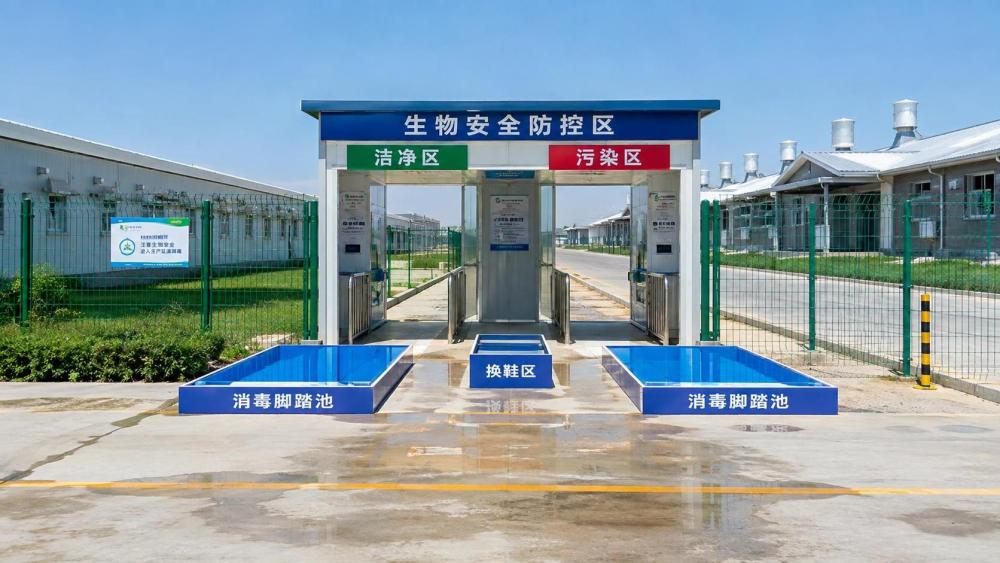
Footbaths require active management. Organic material rapidly reduces the useful action of many disinfectants, and diluted or dirty solution can create a false sense of protection. The bath must be large enough for the full sole to contact the solution, positioned where people must use it, protected from excessive rain or debris, and refreshed according to the disinfectant instructions and the observed level of soiling. A boot-cleaning step is needed before disinfection when boots carry manure, litter, or mud. Disinfectant cannot reliably penetrate a layer of organic material.
Clean first, then disinfect with a defined purpose
Cleaning and disinfection are related but different tasks. Cleaning removes visible organic matter, dust, grease, litter, and biofilm that shelter microorganisms. Disinfection is applied after surfaces have been cleaned sufficiently for the product to contact them. Skipping the first step commonly leads to poor results, especially on cracked concrete, textured plastic, loading ramps, wheels, drain areas, and equipment with hinges or hollow sections.
Use the disinfectant label as an operating instruction, not simply as a purchasing specification. Concentration, contact time, water temperature, surface type, and target organism all affect performance. Hard water, incorrect dilution, excessive organic load, and premature drying can alter results. Mixing products without an approved instruction can be unsafe or reduce effectiveness. Measuring equipment should be available at the preparation point so dilution is not estimated by eye.
Cleaning tools themselves need zoning. A brush used in the mortality handling area should not be taken into a poultry house. Color coding can help where it is consistently applied, but labels must remain readable after washing. Replace worn brushes, cracked buckets, damaged squeegees, and porous items that cannot be thoroughly cleaned. Equipment design matters: smooth, drainable, corrosion-resistant surfaces are easier to wash and inspect than rough materials with inaccessible joints.
Pay attention to high-contact surfaces
Door handles, control panels, drinker adjustment tools, egg trays, trolleys, loading equipment, wheel arches, handrails, and mobile phones receive frequent contact but are easily omitted from general washdown. Their risk depends on the movement pattern. A control panel inside one house has a different exposure profile from a tablet carried between houses. A device that must travel should have a defined cleaning method and should not be placed on litter, feed bags, or dirty vehicle surfaces.
After washdown, inspect before declaring the area ready. Look under slats, around fans, inside service corridors, beneath feed lines, and at drainage points. A surface can appear clean from standing height while debris remains in corners and equipment gaps. Verification does not always require laboratory testing; visual inspection, documented completion, and targeted follow-up of recurring problem areas make routine cleaning more reliable.
Keep vehicles, equipment, feed, and water from becoming transfer routes
Vehicle movement deserves the same attention as people movement. Tires, wheel wells, steps, pedals, cab floors, and loading surfaces can carry material from another farm, processing location, hatchery, or disposal area. Establish where each vehicle can stop and whether it needs access beyond the outer zone. Avoid treating every vehicle in the same way. A feed delivery that connects to an external fill point has a different risk profile from a live-bird collection vehicle approaching house doors.
When a vehicle must enter, remove obvious contamination before applying disinfectant, then allow the required contact time. Rushing a vehicle through a spray arch or over a wet mat may leave untreated surfaces and does not address the cab or unloading equipment. Drivers should remain in the cab when the task allows. When interaction is necessary, use a defined handover point rather than allowing unplanned movement around houses.
Feed delivery points should be protected from standing water, wild bird access, spilled feed, and rodent activity. Clean spillages promptly. Feed residue near bins attracts pests and creates a repeated contamination pressure. Check bin lids, augers, seals, and access doors for damage that permits moisture or pests to enter. Sampling or maintenance tools used around feed systems should stay assigned to that task.
Water systems require routine attention because water quality and line condition influence bird health and can conceal a developing problem. Flush lines according to the flock stage and product instructions, monitor for sediment or biofilm, and investigate changes in water use alongside feed intake and house conditions. A drop in water consumption can result from equipment failure, temperature stress, blocked drinkers, or flock illness; treating it only as a technical fault delays investigation.
Reduce wildlife and pest pressure through maintenance
Rodents, wild birds, insects, and domestic animals create exposure pathways that cannot be solved by a single bait station or occasional inspection. Biosecurity depends on removing food, water, shelter, and entry points. Repair holes in cladding, damaged mesh, loose doors, broken seals, and gaps around pipes. Keep vegetation and stored materials from forming sheltered routes alongside poultry houses.
Mortality must be removed from bird areas promptly and handled through a route that does not pass through clean storage or staff changing areas. The collection container should remain closed, leak-resistant, easy to clean, and located to avoid attracting scavengers near houses. Reusable collection equipment needs cleaning and disinfection before it returns to a clean zone.
Pest-control activity should be mapped and reviewed rather than treated as a monthly administrative task. Fresh droppings, gnaw marks, feed loss, insects around wet areas, and repeated bait consumption indicate a location that needs structural correction. Adding more bait without addressing a broken door seal, spilled feed, or standing water often creates repeated work without removing the source.
Use flock observations as an early-warning system
Daily flock observation should be consistent enough that a change stands out. Record mortality, culls, feed use, water use, egg production where relevant, environmental alarms, unusual sounds, litter condition, and visible clinical signs. The purpose is not to collect every possible measurement. It is to identify departures from the farm's normal pattern early enough to isolate movement and seek appropriate advice.
Similar signs can have different causes. Wet litter may follow a leaking drinker line, poor ventilation, excessive stocking pressure, enteric disease, or a change in water quality. Coughing can be associated with dust, ammonia, temperature variation, ventilation imbalance, or infectious disease. A useful response starts with observation and containment: note which house is affected, compare recent consumption and environmental records, limit nonessential entry, and avoid moving equipment out until the situation is understood.
When abnormal mortality or disease signs are observed, follow the farm's escalation procedure promptly. Preserve relevant records, identify recent visitors and movements, and prevent routine work from carrying materials into other houses. Delayed reporting is especially harmful because it allows normal traffic patterns to continue while the source remains uncertain.
Make routines auditable without turning them into paperwork
Biosecurity records should support action. Short logs for visitor access, cleaning tasks, disinfectant preparation, pest findings, mortality handling, vehicle entry, and flock observations create a practical timeline. They also show whether a procedure is being performed as designed. A record completed at the end of the week from memory cannot provide the same confidence as a time-specific entry made during the task.
Review records for gaps and recurring exceptions. Repeatedly empty footbaths, missing disinfectant preparation notes, unlogged contractor access, or unexplained changes in water intake are operational signals, not merely documentation errors. Correcting the underlying obstacle may involve moving supplies closer to the entrance, clarifying responsibility for replenishment, changing a traffic route, or replacing equipment that is difficult to clean.
Daily biosecurity becomes dependable when the clean route is the easiest route to follow. Visible boundaries, assigned equipment, maintained cleaning stations, controlled traffic, and disciplined observation reduce the number of uncontrolled contacts that allow disease to enter or move through a poultry farm.