




Search
Related News
- 00
0000-00
Fruit Vegetable Dicing Machine Basics for Buyers Building Cleaner Prep Lines - 00
0000-00
How to Choose Poultry House Feeding Systems for Flock Size, Layout, and Feed Efficiency - 00
0000-00
How Recirculating Soilless Cultivation Improves Water Efficiency in Greenhouses - 00
0000-00
What Is Precision Crop Management and Which Farm Data Matters Most? - 00
0000-00
How to Choose Postharvest Cooling Equipment for Different Fruit and Vegetable Operations
Cold-Chain Packaging Costs Rise 12.3% in Q2




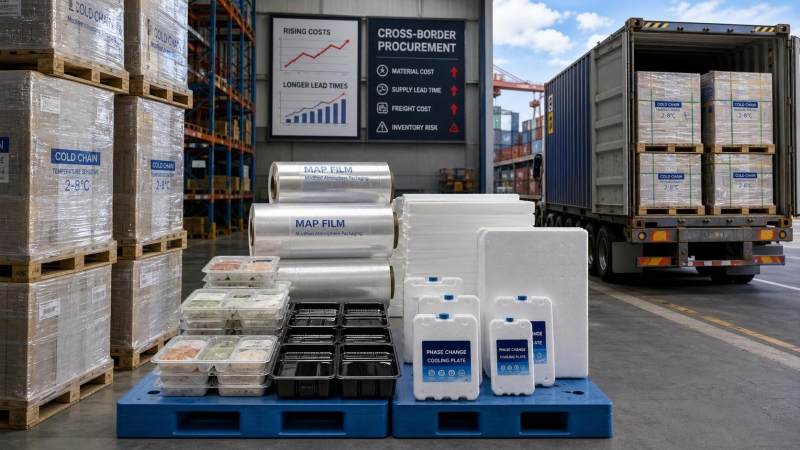
The timing of the underlying market shift is not clearly specified in the source input, but the latest release from AFBN and CRU Global points to a clear execution signal for cold-chain packaging trade: higher material and freight costs are now feeding directly into pricing and delivery conditions. For importers, packaging buyers, processors, and supply-chain service providers working with vacuum trays, modified-atmosphere films, and phase-change cooling panels, this matters not only as a cost issue but also as a change in procurement timing, delivery planning, and cross-border supply arrangements.
What the latest index confirms
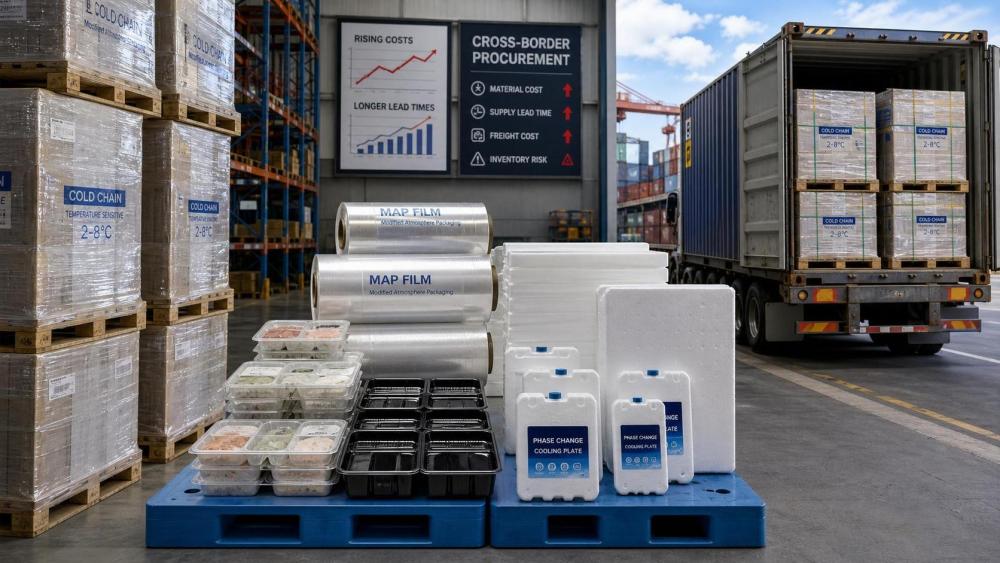
According to the 2026 second-quarter Agri-Food Packaging Materials Price Index issued jointly by AFBN and CRU Global, the global average price of cold-chain packaging materials increased by 12.3% quarter on quarter. The products covered in the summary include vacuum trays, modified-atmosphere packaging film, and phase-change cold-storage panels.
The summary attributes the increase to higher international freight costs for polypropylene (PP) and aluminum foil substrates, together with a surge in demand during the high-temperature season in the Middle East. It also states that spot delivery cycles in markets including Saudi Arabia, the UAE, and Indonesia have extended to six to eight weeks, and recommends that importers lock in Q3 orders earlier.
Why this is becoming an operational rule for trade and supply
Procurement teams are facing a narrower booking window
From an industry perspective, procurement teams may be among the first to feel the impact because the reported price increase is paired with longer spot lead times. The practical effect is that purchasing decisions for cold-chain packaging can no longer be treated as short-cycle replenishment in the affected markets. What deserves closer attention is whether internal procurement approvals, supplier confirmations, and shipment scheduling are still aligned with a six-to-eight-week delivery environment.
For these buyers, the relevant change is not a new formal regulation in the narrow legal sense, but a market rule that can affect contract execution and import timing. Purchase specifications, delivery clauses, and order-locking arrangements may require closer review where packaging materials are tied to temperature-controlled product movement.
Processors and packers may see pressure at the delivery interface
Manufacturing and packing operations that depend on vacuum trays, modified-atmosphere films, or phase-change cooling components may be affected where packaging availability is linked to dispatch schedules. Analysis shows that the main pressure point is not only input cost inflation but also the risk of mismatch between production planning and packaging arrival.
Where customer contracts, export documentation, or technical product files rely on specific packaging configurations, firms may need to monitor whether substitute sourcing or revised delivery timing creates additional review requirements. That is especially relevant when packaging format, barrier properties, or cold-chain performance must remain consistent with existing technical documentation.
Supply-chain service providers need to watch documentation and timing discipline
Freight coordinators, import service providers, and other logistics participants may be affected because the reported increase is partly tied to higher international freight costs for PP and aluminum foil substrates. Observably, this raises the importance of timing discipline across booking, shipment planning, and delivery commitments.
In practice, these firms may need to pay closer attention to shipment schedules, order confirmation timing, and supporting trade documents tied to delivery performance. Where clients are managing regulated food or temperature-sensitive goods, any delay in packaging availability can also affect downstream compliance records, delivery sequencing, and traceability management.
What companies should watch in the next procurement cycle
Review whether current supplier timelines remain realistic
Analysis shows that companies relying on spot purchases into Saudi Arabia, the UAE, Indonesia, or similar affected flows should reassess whether existing procurement calendars still match market conditions. If internal schedules were built around shorter replenishment cycles, the shift to six-to-eight-week delivery may require earlier purchase confirmation and tighter supplier coordination.
Check that technical and compliance files stay matched to sourced materials
Where cold-chain packaging is connected to product specifications, testing records, or customer-facing technical files, companies should verify that any sourcing adjustment does not create a gap between ordered materials and documented packaging requirements. The input does not provide specific certification or regulatory changes, so this should be treated as a compliance watchpoint rather than a confirmed new rule.
Prepare trade and contract documents for less flexible execution
What deserves closer attention is the way longer lead times can affect commercial execution. Importers and purchasing teams may need to review order terms, delivery commitments, and documentation readiness earlier in the transaction cycle. This is particularly relevant where packaging availability influences shipment release, packing plans, or delivery acceptance windows.
Monitor whether Q3 ordering behavior becomes the new market discipline
The source summary recommends that importers lock in Q3 orders in advance. It is more appropriate to understand this as a practical market signal rather than a formal mandatory rule. Even so, firms that wait for spot availability may face greater exposure to price volatility and delivery uncertainty if current conditions persist.
How this signal should be read at this stage
Observably, this development is best read as an execution-level market rule emerging from cost pressure and seasonal demand, rather than as a fully defined policy change with formal legal text. The combination of higher substrate freight costs and extended lead times is already affecting how market participants may need to schedule purchases and deliveries.
At the same time, it would be premature to treat the current signal as a settled long-term pattern. Analysis shows that the more useful reading for now is that companies should watch for how this pricing pressure is reflected in supplier quotations, trade terms, technical file requirements, and market feedback in the next ordering cycle.
What the market signal means for near-term decisions
The immediate significance of this update lies in its effect on procurement discipline, delivery planning, and cross-border execution for cold-chain packaging materials. It does not by itself establish a new legal regime, but it does indicate that buyers and suppliers may already be operating under tighter commercial conditions in parts of the Middle East and Southeast Asia.
From an industry perspective, the most balanced conclusion is that this should be understood as a live operational signal with trade and compliance implications, not merely a price headline. Companies exposed to these packaging categories should continue watching whether longer lead times, earlier ordering expectations, and documentation sensitivities become embedded in routine market practice.
Basis of this article and points still to verify
This article is based on the user-provided title, event timing, and event summary. The input states that the event timing is not clearly specified. It also summarizes findings attributed to AFBN and CRU Global in the 2026 second-quarter Agri-Food Packaging Materials Price Index.
For this type of development, commonly relevant source categories may include official announcements, regulator or trade authority notices, customs or trade administration information, industry association releases, standard-setting documents, and reporting by authoritative industry media. A specific official source link was not provided in the input, so further verification remains necessary.
What still needs continued observation includes any more detailed market guidance, procurement execution practices, specification or certification review requirements, tender-document changes, supplier implementation, and broader industry feedback on delivery and order-locking behavior.