




Search
Related News
- 00
0000-00
How to Specify Stainless Steel Processing Machinery for Hygienic Food Lines - 00
0000-00
How Food Processors Can Improve Throughput Without Compromising Hygiene Control - 00
0000-00
Microbial Fermentation Explained: How It Produces Food Ingredients at Scale - 00
0000-00
Protected Cultivation Technology: Which Climate Control Systems Fit Your Crop? - 00
0000-00
Sizing Livestock Ventilation Systems for Heat, Humidity, and Ammonia Control
EU Rule Mandates Energy Monitoring in Food Packaging Machines




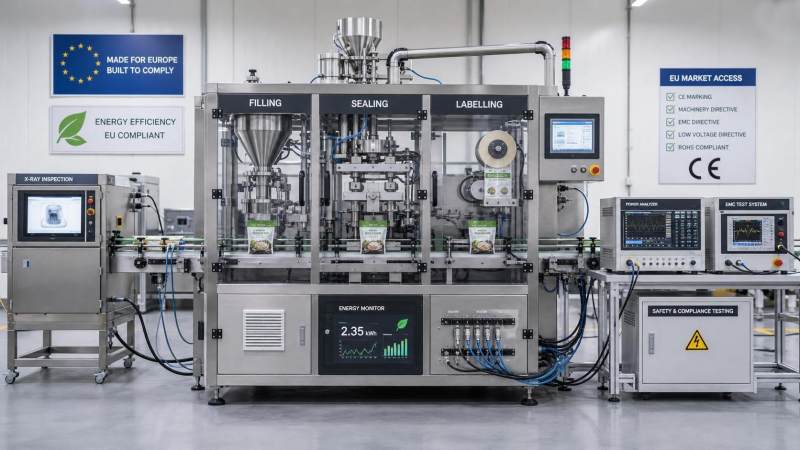
On July 10, 2026, the European Commission’s announced requirement for food packaging machinery entering the EU moves from policy text into an operational compliance condition. Equipment used for filling, sealing, labeling, and wrapping will need to meet EU 2026/1189, including an integrated real-time energy consumption monitoring interface and support for EN 16247-1:2026 data export. For exporters, compliance teams, and testing-related functions in the packaging machinery trade, this matters because the rule is tied directly to conformity procedures rather than being treated as an optional technical upgrade.
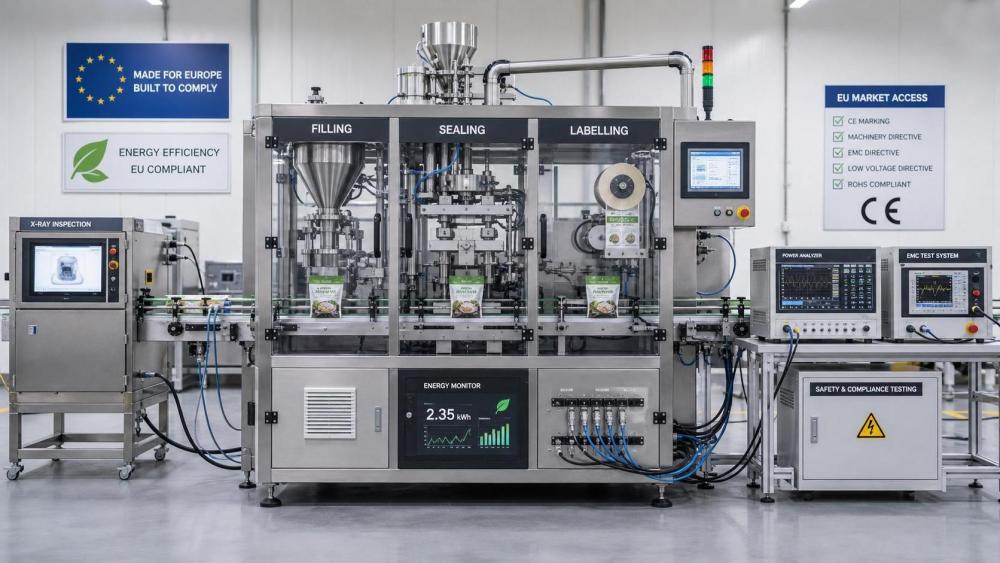
What the new requirement formally covers
According to the provided event information, from July 10, 2026, all food packaging machinery imported into the EU must comply with Regulation EU 2026/1189. The scope includes filling, sealing, labeling, and wrapping equipment.
The confirmed requirement is that affected machinery must include a built-in interface for real-time energy consumption monitoring and must support data export in line with EN 16247-1:2026.
The provided information also states that this requirement directly affects the CE-MD compliance path and type-testing procedures for Chinese packaging machinery exporters. Machinery that is not pre-installed with the required module will not be able to complete the EU Declaration of Conformity.
Where the impact is likely to appear first
Export-facing machinery manufacturers
From an industry perspective, this group is likely to feel the impact most directly because the requirement is attached to whether equipment can complete the conformity process for EU entry. The immediate pressure point is no longer only product performance, but whether the machine architecture already includes the required monitoring interface and export capability before shipment and testing.
Compliance and type-testing functions
Analysis shows that compliance teams and testing-related service providers will need to pay closer attention to how technical documentation, interface readiness, and data export functions are presented during CE-MD and type-testing workflows. The change matters because the provided information links the rule to the conformity route itself, not only to post-sale operation.
EU-bound buyers and project procurement teams
Buyers and procurement teams involved in EU-directed projects may also face practical effects. Observably, procurement decisions may need to distinguish more clearly between machines that are structurally ready for the new requirement and those that are not, especially where delivery timing and declaration completion are tied to project acceptance.
Supply-chain and delivery coordination roles
For companies handling order planning, delivery scheduling, and customer communication, the main issue is operational coordination. What deserves closer attention is whether machinery configurations, pre-installation status, and compliance-related documents remain aligned throughout production and handover, since the absence of the required module affects the ability to complete the declaration process.
What companies should verify now
Check whether product scope is affected
Companies serving the EU market should first verify whether their equipment falls within the stated categories of filling, sealing, labeling, or wrapping machinery covered by the provided event summary. This is a practical first filter before making broader compliance assumptions.
Separate module installation from document completion
Analysis shows that one key operational issue is the distinction between adding a feature and meeting a conformity condition. The provided information indicates that machinery without the pre-installed module cannot complete the EU Declaration of Conformity, so firms should not treat the monitoring function as a later-stage accessory item.
Review testing and export documentation workflows
What deserves closer attention is whether existing type-testing preparation and export document workflows are built around older machine configurations. Where internal checklists or supplier handoffs do not yet reflect the required interface and EN 16247-1:2026 data export capability, delays may appear at the documentation and verification stage.
Prepare for customer communication on compliance status
For sales, project, and after-sales teams, a practical issue is how compliance status is described to EU customers and channel partners. Observably, firms may need clearer communication on whether a machine is already configured to meet the stated requirement, particularly when delivery commitments depend on completion of conformity documentation.
Why this reads as more than a routine technical update
Analysis shows that this development is better understood as a compliance-linked market access signal rather than a minor specification change. The core reason is that the requirement is described as affecting the path to CE-MD compliance and type testing, and that non-equipped machinery cannot complete the EU Declaration of Conformity.
At the same time, it would be premature to extend this into wider claims beyond the provided facts. It is more appropriate to understand this as a concrete near-term rule change with immediate procedural implications for EU-bound food packaging machinery, while continued observation is still needed on how implementation details are reflected in day-to-day testing and trade execution.
How this news is best understood at this stage
Based on the confirmed information, the immediate significance of this development lies in the connection between energy monitoring functionality and formal market-entry compliance for food packaging machinery imported into the EU. The issue is not only technical adaptation, but whether exporters, testing functions, and buyers treat the requirement early enough in product configuration and declaration preparation.
In neutral terms, this is best read as an already effective compliance condition for the affected machinery categories as of July 10, 2026, and also as a policy signal that deserves continued monitoring where documentation practice, testing procedures, and customer-side expectations are concerned.
Basis of this article and points requiring continued verification
This article is based on the user-provided news title, event date, and event summary. The factual section has been limited to the supplied information concerning the European Commission announcement, Regulation EU 2026/1189, the requirement for a real-time energy consumption monitoring interface, EN 16247-1:2026 data export support, and the stated impact on CE-MD compliance and EU Declaration of Conformity procedures.
For this type of industry update, relevant source categories would typically include official announcements, company statements, industry association updates, authoritative media reporting, and standard-setting documents. The specific official source link was not provided in the input, so it still requires ongoing verification. Follow-up attention should focus on any further official wording, implementation-related clarification, and how the stated requirement is applied in actual conformity and type-testing workflows.