




Search
Related News
- 00
0000-00
How to Select Agricultural Irrigation Solutions for Water-Limited Farms - 00
0000-00
How to Select Food Plant Sanitation Equipment for High-Risk Processing Areas - 00
0000-00
Selecting Meat Packaging Technology to Extend Shelf Life and Control Leakage - 00
0000-00
Selecting Secondary Dairy Packaging Systems for Hygienic, High-Speed Distribution - 00
0000-00
How to Design Greenhouse Irrigation Zones for Uniform Watering and Lower Waste
FDA Sets Traceability Rule for Food Contact Imports





On August 5, 2026, the US FDA released a revised Food Contact Substance compliance guide that introduces a new documentation requirement for food-contact imports into the US. From October 1, 2026, suppliers of food packaging materials, processing equipment components, and additives will need to provide a certified end-to-end traceability statement. For exporters serving the US market, especially companies linked to packaging machinery and materials and food ingredients and additives, the development deserves close attention because it places traceability records, testing documentation, and document authentication at the center of market access.
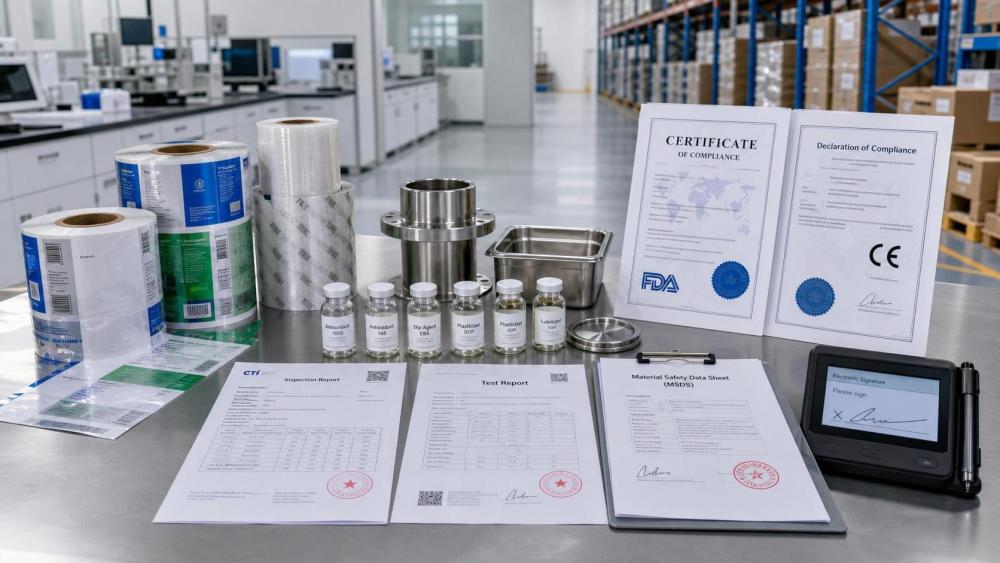
What the revised FDA guide now requires
According to the information provided, the FDA issued the updated Food Contact Substance compliance guide on August 5, 2026. The revised guide requires all suppliers of food packaging materials, processing equipment parts, and additives imported into the United States to submit a certified end-to-end traceability statement starting on October 1, 2026.
The required statement must cover raw material origin, manufacturing processes, third-party testing reports, and digital signature verification. The update directly affects the compliance pathway for Chinese exporters supplying the US market in the Packaging Machinery & Materials and Food Ingredients & Additives categories.
Where the operational pressure is likely to appear
Export-facing suppliers may face a higher documentation threshold
From an industry perspective, companies shipping covered materials or components to the United States may be affected first because the new requirement is tied directly to import compliance. The likely pressure point is not only product qualification itself, but whether records can be assembled into a certified end-to-end statement that aligns raw materials, production steps, testing files, and authenticated sign-off.
Upstream sourcing teams may come under closer review
Analysis shows that procurement and supplier management functions may be affected because raw material origin is explicitly included in the required statement. That means businesses relying on multi-tier sourcing may need to pay closer attention to how upstream information is collected, retained, and passed downstream for US-bound shipments.
Manufacturing and quality teams may need tighter record linkage
Observably, manufacturing sites and quality control functions may see the greatest practical impact in how process records and third-party test reports are connected. The issue is not only whether testing exists, but whether the documentation chain can clearly support the traceability declaration required for covered imports.
Service providers in compliance and supply-chain coordination may see expanded roles
Supply-chain service providers, testing coordinators, and documentation support teams may also be affected because digital signature verification and certified statements add another layer to shipment readiness. What deserves closer attention is whether these supporting functions can keep documentation complete and synchronized with customer and import requirements.
What companies should review now
Watch for further FDA wording and implementation detail
Analysis shows that companies should distinguish between the confirmed headline requirement and any later clarification on how the rule is applied in practice. The current information confirms the obligation and its core content, but businesses should continue monitoring official wording for any further interpretation relevant to filing, certification, or document format.
Check whether product scope and customer commitments match the new requirement
For exporters and suppliers serving US accounts, a practical priority is to identify which shipments involve food packaging materials, processing equipment components, or additives covered by the revised guide. This matters because compliance preparation is likely to affect customer communication, shipment planning, and internal review timelines.
Review whether traceability files can be assembled as one usable package
What deserves closer attention is the handoff between sourcing records, manufacturing records, third-party testing reports, and digital authentication. Even where each document exists separately, the business risk may sit in whether they can be presented as one certified end-to-end statement for US-bound supply.
Prepare for longer coordination cycles across suppliers and customers
Observably, the requirement may affect lead-time planning and cross-border coordination because multiple parties may need to contribute to the final declaration. Companies involved in exports to the United States should pay attention to supplier qualifications, supporting documents, and customer-facing communication well before the October 1, 2026 effective date.
Why this looks like more than a short-term filing update
This section is an observation. It is more appropriate to understand this development as a compliance signal with immediate operational consequences rather than as a routine paperwork adjustment. The reason is that the required declaration links four distinct elements, raw material origin, manufacturing process information, third-party testing, and digital signature verification, into one import-facing compliance expectation.
At the same time, it would be premature to treat the update as a fully settled long-term market outcome based on the information currently available. Observably, the stronger conclusion is that traceability is being positioned as a more explicit condition in the compliance path for covered food-contact imports, and that warrants continued attention from exporters and supply-chain managers.
How the industry may best read this update for now
For the market, the immediate significance of this FDA update lies in compliance execution rather than headline policy language alone. It points to a more document-intensive path for companies supplying food-contact materials, equipment components, and additives into the United States.
Analysis shows that the update is best understood, at this stage, as a concrete near-term compliance change and a broader signal that traceability evidence is becoming more central in cross-border supply to the US market. The full business effect still depends on implementation practice, but the requirement itself is already clear enough to justify preparation.
Basis of this article and points for continued verification
This article is based on the user-provided news title, event date, and event summary. The information available for writing includes the August 5, 2026 release of a revised FDA Food Contact Substance compliance guide, the October 1, 2026 effective date, the requirement for a certified end-to-end traceability statement, the required content categories, and the stated impact on Chinese exporters in Packaging Machinery & Materials and Food Ingredients & Additives.
For this type of industry update, commonly relevant source types may include official agency notices, company statements, industry association materials, authoritative media coverage, and standards-related documents. A specific official source link was not provided in the input, so further verification remains necessary. Continued attention should focus on any later official clarification concerning implementation details, scope interpretation, and documentation practice.