




Search
Related News
- 00
0000-00
How to Select Agricultural Irrigation Solutions for Water-Limited Farms - 00
0000-00
How to Select Food Plant Sanitation Equipment for High-Risk Processing Areas - 00
0000-00
Selecting Meat Packaging Technology to Extend Shelf Life and Control Leakage - 00
0000-00
Selecting Secondary Dairy Packaging Systems for Hygienic, High-Speed Distribution - 00
0000-00
How to Design Greenhouse Irrigation Zones for Uniform Watering and Lower Waste
Food Fermentation Control Points That Impact Batch Consistency




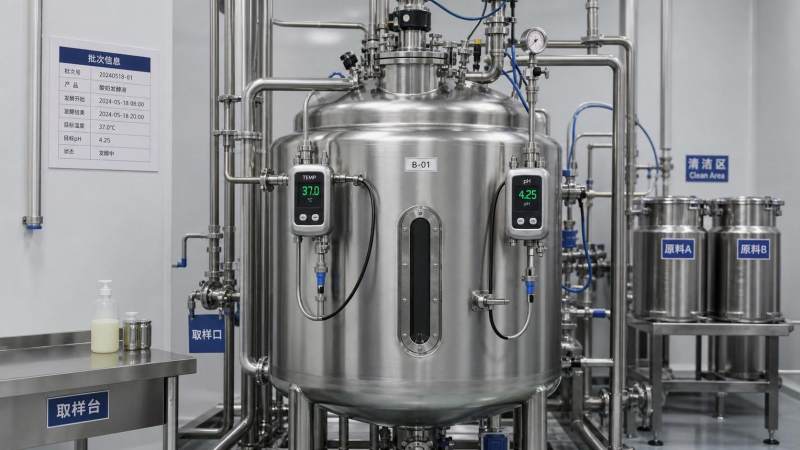
In commercial food fermentation, consistency is rarely decided by one dramatic failure. It is usually shaped by small shifts in temperature, inoculation rate, oxygen exposure, raw material quality, and sanitation discipline.
Those shifts matter because even a stable recipe can produce uneven flavor, texture, acid development, gas formation, yield, or shelf life when process control is weak. In a market focused on traceability, food safety, and predictable output, batch reliability becomes a technical and commercial issue at the same time.
Across the wider agri-food sector, food fermentation now sits at the intersection of bioscience, processing equipment, quality systems, and supply chain performance. That is why control points deserve close attention during process review, equipment comparison, and plant planning.
Why batch consistency is a strategic issue
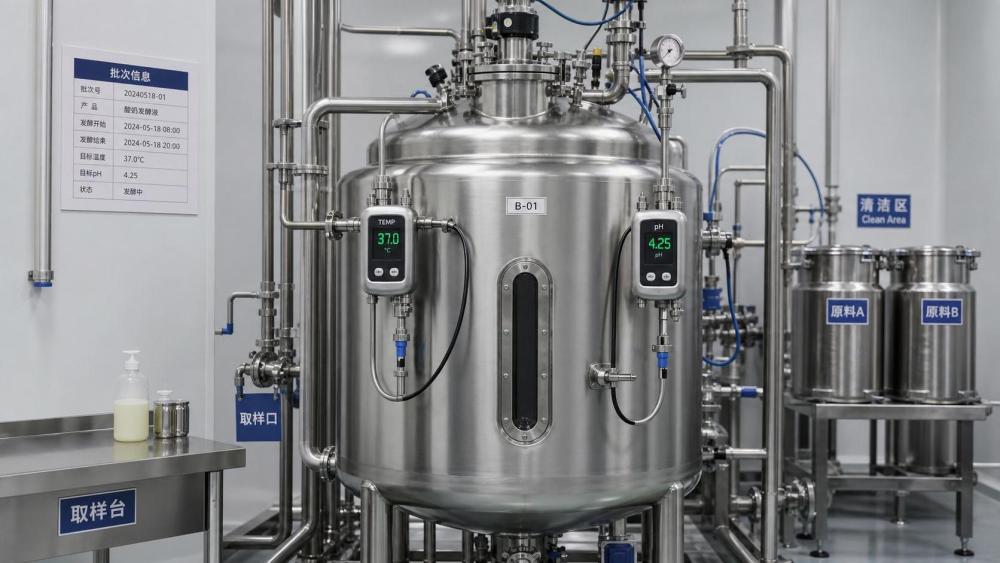
Food fermentation is used in dairy, beverages, bakery, sauces, vegetables, alternative proteins, and functional ingredients. In each category, the process depends on living systems that react to their environment quickly.
That biological sensitivity creates value, but it also creates variability. A slight change in substrate composition or cleaning performance can move the final product outside target specifications.
For business operations, inconsistency affects more than taste. It can change line efficiency, rework rates, hold times, waste volume, microbiological risk, and customer complaint patterns.
From the AFBN perspective, this is not only a bioscience topic. It also connects with equipment design, laboratory testing, storage conditions, cold-chain control, and supplier benchmarking across the modern agri-food chain.
The core idea behind fermentation control points
A control point is any condition that can materially shift microbial activity and therefore alter the batch result. Some control points are obvious, such as temperature or pH.
Others are less visible, including dissolved oxygen, mineral balance, inoculum vitality, transfer timing, or dead zones inside tanks and piping.
In practical terms, food fermentation consistency depends on controlling three layers at once: the raw material, the biological culture, and the production environment.
If one layer is weak, the other two may not compensate. Strong starter cultures cannot fully correct unstable sugar content, and advanced vessels cannot fix poor sanitation habits.
The variables that most often move the batch
Raw material composition
Fermentation begins with what enters the system. Variations in moisture, sugar profile, protein level, salt content, and native microflora can change metabolic speed and final sensory results.
This is especially relevant when agricultural inputs vary by season, origin, storage age, or pre-processing method. Stable sourcing specifications reduce downstream correction pressure.
Starter culture quality
Not all inoculum performs the same, even when supplied under the same strain name. Viability, purity, storage history, and activation method all influence fermentation speed and robustness.
A culture that starts slowly may allow unwanted organisms to gain ground. A culture that overperforms may push acidity or gas development beyond the intended profile.
Temperature profile
Temperature is one of the strongest control points in food fermentation, but target temperature alone is not enough. Ramp speed, holding pattern, and temperature uniformity also matter.
A vessel with hot and cold zones can create mixed fermentation behavior inside one batch. That often leads to uneven acidification, texture instability, or flavor drift.
pH and acid development
pH is both a process indicator and a safety signal. The key issue is not only the final pH value, but also how quickly the batch reaches critical points.
Delayed acidification can open a contamination window. Excessively fast acidification can damage texture, reduce flavor complexity, or create process timing conflicts downstream.
Oxygen and mixing behavior
Some food fermentation processes need oxygen control just as much as temperature control. Aerobic, anaerobic, and microaerophilic conditions produce very different outcomes.
Mixing intensity also changes microbial access to nutrients and heat. Overmixing can damage structure, while undermixing can create stratification and measurement errors.
Where equipment and plant design influence results
Batch consistency is often discussed as a microbiology issue, yet equipment design has a direct effect on food fermentation control. The vessel, piping, valves, sensors, and cleaning system shape the process every day.
Dead legs, poor insulation, slow response probes, and difficult-to-clean surfaces can create variability even when the recipe is fixed. In other words, mechanical details become biological outcomes.
This is where benchmarking becomes useful. Comparing equipment should include control accuracy, hygienic design, cleanability, and data capture, not only throughput or capital cost.
Quality systems that support stable food fermentation
Reliable food fermentation needs more than a validated recipe. It needs repeatable routines around sampling, testing, sanitation, and deviation response.
Laboratory support is important because fermentation often moves faster than manual observation. Microbial counts, pH trend data, viscosity checks, and metabolite tracking give earlier warnings than finished-product inspection.
Documentation matters as well. When plants can link batch outcomes with raw material lots, sensor records, and cleaning histories, root-cause analysis becomes more precise and corrective actions improve.
- Define acceptable input ranges, not just target recipes.
- Verify culture handling from receipt to inoculation.
- Track fermentation curves, not only final results.
- Validate cleaning performance with evidence, not assumption.
- Review deviations by pattern, not as isolated events.
How to read consistency across different production scenarios
Not every food fermentation process should be judged by the same markers. A fermented dairy base, a vegetable brine, a probiotic ingredient, and a fermented beverage each have different failure modes.
Still, the review logic is similar. Look at substrate variability, critical growth conditions, contamination exposure points, and where process corrections happen too late.
For facilities linked to broader agri-food operations, upstream factors also deserve attention. Crop handling, cold storage, ingredient transport, and pre-treatment methods can all change fermentation behavior before the batch even starts.
That broader view fits the AFBN approach. Fermentation performance is easier to understand when production, processing, hygiene, testing, and supply chain conditions are reviewed as one connected system.
Practical checkpoints for evaluation and next decisions
A useful evaluation framework starts with a simple question: which variables are truly controlled, and which are only assumed to be stable? That distinction often reveals the real source of batch inconsistency.
It also helps to separate high-impact variables from background noise. In food fermentation, tighter data around inoculum quality, temperature uniformity, pH trajectory, and sanitation effectiveness usually delivers the clearest insight.
The next step is to compare process needs with current equipment capability, laboratory coverage, and operating discipline. Where gaps appear, the answer may be a design upgrade, a tighter specification, or a better monitoring routine.
For teams reviewing technologies or plant options, a structured benchmark around control points often gives a better basis for decision-making than headline capacity alone. In food fermentation, the most dependable output usually comes from systems built to manage biological variation, not just process volume.