



Search
Related News
- 00
0000-00
Probiotics Price Guide: What Drives the Cost of Bulk Ingredients? - 00
0000-00
Georgia’s Tomato Import Value Reaches Record for January–October 2026 - 00
0000-00
Health Attributes Drive Innovation in the Cereal Industry - 00
0000-00
French Tomato Output Forecast to Fall in 2026 as Prices Remain High - 00
0000-00
Choosing Food Packaging Lines: Capacity, Product Type and Automation
Choosing Stainless Steel Slaughtering Equipment: Capacity and Hygiene




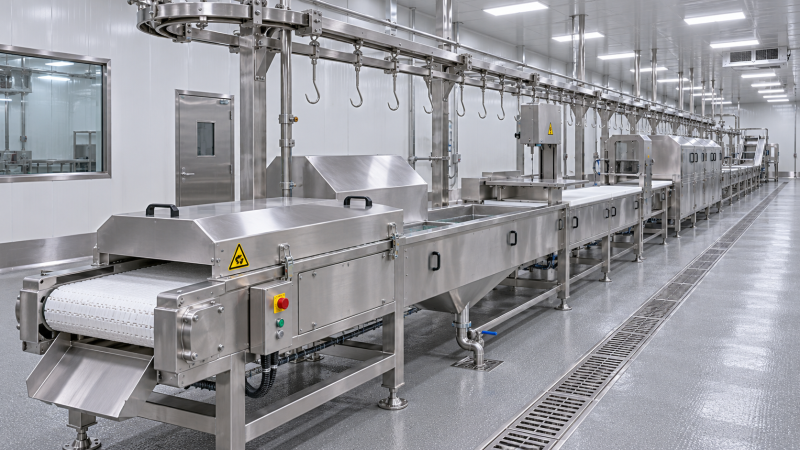
Choosing stainless steel slaughtering equipment involves more than comparing purchase prices. Procurement teams must balance processing capacity, hygienic design, cleaning requirements, and long-term operating costs.
Equipment matched to expected throughput can prevent bottlenecks, while accessible surfaces and appropriate stainless steel grades support effective sanitation and dependable production.
This guide explains how to compare capacity, assess hygienic construction, evaluate suppliers, and specify equipment that fits the whole slaughtering operation.
How Much Slaughtering Capacity Does Your Facility Need?
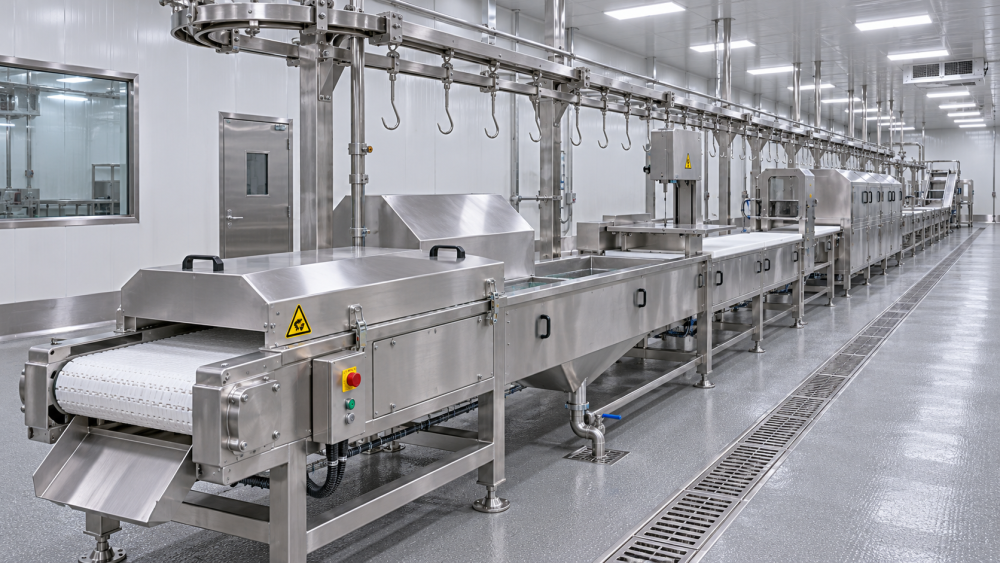
Start with the species, average animal size, operating hours, and saleable output required. Poultry, pigs, cattle, and sheep need different equipment and line configurations.
Convert daily volume into an hourly requirement using actual production time. Exclude planned breaks, inspection pauses, changeovers, and other periods when animals are not being processed.
For example, 800 pigs over eight scheduled hours represent 100 pigs per hour. If productive time is seven hours, the requirement rises to approximately 114.
Use this figure as a planning baseline, then discuss reasonable capacity margins with operations staff. The right margin depends on demand variability, staffing, and maintenance plans.
A supplier’s maximum rated speed may assume uniform animals, uninterrupted operation, and ideal staffing. Request the conditions behind every capacity claim before comparing quotations.
Ask suppliers to state normal operating throughput as well as peak speed. Both figures should reflect your animal weights, product specifications, and inspection arrangements.
Future growth matters, but excessive oversizing can increase capital spending, energy consumption, and sanitation effort. Consider modular expansion when demand forecasts remain uncertain.
Where Will Bottlenecks Limit the Line?
A slaughtering line performs at the pace of its most restrictive stage. Buying a faster machine will not solve a constraint elsewhere in the process.
Map the planned flow from animal reception through stunning, bleeding, dressing, inspection, chilling, and dispatch. Include by-product handling and any cutting or deboning operations.
Record the expected capacity, staffing, and downtime at each stage. Pay particular attention to manual workstations, inspection points, transfer equipment, and chilling capacity.
For example, a dressing line rated at 120 animals per hour offers limited benefit if inspection arrangements or chilling capacity support only 90 per hour.
Buffers can absorb short interruptions, but they need hygienic handling rules and sufficient space. They cannot compensate indefinitely for an undersized downstream operation.
Ask suppliers to provide a line balance showing equipment cycle times, operator assumptions, transfer points, and expected throughput under your intended production conditions.
Also review restart procedures after stoppages. A line that reaches its rated speed quickly and recovers safely may outperform a faster system with frequent interruptions.
Which Stainless Steel Grade Should Buyers Specify?
Stainless steel selection depends on exposure, cleaning chemicals, temperature, and expected service life. The grade alone does not guarantee a hygienic or corrosion-resistant machine.
Type 304 is widely used in food processing equipment and may suit many applications when cleaning chemicals and operating conditions are compatible with the material.
Type 316 offers improved resistance to certain corrosive environments, including chloride exposure. It may be appropriate for components exposed to aggressive cleaning or saline conditions.
Type 316 generally costs more, and it is not immune to corrosion. Ask suppliers to justify its use by component rather than applying it automatically everywhere.
Identify product-contact surfaces, splash zones, frames, fasteners, and enclosed components in the specification. Suppliers should state the material grade used for each relevant area.
Check whether welds, filler materials, and surface treatments are compatible with the intended environment. Poor fabrication can undermine the value of a suitable base material.
Where traceability matters, request material certificates and a method for identifying installed components. Confirm any testing requirements before placing the order.
What Makes Equipment Easier to Clean and Inspect?
Hygienic design reduces places where tissue, fat, blood, and water can accumulate. Inspect the physical construction rather than relying on a general sanitation claim.
Look for accessible product-contact surfaces, smooth finished welds, adequate drainage, and joints designed to limit gaps. Surfaces should withstand the specified cleaning process.
Ask how guards, covers, belts, and removable parts are opened or removed. Cleaning staff should be able to reach critical areas without unnecessary dismantling.
Check for hollow sections that could trap liquid, horizontal ledges, exposed threads near product, and difficult-to-clean fasteners. Ask how each identified risk is controlled.
Drainage deserves particular attention around tables, conveyors, frames, and collection points. Standing water can complicate sanitation and accelerate corrosion when cleaning residues remain.
Review surface finish requirements with the supplier and food safety team. A numerical roughness specification can support acceptance criteria, but finish alone cannot ensure cleanability.
For equipment cleaned in place, request evidence that the proposed system reaches all intended surfaces. Some assemblies may still require dismantling and manual inspection.
Ask for cleaning instructions covering chemicals, concentrations, contact times, water temperatures, and compatible components. Confirm these instructions work with your site’s sanitation procedures.
Include sanitation staff in equipment demonstrations and design reviews. Their ability to access and verify cleaning points can influence both hygiene performance and production availability.
How Should Equipment Support Food Safety and Compliance?
Equipment should fit the facility’s hazard analysis and food safety plan. Procurement, quality assurance, engineering, and operations teams should agree on requirements before requesting bids.
Consider how the design separates edible products from inedible material and limits cross-contamination. Review the movement of carcasses, personnel, tools, water, and waste.
Inspection access is also essential. Confirm that the line layout provides suitable space, lighting, positioning, and safe access for the inspection procedures required at your site.
Regulatory obligations vary by species, country, and destination market. Verify applicable requirements with the relevant authority and qualified local advisers before finalizing the design.
Where appropriate, ask suppliers to identify relevant hygienic design standards or third-party certifications. Verify their scope and applicability rather than treating a logo as complete proof.
Equipment can support animal welfare through reliable handling, stunning, and restraint systems. Specify the applicable requirements and seek evidence that the complete line supports them.
What Utilities and Facility Requirements Affect the Purchase?
Equipment capacity must fit the building and its utilities. Request water consumption, electrical load, compressed air demand, drainage requirements, and heat output for each operating mode.
Distinguish production consumption from cleaning consumption. A machine with low running water demand may still require substantial water, chemicals, and time during sanitation.
Check floor loading, ceiling height, door openings, maintenance clearance, and access routes. Overhead rails and suspended equipment may require structural assessment before installation.
Review connections between equipment and existing infrastructure, including conveyors, rails, controls, and drainage. Assign responsibility for each interface in the purchase contract.
Chilling and cold storage deserve separate capacity checks because they affect throughput after slaughter. Assess loading patterns, cooling requirements, and available space with qualified specialists.
For facilities with limited water or power, compare alternatives under realistic operating conditions. Any efficiency improvement must remain compatible with cleaning and food safety requirements.
How Can Buyers Compare Total Cost of Ownership?
Purchase price is only one part of the investment. Compare quotations using the same equipment scope, throughput assumptions, installation responsibilities, and expected operating period.
Include freight, import duties where applicable, installation, commissioning, training, building modifications, utilities, and any required integration with existing systems.
Estimate recurring costs for labor, water, energy, cleaning chemicals, consumables, spare parts, preventive maintenance, and planned production downtime.
Also assess the financial effect of unplanned stoppages. A lower-priced machine may be less attractive if replacement parts are difficult to obtain or repairs take longer.
Compare expected usable life and major refurbishment requirements, but request evidence for supplier estimates. Use your own production schedule and local utility prices in calculations.
For a consistent comparison, calculate annual operating cost and add it to the initial investment over an agreed evaluation period. Apply your organization’s financial method.
Where improved throughput or reduced labor creates potential savings, test those assumptions against actual demand and staffing plans. Unused capacity does not automatically generate revenue.
What Evidence Should You Request From Suppliers?
Issue a consistent request for quotation describing species, animal size range, target throughput, operating hours, site constraints, cleaning methods, and applicable market requirements.
Ask each supplier to identify exclusions and assumptions. A quotation that omits controls, installation, or necessary transfers can appear cheaper while leaving significant costs unresolved.
Request layout drawings, a component list, material specifications, utility estimates, cleaning instructions, maintenance schedules, and a proposed spare-parts list.
Seek references from comparable installations and, where possible, arrange a visit or demonstration. Similar species, line speeds, and sanitation practices make comparisons more useful.
Ask about local service coverage, response times, replacement-part availability, and remote support. Confirm which commitments are contractual and which are indicative.
Review warranty coverage alongside exclusions, preventive maintenance obligations, and the process for reporting defects. Clarify whether travel and labor are included.
For automated systems, confirm control-system documentation, access permissions, backup procedures, and integration responsibilities. These details affect troubleshooting and future modifications.
How Should Acceptance Criteria Be Defined?
Agree on measurable acceptance criteria before ordering. Include equipment scope, material documentation, safety functions, installation quality, and the conditions for capacity testing.
Specify the test species, animal size range, staffing, operating period, and upstream and downstream support. Record stoppages and their causes during the agreed test.
Distinguish a factory acceptance test from a site acceptance test. Factory checks can verify assembly and controls; site testing addresses installation and actual line interfaces.
For hygiene acceptance, confirm that equipment can be accessed and cleaned according to the agreed procedure. The facility should verify sanitation through its own food safety program.
Document deficiencies, corrective actions, and completion deadlines. Link final acceptance to the contract so both parties understand how outstanding issues will be resolved.
Arrange operator and maintenance training before handover, and obtain drawings, manuals, recommended spare parts, and cleaning documentation in a language the site team can use.
Making the Final Procurement Decision
The best stainless steel slaughtering equipment supports the required line throughput, fits the facility, and can be cleaned, inspected, maintained, and operated reliably.
Compare suppliers against a shared specification, then weigh documented performance and lifetime costs alongside purchase price. Involve operations, sanitation, engineering, and food safety teams throughout.
Before signing, resolve capacity assumptions, material choices, service support, and acceptance tests. These decisions turn a promising quotation into a more dependable production investment.
Want to dive deeper into these market dynamics, or need data-driven support for your next business move? Drop a line below and let the analysts at AFBN provide customized insights.
We respect your privacy. Your information is strictly confidential.
相关推荐
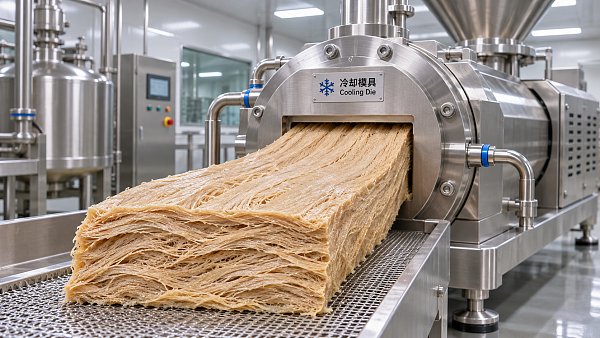
 How Extrusion Processing Creates Texture in Plant-Based MeatExplore plant-based processing extrusion and discover how moisture, heat and cooling shape meat-like texture, plus what to consider when evaluating equipment and scaling production.
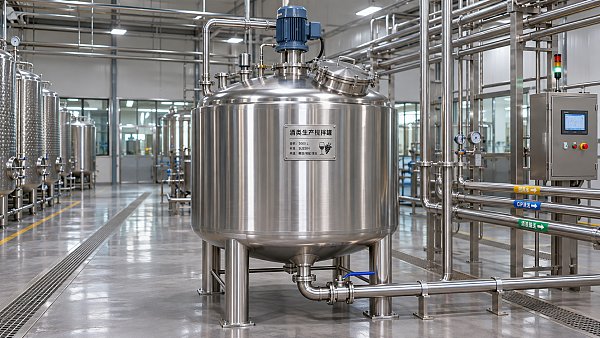
 Specifying Stainless Steel Mixing Tanks for Alcohol ProductionSpecify stainless steel mixing tanks for alcohol production with confidence. Explore agitation, cleaning, safety and supplier criteria for a better investment.
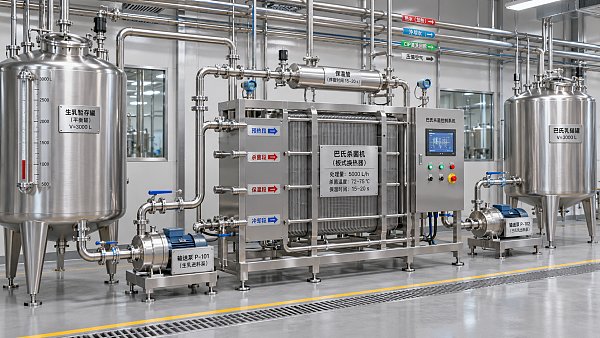
 Dairy Equipment Price Guide: Budgeting for Machines and InstallationCompare dairy equipment prices beyond the machine quote. Learn how to budget for installation, utilities, startup, and ownership costs before you buy.
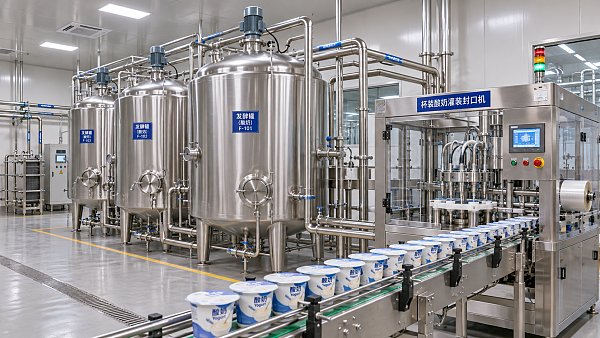
 Choosing a Yogurt Processing Line: Capacity, Product Types and EquipmentCompare dairy processing lines for yogurt by capacity, product type and equipment. Discover key factors for selecting a reliable, scalable production line.