




Search
Related News
- 00
0000-00
Selecting Plant Proteins for Meat Analogs: Texture, Flavor, and Processing Fit - 00
0000-00
How to Specify Stainless Steel Processing Machinery for Hygienic Food Lines - 00
0000-00
How Food Processors Can Improve Throughput Without Compromising Hygiene Control - 00
0000-00
Microbial Fermentation Explained: How It Produces Food Ingredients at Scale - 00
0000-00
Protected Cultivation Technology: Which Climate Control Systems Fit Your Crop?
Procurement Checks for Automatic Chicken Cage System Projects




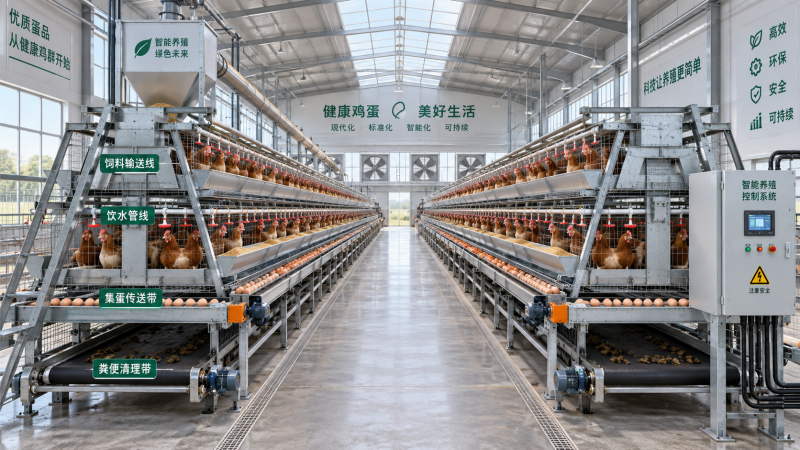
Start with the production model, not the equipment list
A cage project can look straightforward on a quotation: rows of cages, feeding lines, drinkers, egg collection, manure removal, controls, and installation. Procurement risk appears when those items are bought as separate components rather than as a working production system. A mismatch between house dimensions, flock plan, labour availability, electrical capacity, and maintenance capability can turn a technically complete package into a difficult-to-run facility.
For commercial layer operations, the first procurement check is whether the proposed system matches the farm’s intended operating model. Buyers should establish the number of birds per house, target flock cycles, egg handling route, manure-management method, available labour per shift, and expected downtime windows before comparing suppliers. These inputs affect row length, tier count, aisle width, belt arrangement, collection points, and the degree of automation that is practical.
A system designed for a farm that packs eggs on site may need a different discharge arrangement from one that transfers trays or eggs to a separate grading room. Likewise, a site with limited trained maintenance staff may benefit from simpler drive arrangements and readily accessible components, even if another configuration offers a higher nominal level of automation. Procurement decisions should focus on the full operating process rather than on the largest possible bird capacity per building.
Check whether the house can support the proposed layout
Many project problems originate in the interface between the cage system and the building. A supplier may be able to provide an equipment layout, but the purchaser still needs to verify that the building envelope, civil works, utilities, ventilation design, drainage, and access routes can support it.
House measurements should be confirmed on site rather than taken only from older drawings. Internal width and length, column positions, roof trusses, doors, service rooms, floor level variation, and manure discharge locations can all alter the practical layout. Small dimensional differences can affect end-of-row clearances, conveyor routes, and maintenance access. The layout should also preserve safe routes for staff, bird transfer, cleaning, emergency response, and removal of damaged equipment.
- Floor and structural loading: Confirm the load assumptions for equipment, birds, feed, manure accumulation, workers, and service equipment. The responsibility for checking the building structure should be clearly assigned.
- Ventilation interface: Cage rows influence air movement. The purchaser should review whether inlets, fans, cooling equipment, and baffles remain accessible and whether the arrangement creates likely hot, cold, or stagnant zones.
- Drainage and wash-down conditions: Where cleaning methods introduce water, electrical equipment, belt drives, and corrosion-sensitive areas need appropriate protection.
- Service clearances: A layout that permits normal operation but blocks replacement of a motor, gearbox, belt, nipple line, or egg conveyor is not fully maintainable.
These checks are especially important in retrofit projects. Existing buildings often contain utility constraints that are absent from a new-build drawing, including uneven floors, limited incoming power, undersized doors, and structural members that interfere with conveyor runs.
Define automation by process and failure consequence
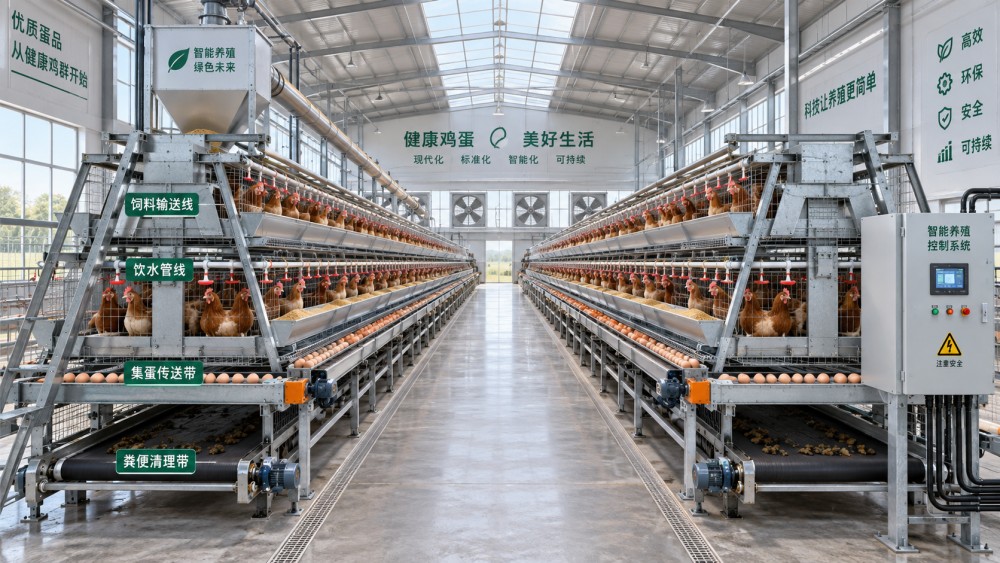
Automation should be assessed one process at a time: feeding, drinking, egg collection, manure removal, environmental control, monitoring, and alarm response. The relevant question is not whether each process is automated, but what happens when it stops, how quickly staff can detect the failure, and whether a safe manual or backup procedure exists.
When reviewing an automatic chicken cage system, procurement teams can ask for a process map showing each drive, sensor, controller, power supply, transfer point, and operator intervention point. This is more useful than a generic automation description because it exposes dependencies. For example, egg collection may rely on several linked conveyors; a stoppage at one downstream transfer point can affect multiple rows. Feed delivery can involve storage, conveying, distribution, and line-level mechanisms, each with different wear and cleaning requirements.
Control panels should be reviewed for practical operation, not merely included as a line item. Buyers should clarify who can change schedules, reset alarms, access fault history, calibrate sensors, and modify parameters. If remote monitoring is offered, determine whether it is used only for notification or can change operating settings. The contract should identify communication requirements, local control availability during network loss, and ownership of operating data.
Power quality and emergency operation
Electrical planning deserves separate attention. Motors, control panels, lighting, ventilation, pumps, and egg-handling equipment may have different starting loads and operating patterns. The project should include a load schedule that identifies normal demand, peak demand, critical loads, phase requirements, protective devices, cable routes, earthing arrangements, and standby-power priorities.
Backup generation is often discussed only in relation to ventilation, yet a purchaser should decide which cage functions need controlled recovery after an outage. Abrupt restarting of multiple conveyors or feed drives may create mechanical and electrical stress. A documented restart sequence can reduce confusion when power returns. Electrical safety documentation should be consistent with the project jurisdiction and applicable machine-safety requirements. ISO 12100 provides a general framework for machinery risk assessment and risk reduction, while IEC 60204-1 addresses electrical equipment of machines; neither replaces local legal obligations or a site-specific engineering review. (Sources: ISO 12100:2010, Safety of machinery—General principles for design—Risk assessment and risk reduction; IEC 60204-1:2016+AMD1:2021, Safety of machinery—Electrical equipment of machines.)
Evaluate the cage structure beyond gauge and capacity claims
Steel thickness alone does not establish durability. The buyer should understand the material specification, wire diameter where applicable, fabrication method, weld quality, galvanizing or coating process, edge finishing, and protection of cut or drilled areas. Conditions inside poultry houses are demanding: moisture, dust, cleaning agents, feed residues, and ammonia-containing air can accelerate corrosion, particularly around joints, manure zones, drinker lines, and conveyor supports.
Ask suppliers to state exactly which parts receive which corrosion-protection treatment. A broad statement that a system is “galvanized” does not explain whether the finish is hot-dip, pre-galvanized, or applied differently to frames, wire components, fasteners, and accessories. The quotation should identify substitutions that require buyer approval, because lower-cost fasteners, bearings, motors, and belts may materially affect service life and maintenance exposure.
Bird-contact surfaces require the same scrutiny. Sharp points, poor wire finishing, unstable flooring, damaged drinker fittings, or poorly aligned feed troughs can create welfare and operational problems. Housing-system requirements vary by market and can change the allowable configuration, stocking arrangement, enrichment provisions, inspection access, and handling practices. For projects supplying regulated markets, the purchaser should confirm the applicable national or regional rules before finalizing the cage format. The World Organisation for Animal Health’s guidance on laying hen production systems is a useful reference point for welfare risk assessment, but it is not a substitute for local law. (Source: World Organisation for Animal Health, Terrestrial Animal Health Code, Chapter 7.5, “Animal Welfare and Laying Hen Production Systems.”)
Make maintenance access a scored procurement criterion
Low-maintenance equipment does not mean equipment that never requires attention. Belts need tracking, bearings require inspection, drinker systems need flushing, motors can fail, and manure systems must be monitored for alignment and buildup. A robust procurement review asks how maintenance is performed under real house conditions.
Request a preventive-maintenance schedule that identifies daily, weekly, flock-cycle, and annual tasks. It should list labour skills, tools, lubrication needs, likely wear parts, safety isolation steps, and estimated access time. Where a supplier offers spare-parts packages, compare their contents against the maintenance schedule rather than accepting a generic kit. Critical spares usually depend on the system design, local lead times, and the operational consequence of a failed item.
Turn the quotation into a measurable scope of supply
Comparing total prices without normalizing scope is a common procurement error. One offer may include installation supervision, control wiring, commissioning, tools, spare parts, training, and detailed drawings; another may exclude some or all of them. The lower initial figure can conceal substantial site costs and coordination risk.
A bid comparison sheet should separate equipment supply, packing, inland transport, international freight where relevant, unloading, installation labour, supervision, civil works, electrical works, commissioning, training, consumables, and post-handover support. It should also record delivery terms, packaging assumptions, exclusions, warranty boundaries, and the party responsible for import documentation or local permits.
Technical deviations need the same discipline as commercial deviations. If a supplier proposes an alternative motor brand, control component, cage finish, belt material, or feeder design, the buyer should record the change, assess the operational impact, and obtain written acceptance before issuing an order. Verbal clarification during negotiation is easily lost once manufacturing begins.
Inspect before shipment and accept only after functional testing
Factory inspection is most effective when it follows an agreed inspection and test plan. The plan can define document review, dimensional checks, material traceability where specified, visual workmanship checks, dry running of selected assemblies, control-panel verification, packing inspection, and corrective-action handling. The appropriate depth of inspection depends on project value, supplier history, and the difficulty of remedying defects after delivery.
For larger systems, procurement teams may divide acceptance into stages. A pre-shipment review can confirm that the supplied equipment corresponds to approved drawings and bills of materials. Site acceptance can then verify installation quality, electrical protection, mechanical alignment, water flow, feed distribution, conveyor operation, alarms, emergency stops, and operational handover. Tests should be based on agreed functional criteria, not on a vague statement that the system is “working.”
Records matter after commissioning. Retain approved layouts, wiring diagrams, manuals, parts lists, test records, warranty terms, training attendance records, and a log of open defects. These documents support maintenance teams and provide a clearer basis for resolving disputes about missing components, installation damage, or warranty coverage.
Use total risk, not purchase price, to make the final decision
The right system is rarely the one with the highest advertised automation level or the lowest equipment price. It is the configuration that fits the house, flock plan, labour model, utility reliability, maintenance capability, welfare obligations, and egg-handling process with manageable technical and commercial risk.
A disciplined buyer treats the cage structure, automation package, building interface, electrical infrastructure, spare-parts strategy, and acceptance plan as connected decisions. When those interfaces are documented before purchase, the project is more likely to reach handover with fewer scope gaps and a clearer path to stable daily operation.
Sources cited
International Organization for Standardization. ISO 12100:2010, Safety of machinery—General principles for design—Risk assessment and risk reduction.
International Electrotechnical Commission. IEC 60204-1:2016+AMD1:2021, Safety of machinery—Electrical equipment of machines.
World Organisation for Animal Health. Terrestrial Animal Health Code, Chapter 7.5, “Animal Welfare and Laying Hen Production Systems.”