



Search
Related News
- 00
0000-00
Probiotics Price Guide: What Drives the Cost of Bulk Ingredients? - 00
0000-00
Georgia’s Tomato Import Value Reaches Record for January–October 2026 - 00
0000-00
Health Attributes Drive Innovation in the Cereal Industry - 00
0000-00
French Tomato Output Forecast to Fall in 2026 as Prices Remain High - 00
0000-00
Choosing Food Packaging Lines: Capacity, Product Type and Automation
Tags
Agri-Food Technology: Key Applications From Farm to Food Processing




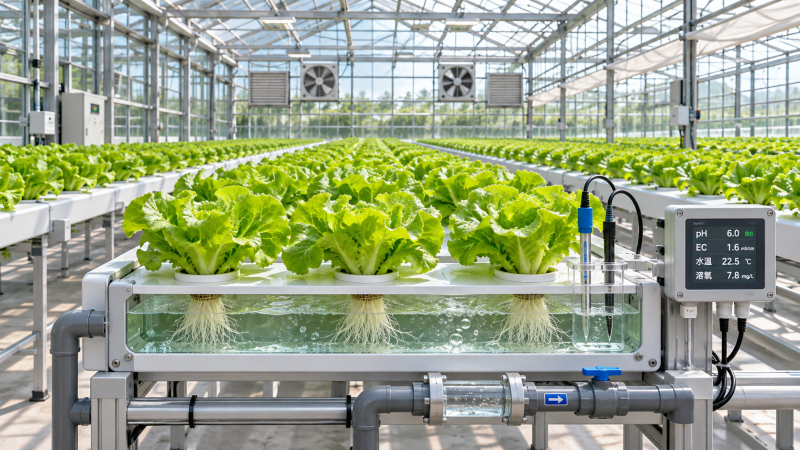
Agri-food industry technology connects the systems used to produce, handle, process, and preserve food. Its applications range from irrigation controls that respond to soil conditions to processing equipment that sorts raw materials, manages heat treatment, and checks packaged products.
The most useful distinction is between technologies that improve conditions for producing food and those that control what happens after harvest. Both can improve consistency and reduce waste, but their value depends on the crop or product, the surrounding infrastructure, and the reliability of the process they support. A sensor, machine, or software platform is rarely effective in isolation.
From field conditions to more precise crop production
Crop production begins with biological variation: soil properties differ within a field, weather changes, and plants do not all develop at the same rate. Precision agriculture uses measurements to make decisions that reflect some of this variation rather than treating an entire field as uniform.
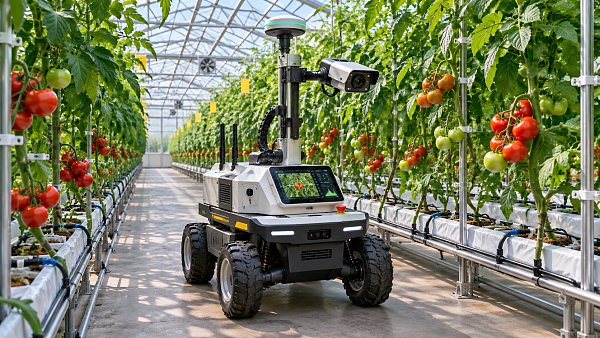
Soil moisture sensors, weather stations, satellite imagery, and equipment-mounted sensors can provide information about growing conditions. Depending on the system, that information helps determine when to irrigate, where to investigate crop stress, or how to adjust fertilizer application. GPS-guided machinery can support more accurate field operations, while variable-rate equipment can apply inputs at different rates across a field.
These tools do not automatically explain why a crop is underperforming. A satellite image may reveal an area with unusual plant growth, but poor drainage, disease, nutrient deficiency, or equipment problems could all require different responses. Field inspection and knowledge of local conditions remain important for interpreting the signal.
Precision also has a practical cost. Sensors need suitable placement and maintenance; machinery must be compatible with application maps; and digital recommendations depend on the quality of the underlying data. A smaller operation may gain more from a well-managed irrigation schedule than from a complex monitoring platform that it lacks the resources to maintain.
Irrigation and fertigation
Irrigation technology moves water to crops in controlled amounts. Drip irrigation delivers water near the root zone through emitters, while sprinklers distribute it over a wider area. The better choice depends on factors such as crop type, soil, water quality, field layout, and available pressure.
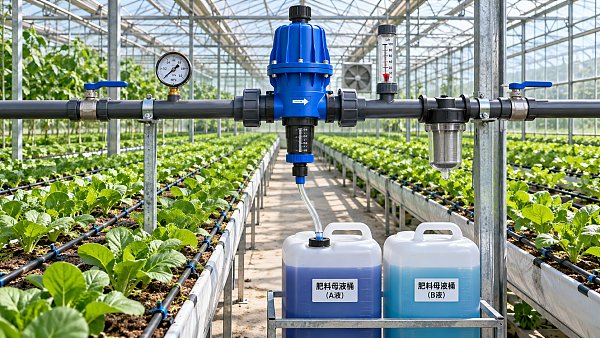
Fertigation adds soluble fertilizer to irrigation water. It allows nutrients to be delivered in relation to crop development, but it also makes water treatment, filtration, mixing, and system calibration important. Blocked emitters or an incorrectly prepared nutrient solution can produce uneven growth even when the control system is functioning as programmed.
Automation can open valves or adjust irrigation using a timer, sensor readings, or a control strategy. The key distinction is between automating a schedule and controlling irrigation based on crop needs: a timer reduces manual work, whereas a responsive system also requires dependable measurements and appropriate decision rules.
Controlled-environment farming: managing the growing space
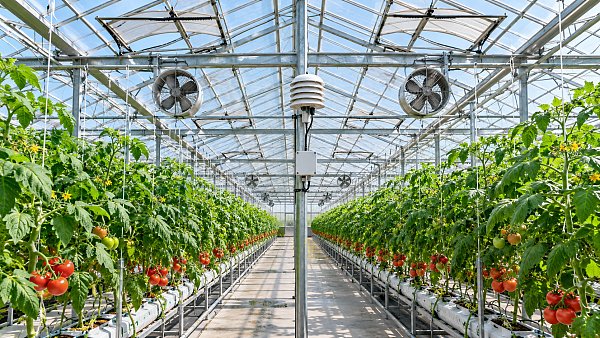
Greenhouses and indoor growing facilities use structures and equipment to influence conditions around a crop. Greenhouses use natural light while controlling factors such as ventilation, heating, humidity, and irrigation. Indoor facilities may rely more heavily on artificial lighting and mechanical climate control.
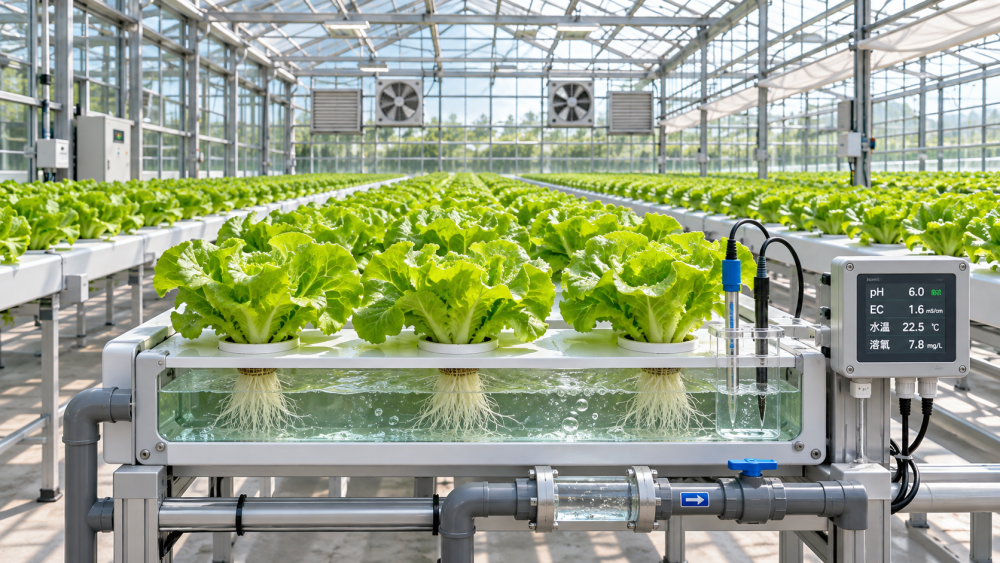
Hydroponic systems grow plants with roots supplied by a nutrient solution rather than field soil. Depending on the design, the solution flows past roots, is delivered through irrigation lines, or is recirculated. Sensors and controllers can help maintain nutrient concentration and acidity within a suitable range, but the correct settings differ by crop and growth stage.
Control over the environment can make production more predictable, particularly where outdoor conditions constrain growing. It does not eliminate biological risk. A ventilation failure can cause heat or humidity to rise quickly, while a problem in a shared nutrient system can affect many plants. In recirculating systems, water treatment and sanitation are especially important because pathogens can move with the solution.
Energy is another defining consideration. Heating, cooling, dehumidification, pumping, and supplemental lighting all add to operating requirements. A facility designed around maximum environmental control is not necessarily the most economical one; local climate, electricity costs, crop value, and the intended production season influence how much control is justified.
Livestock and aquaculture systems
Technology in animal production focuses on monitoring conditions, delivering feed and water, managing labor, and detecting signs that require attention. Automated feeding equipment can distribute feed according to a schedule or ration, while ventilation controls respond to temperature and other conditions inside a building. In dairy production, automated milking systems combine mechanical milking with information about individual animals and milk output.
Wearable devices, cameras, and other sensors can indicate changes in movement, feeding, or behavior. Such changes may prompt closer inspection, but they are not a diagnosis on their own. Animal identification, sensor placement, maintenance, and a clear response procedure determine whether the information is useful.
In aquaculture, monitoring dissolved oxygen, water temperature, and other water-quality parameters supports decisions about aeration, feeding, and stocking conditions. Recirculating aquaculture systems treat and reuse water, combining components such as filtration, biological treatment, and oxygenation. They can provide greater control over water conditions, but continuous power, system maintenance, and backup arrangements are important because a failure can affect the whole system.
Harvest handling connects the farm to processing
Technology used immediately after harvest has a direct effect on what reaches a processor. Rough handling, delays, unsuitable temperatures, and contamination can reduce quality before food enters a factory. For fruit and vegetables, cleaning, grading, and pre-cooling may be as important to the final result as the processing equipment that follows.
Sorting systems separate produce by characteristics such as size, shape, color, or visible defects. More advanced optical systems use cameras and software to classify items moving along a conveyor. They can support consistent grading, but their effectiveness depends on lighting, product presentation, calibration, and the defects the system is designed to detect.
A visible appearance standard is not the same as a food safety test. A sorter may remove damaged produce without detecting pathogens, chemical residues, or internal defects outside its detection capability. Similarly, aggressive sorting can reduce usable yield if acceptable material is rejected. The grading specification should therefore reflect the intended product: ingredients for purée do not necessarily need the same appearance as produce sold whole.
Food processing technology: turning variable inputs into consistent products
Processing equipment changes raw agricultural materials into products with defined characteristics. Depending on the food, a line may include washing, peeling, cutting, mixing, cooking, drying, freezing, filling, or packaging. The purpose is not simply to increase output: each operation influences product safety, texture, flavor, yield, and shelf life.
For example, cutting vegetables creates a convenient ingredient but also exposes more surface area and can accelerate quality loss. The process must be supported by suitable sanitation, temperature control, and packaging. In a dairy operation, heat treatment is designed around the product and its required safety outcome; recording temperature alone is not enough without ensuring that the product receives the appropriate treatment for the required time.
Equipment capacity also needs to be understood as part of a complete line. A high-speed cutter cannot deliver its rated output if washing, inspection, or packaging cannot keep pace. Conversely, running a line below its design capacity can affect labor, cleaning time, and unit costs. Product variability matters too: changes in size, viscosity, or moisture content can alter how reliably a machine performs.
Automation and hygienic design
Conveyors, robotic handling, programmable controls, and automated filling can reduce repetitive manual tasks and improve process consistency. Their usefulness depends on the product and operation. Uniform containers moving at a steady rate are generally easier to automate than fragile or irregularly shaped items that vary from batch to batch.
Hygienic design addresses another requirement: equipment must be capable of being cleaned and maintained without creating inaccessible areas where food residues can accumulate. Materials, joints, seals, drainage, and access for inspection all matter. Clean-in-place systems circulate cleaning solutions through suitable enclosed equipment, but their effectiveness depends on the system design and verification of the cleaning process. Automation does not remove the need to confirm that equipment is clean.
Fermentation, enzymes, and ingredient technology
Biological processes also play a role in food manufacturing. Fermentation uses microorganisms to transform ingredients, producing changes in flavor, texture, acidity, or other properties. Familiar applications include yogurt, cheese, and fermented vegetables, while controlled microbial processes can also be used to produce selected food ingredients.
Enzymes are used to enable or accelerate specific reactions. Depending on the application, they can help break down starch, modify proteins, or improve juice extraction. Their performance depends on conditions such as temperature, acidity, processing time, and the composition of the raw material.
These approaches are not interchangeable with conventional processing equipment. A fermentation system needs suitable microbial cultures, ingredient control, sanitation, and monitoring of process conditions. An enzyme selected for one formulation may perform differently in another. Product claims and permitted uses also depend on the ingredient and the rules in the relevant market.
Packaging, cold chains, and food safety checks
Packaging protects food during handling and distribution, but it must be matched to the product. A material that limits moisture transfer may help preserve a dry snack, while chilled fresh produce has different respiration and moisture-management requirements. Vacuum and modified-atmosphere packaging can alter the environment around certain foods, but their suitability depends on the product, storage conditions, and safety controls.
Cold-chain systems maintain specified temperatures during storage and transport. Refrigeration slows many forms of quality deterioration, but it does not correct contamination that has already occurred, and it does not make a product safe indefinitely. Temperature monitoring is useful only when readings are reviewed and deviations lead to action. Loading practices, door opening, equipment capacity, and the temperature of incoming products can all affect the conditions food actually experiences.
Food safety technology adds checks at different points in the process. Metal detectors and X-ray systems are used for certain physical contaminants; laboratory methods can test for microorganisms, allergens, chemical residues, or product composition. Each method has a defined detection capability and sampling limitation. A negative laboratory result from a sample does not establish that every unit in a batch is free of a hazard, so testing supports rather than replaces preventive controls.
Traceability links the stages together
Traceability systems connect information about ingredients, processing batches, packaging, and distribution. Barcodes, electronic records, and production software can make it easier to identify where a material was used and which finished products may be affected by a problem.
The central requirement is not the sophistication of the software but the integrity of the links between records. If ingredients from several lots are combined, the system must capture that relationship. If material is reworked into a later batch, that movement also needs to be recorded. Missing or inaccurate entries can limit the value of an otherwise capable platform.
The same principle applies across agri-food technology: performance depends on how equipment, people, biological materials, and operating conditions interact. A useful assessment starts with the problem to be controlled—uneven irrigation, variable raw materials, a processing bottleneck, or temperature excursions—and then examines whether the technology can address it under the conditions in which it will actually operate.
Want to dive deeper into these market dynamics, or need data-driven support for your next business move? Drop a line below and let the analysts at AFBN provide customized insights.
We respect your privacy. Your information is strictly confidential.
相关推荐
 Tomato Conference Explores Robotics and AI in Greenhouse GrowingGreenhouse robotics and AI take center stage at a tomato conference. Explore their potential for crop management, labor challenges and smarter purchasing.
 Controlled Environment Crop Production in Greenhouses: How Climate Control WorksExplore controlled environment crop production greenhouse systems and learn how climate control balances crop quality, energy use, and production stability.
 Choosing a Greenhouse Fertigation Injector: Flow Rate and Dosing RatioChoose the right greenhouse fertigation equipment injector by comparing flow rates, dosing ratios and pressure requirements for accurate nutrient delivery.
 French Zucchini Output Forecast to Fall 8% in 2026 to Five-Year LowFrench zucchini production is forecast to fall 8% in 2026 to a five-year low. Explore what the smaller crop could mean for growers, buyers and prices.