



Search
Related News
- 00
0000-00
Probiotics Price Guide: What Drives the Cost of Bulk Ingredients? - 00
0000-00
Georgia’s Tomato Import Value Reaches Record for January–October 2026 - 00
0000-00
Health Attributes Drive Innovation in the Cereal Industry - 00
0000-00
French Tomato Output Forecast to Fall in 2026 as Prices Remain High - 00
0000-00
Choosing Food Packaging Lines: Capacity, Product Type and Automation
Commercial Horticulture Technology: Tools for Greenhouse Growing




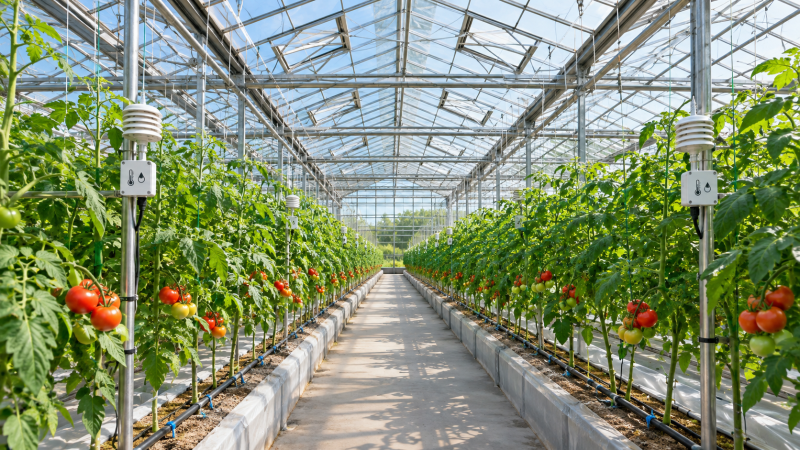
A commercial greenhouse can look calm from the outside, even while its operators are making dozens of decisions inside: whether to ventilate, how much water to apply, when to add nutrients, and how to respond to a change in light or humidity. Each decision affects the crop, and many affect one another.
Commercial horticulture technology brings these decisions together through tools that measure conditions, control equipment, and support crop management. Climate controls, irrigation systems, grow lights, sensors, and greenhouse structures all have distinct roles, but their value depends on how well they work as a system. For anyone researching a greenhouse project, understanding those connections is a useful starting point before comparing equipment or suppliers.
What Is Commercial Horticulture Technology?
Commercial horticulture technology refers to the equipment, software, and growing methods used to produce crops at business scale. In greenhouse growing, it includes the structure itself as well as the systems that manage the environment, deliver water and nutrients, monitor plants, and organize labor.
The aim is not to eliminate the grower’s judgment. Rather, technology makes conditions more visible and gives operators more control over them. A temperature sensor, for example, reports what is happening; a controller can then operate vents or heating according to set points; and a grower can review whether those settings are appropriate for the crop and season.
Greenhouses range from relatively simple protected structures to highly automated facilities. The right level of technology depends on the crop, local climate, available utilities, market requirements, and the people who will run the site.
The Greenhouse as a Connected Growing System
It is tempting to evaluate each piece of equipment separately. In practice, a greenhouse behaves more like a connected environment. Adding supplemental lighting can affect crop water demand and air temperature. Ventilating to remove humidity can also release heat and carbon dioxide. Irrigation decisions influence the root zone, while the root zone influences how plants respond to the climate above them.
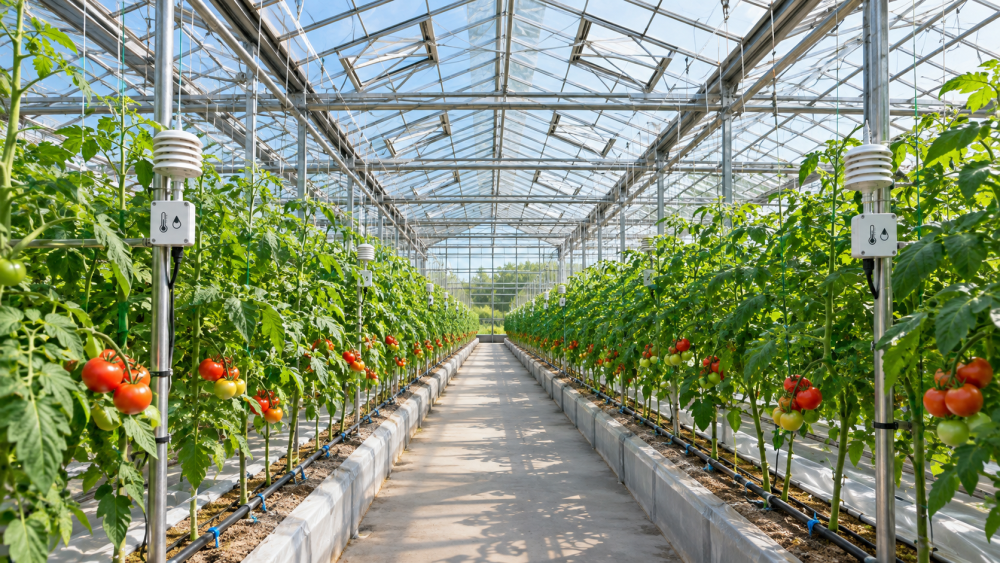
These relationships matter because a tool that works well on its own may create new demands elsewhere. Before selecting equipment, project teams should consider how the structure, climate system, water supply, crop layout, and control platform will operate together.
Core Tools Used in Commercial Greenhouse Growing
Greenhouse structures and coverings
The structure sets the starting conditions for everything inside. Frame design, roof shape, height, ventilation openings, and covering material influence light transmission, heat retention, airflow, and maintenance requirements.
Glass and different plastic coverings offer different combinations of durability, insulation, light behavior, and replacement needs. The most suitable choice depends partly on local weather and the crop’s light requirements. A project in a cold region may place greater emphasis on retaining heat, while one in a hot climate may need to prioritize ventilation and shading. Structural design must also account for applicable building requirements and local wind and snow loads.
Climate control and ventilation
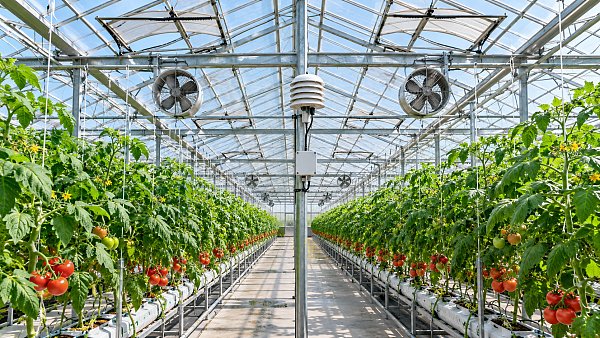
Greenhouse climate systems manage temperature, humidity, and air movement using combinations of roof or side vents, fans, heating equipment, cooling systems, and thermal or shading screens. More advanced installations may coordinate these components through a central controller.
Humidity deserves attention alongside temperature. Moist conditions can increase disease risk, especially when plant surfaces remain wet for long periods. Air circulation and ventilation can help manage moisture, but removing humid air may also increase heating demand. Good climate management therefore involves balancing crop health against energy use rather than pursuing a single ideal number.
Some operations also supplement carbon dioxide to support photosynthesis when conditions are suitable. Its use should be considered alongside ventilation, light, crop needs, and worker safety; adding CO2 while vents are open, for example, may reduce the value of supplementation.
Irrigation and fertigation
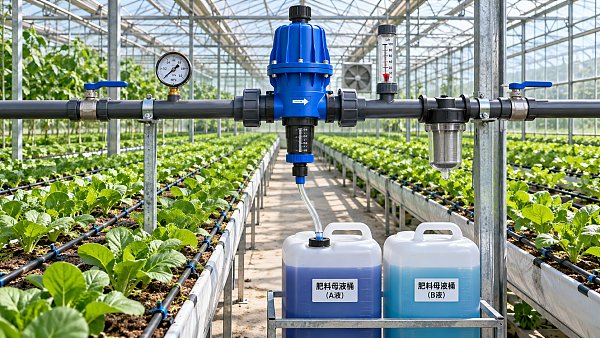
Irrigation delivers water to the crop, while fertigation adds dissolved nutrients through the irrigation system. Common arrangements include drip lines for crops grown in containers or substrate, and circulating nutrient solutions in some hydroponic systems.
Automated irrigation may be triggered by a timer, accumulated solar radiation, substrate moisture, or a combination of inputs. The appropriate approach depends on the growing system and how quickly crop demand changes. Water applied on a fixed schedule is simple to manage, but it may not respond well to a sudden change in weather.
Two measurements are especially useful in fertigation: electrical conductivity (EC), which indicates the concentration of dissolved salts, and pH, which affects nutrient availability. Neither measurement replaces a complete water or nutrient analysis, but both help operators identify when a solution may need adjustment. Source-water quality, filtration, drainage, and equipment cleaning also influence reliability.
Grow lighting and screens
When natural light is insufficient, supplemental lighting can support crop development and production planning. LED fixtures are widely considered for their controllability, while other lighting technologies may still be found in commercial facilities. Selection involves more than comparing fixture specifications: the useful light reaching the crop, installation height, uniformity, operating schedule, electrical capacity, and heat output all matter.
Screens serve a different but related purpose. Shade screens can reduce excess incoming radiation, while thermal screens help limit heat loss. Some installations use more than one screen to address changing conditions. Lighting and screen strategies should be planned together so that one system is not working against the other.
Sensors, software, and automation
Sensors give operators a view of conditions they cannot reliably judge by sight alone. A greenhouse may monitor air temperature and relative humidity at crop level, incoming light, irrigation flow, substrate moisture, nutrient solution EC and pH, and other variables.
Software can display trends, issue alarms, record events, and connect measurements to equipment controls. Yet more data does not automatically mean better decisions. Sensors need appropriate placement, routine checks, calibration where required, and a clear response plan when readings fall outside expected ranges. A humidity alarm has limited value if no one knows who will investigate it or what action to take.
Crop handling and labor tools
Production continues beyond climate and irrigation. Benches, growing gutters, carts, lifting platforms, transplanting equipment, harvesting aids, and packing-line tools all influence how efficiently people move through a greenhouse.
For crops requiring frequent pruning, training, or harvesting, the layout can be as important as automation. A well-planned aisle and access system may reduce unnecessary movement and improve working conditions. Automated solutions should be assessed against actual crop tasks, available labor, maintenance capability, and the consistency of the product being handled.
How Growing Methods Affect Technology Choices
Not every greenhouse uses the same root environment. Soil-based production, substrate systems, and hydroponics place different demands on irrigation, monitoring, and sanitation.
- Soil growing: Water management depends on soil properties, drainage, and field variability. The greenhouse structure still provides environmental protection, but root-zone conditions can be less uniform across the site.
- Substrate growing: Materials such as coco coir or mineral wool provide a managed root environment. Drip irrigation, drainage monitoring, and consistent nutrient delivery are central considerations.
- Hydroponic systems: Roots receive nutrients through a water-based solution, with designs varying by crop and production method. Water treatment, solution monitoring, circulation, and contingency planning are particularly important where systems are recirculated.
Recirculating water can reduce discharge and support resource efficiency, but it also means that an issue in the shared water system may affect many plants. Filtration, appropriate treatment, monitoring, and maintenance should be considered from the beginning.
What Should Researchers Compare Before Choosing a System?
Technology comparisons are most useful when they begin with the production plan rather than a catalog. A greenhouse producing leafy greens for a nearby market will have different priorities from one growing tomatoes over a long season or raising ornamental plants with varied spacing and climate needs.
Use the following questions to frame an initial assessment:
- What does the crop require? Consider light, temperature, humidity, plant spacing, root-zone management, crop cycle, and the level of consistency expected by buyers.
- What can the site support? Review water quality and availability, electrical capacity, fuel or heat sources, drainage, local weather, and access for deliveries and distribution.
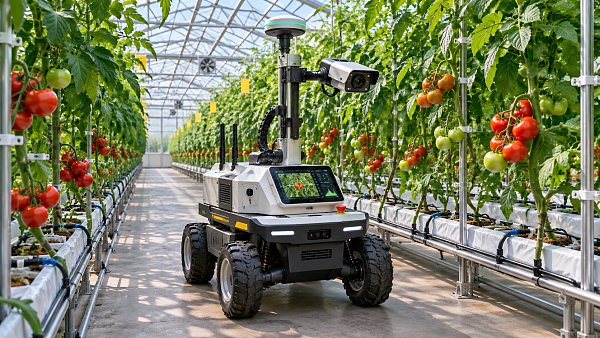
- Which decisions need automation? Identify repetitive tasks, conditions that change quickly, and risks that require an alarm or a rapid response. Not every process needs the same level of control.
- Can the systems communicate? Ask how sensors, controllers, irrigation equipment, and software exchange information, and whether data can be accessed or exported when needed.
- Who will operate and maintain the equipment? Training, spare parts, technical support, cleaning, and routine calibration should be part of the discussion, not an afterthought.
- What happens during a failure? Consider power interruptions, pump faults, blocked filters, sensor errors, and communication outages. Backup arrangements and manual procedures are important where a failure could quickly affect crops.
It is also worth looking beyond purchase cost. Energy, water treatment, consumables, labor, maintenance, and component replacement contribute to the cost of operating a greenhouse over time. The least expensive equipment at the outset may not be the most suitable choice for a particular crop or location.
Common Misunderstandings About Greenhouse Technology
Automation does not remove the need for growing expertise. A controller follows its settings; it does not necessarily know whether plants are stressed, roots are unhealthy, or a sensor is giving a misleading reading. Regular crop observation remains essential.
More control is not always the same as more value. A sophisticated system can be useful where crop value, climate variability, or production goals justify it. In other situations, a simpler and well-maintained setup may better match the operation’s resources and skills.
Technology cannot compensate for every site constraint. Poor source water, unreliable power, or an unsuitable structure can limit the performance of otherwise capable equipment. These fundamentals deserve attention before finer control features.
From Equipment Knowledge to Better Project Questions
Commercial horticulture technology is best understood as a set of connected choices, not a collection of standalone machines. The structure shapes the environment; climate equipment modifies it; irrigation and fertigation support the roots; and sensors help growers see whether their decisions are working.
For an early-stage researcher, the next step is to define the crop, site, production goals, and operating constraints, then use those details to compare possible approaches. AFBN organizes information across greenhouse growing, agricultural equipment, and the wider agri-food supply chain to support that kind of informed evaluation. A clear understanding of how the pieces fit together makes later conversations with growers, engineers, and suppliers more productive.
Want to dive deeper into these market dynamics, or need data-driven support for your next business move? Drop a line below and let the analysts at AFBN provide customized insights.
We respect your privacy. Your information is strictly confidential.
相关推荐
 Tomato Conference Explores Robotics and AI in Greenhouse GrowingGreenhouse robotics and AI take center stage at a tomato conference. Explore their potential for crop management, labor challenges and smarter purchasing.
 Controlled Environment Crop Production in Greenhouses: How Climate Control WorksExplore controlled environment crop production greenhouse systems and learn how climate control balances crop quality, energy use, and production stability.
 Choosing a Greenhouse Fertigation Injector: Flow Rate and Dosing RatioChoose the right greenhouse fertigation equipment injector by comparing flow rates, dosing ratios and pressure requirements for accurate nutrient delivery.
 French Zucchini Output Forecast to Fall 8% in 2026 to Five-Year LowFrench zucchini production is forecast to fall 8% in 2026 to a five-year low. Explore what the smaller crop could mean for growers, buyers and prices.