



Search
Related News
- 00
0000-00
Probiotics Price Guide: What Drives the Cost of Bulk Ingredients? - 00
0000-00
Georgia’s Tomato Import Value Reaches Record for January–October 2026 - 00
0000-00
Health Attributes Drive Innovation in the Cereal Industry - 00
0000-00
French Tomato Output Forecast to Fall in 2026 as Prices Remain High - 00
0000-00
Choosing Food Packaging Lines: Capacity, Product Type and Automation
Automatic Poultry Cages: Evaluating Automation Levels for Layer Operations




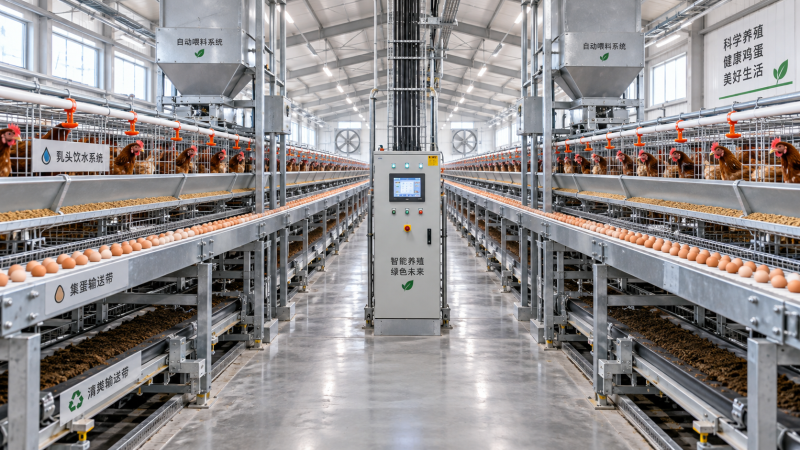
A layer-house automation decision is rarely a choice between “manual” and “fully automatic.” The more practical question is which tasks should be mechanized, which controls need to be integrated, and where human inspection must remain part of the operating routine. For technical evaluators, the wrong automation level can create a mismatch between equipment capacity, labor availability, building layout, power reliability, flock management practices, and maintenance capability.
Layer operations have several repetitive material flows: feed enters the house, water is distributed, eggs move toward collection points, manure is removed, and environmental conditions must be monitored throughout the production cycle. Automation can stabilize these flows, but only when the cage arrangement, drive systems, utilities, and operating procedures are assessed as one system. A highly automated line installed in a poorly prepared building may create more downtime and inspection work than a simpler, well-matched configuration.
Start with the operating bottleneck, not the equipment list
Commercial farms often begin by comparing cage tiers, feeding lines, egg belts, and manure-removal systems. Those components matter, yet the more useful starting point is to identify the present bottleneck. In one operation, egg collection may require excessive walking and handling. In another, inconsistent feed delivery between rows may be the central concern. A farm with limited labor may need automated manure removal, while a site with unstable electricity may need to avoid controls that cannot tolerate interruptions.
Automation should address a measurable operational constraint rather than simply add mechanical complexity. Technical teams can map the daily sequence of work and ask where delay, variation, physical strain, contamination exposure, or handling damage occurs. The answer will often indicate whether the next investment should focus on material movement, monitoring, environmental control, or a broader cage-system redesign.
There is also a difference between reducing labor inputs and reducing labor dependence. A mechanical feed line may reduce the time needed for routine distribution, but staff still need to verify feed availability, observe bird behavior, inspect drives, and respond to blockages. Systems that eliminate routine travel through the house can improve consistency, but they do not remove the need for trained personnel who understand what abnormal operation looks like.
Automation levels in a layer cage system
Layer cage systems are usually evaluated as combinations of independently automated functions. The relevant question is not whether every process is automated, but whether the functions are coordinated at a level appropriate for flock size and site conditions.
These choices should be treated as an operating profile. For example, a farm may automate feeding and egg collection while retaining direct checks of water lines and environmental conditions. This can be appropriate where labor is available for inspection but repetitive collection work is creating handling delays. Conversely, installing automated belts without a realistic plan for egg room capacity, tray supply, transfer layout, and cleaning can merely relocate the bottleneck.
Cage configuration changes the automation fit
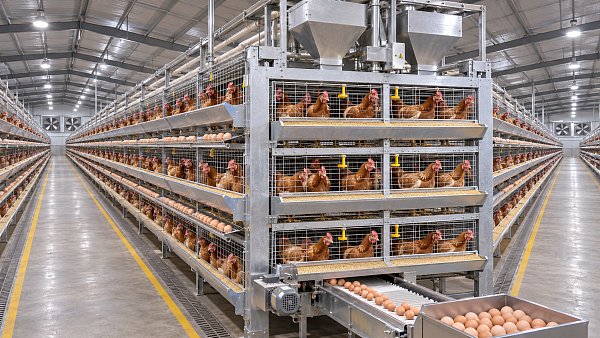
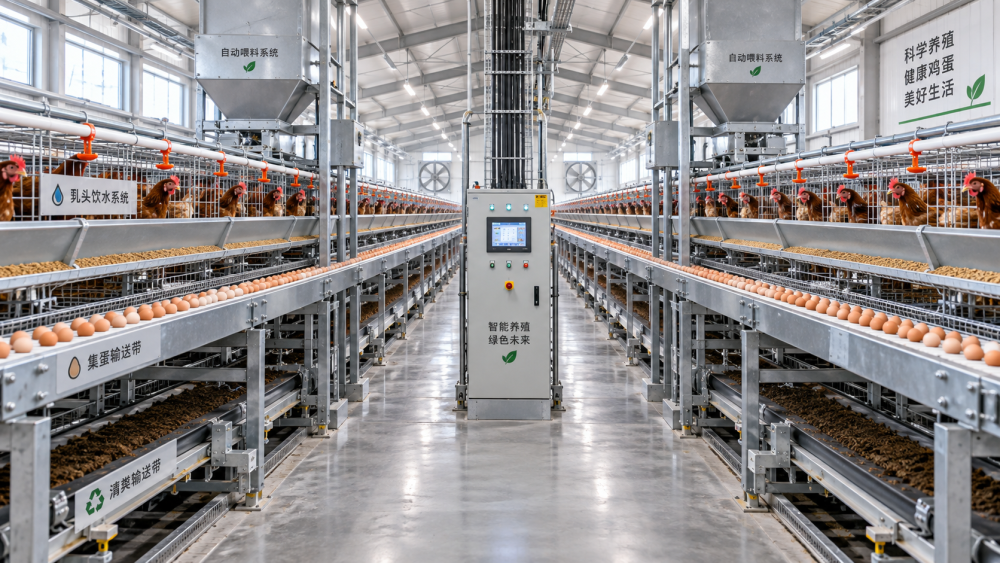
Automation performance is closely tied to the physical geometry of the cage layout. A-type arrangements, in which tiers form an angled profile, are commonly considered where a farm needs a comparatively straightforward arrangement and accessible visual inspection. Multi-tier configurations can increase bird capacity within a building footprint, but they usually place greater demands on structural alignment, manure handling, ventilation design, and access planning.
Technical evaluators should review the complete interface between cages and handling systems. Feed trough position affects distribution and bird access. Drinking lines need stable support and practical flushing points. Egg belts must remain aligned at transfer sections, where even small installation errors can contribute to egg rolling problems or contact damage. Manure belts require adequate tensioning, tracking, discharge clearance, and cleaning arrangements. These are installation details, yet they often determine whether a system operates predictably after commissioning.
When comparing layouts, it is useful to examine the equipment as a set of serviceable zones rather than as a bird-capacity calculation alone. Can operators access drive units safely? Can a damaged belt section be repaired without dismantling adjacent equipment? Is there room to clean under discharge areas? Are electrical cabinets protected from dust, moisture, and routine washdown exposure? A layout that looks efficient on a drawing may be difficult to maintain if these questions are not addressed before installation.
Where automatic systems deliver practical value
The strongest case for automation usually appears where routine work is frequent, repetitive, and sensitive to timing. Feed distribution is a clear example. A properly configured automated line can help deliver feed along rows in a more repeatable sequence than manual handling, provided that feed characteristics, hopper discharge, and line capacity are compatible. Uneven flow caused by damp feed, poor auger performance, or incorrectly adjusted components will still require attention.
Egg collection is another high-value area because eggs are handled every day and each transfer point introduces a potential source of breakage or contamination. Collection belts can reduce manual carrying through the house and can move eggs toward a central handling area. Their value depends on belt cleanliness, speed matching, cage-floor condition, egg roll-out behavior, and the design of transitions between belts and elevators or tables. Automation cannot compensate for eggs that fail to roll correctly from the cage floor or for poorly maintained transfer points.
Manure removal deserves the same level of scrutiny. Frequent removal can support cleaner conditions within the house, but the method must suit the building’s discharge arrangement and the farm’s manure-storage plan. A belt system may be mechanically effective inside the house yet create problems if the discharge point is exposed to rain, lacks containment, or cannot accommodate the volume being moved. Evaluators should follow the manure path beyond the cage rows and include cleaning, loading, storage, and site-management requirements in the review.
For farms considering an A-type arrangement with mechanized feeding, drinking, egg handling, and manure management, product descriptions of automatic poultry cages can be useful as a reference point for identifying the subsystems that need to be specified, checked, and coordinated during procurement.
Utility resilience is part of the automation specification
Automation introduces dependence on electrical drives, control panels, and, in some configurations, sensors and programmed schedules. That dependence should be analyzed before selecting the equipment level. A farm with a dependable electrical supply may focus on control flexibility and motorized handling. A farm exposed to frequent interruptions needs a clear response plan for stopped feed lines, egg belts, ventilation equipment, and lighting programs.
Backup power planning should consider priority loads rather than treating every motor as equally critical. Environmental management and water supply may require faster restoration than egg collection. Control panels should have clear labeling, protected cable routing, and manual operating procedures that staff can use during faults. Emergency operation is not simply a generator issue; it includes who is authorized to intervene, which drives can be restarted safely, and how the flock will be monitored while normal routines are disrupted.
Water quality and pressure conditions also influence system reliability. Nipple drinker lines can work effectively when pressure is properly regulated and flushing is practical, but sediment, mineral deposits, and inconsistent source pressure can create uneven delivery or leakage. Procurement documents should distinguish between the equipment supplied and the water-treatment, filtration, pressure-control, and plumbing work required at the site.
Assess maintainability before calculating labor savings
Labor-saving projections often receive more attention than maintenance workload. Yet maintenance determines whether the expected reduction in routine handling can be sustained. Every automated subsystem adds components that need inspection: motors, gearboxes, bearings, chains, belts, pulleys, sensors, electrical connections, and tensioning devices. The relevant issue is not whether maintenance exists, but whether the farm can perform it consistently.
A technical evaluation should identify wear parts, recommended inspection points, lubrication needs where applicable, adjustment procedures, and likely causes of misalignment. Spare-part availability should be reviewed at the component level. A general promise of support is less useful than knowing whether commonly replaced belts, drive components, switches, and electrical parts can be identified and sourced without ambiguity.
Corrosion resistance also merits a practical review. Layer houses combine moisture, dust, cleaning activity, and manure-related gases, creating a demanding environment for metal structures and moving parts. Surface treatment, fastener selection, drainage, and protection of electrical enclosures can affect service life. Evaluators should ask where moisture accumulates, how washdown is performed, and whether hidden joints or inaccessible areas could retain waste.
Procurement documents should define interfaces and acceptance checks
Many installation disputes arise because responsibilities between the cage supplier, building contractor, electrical installer, and farm operator are not clearly assigned. A sound technical specification should describe building dimensions, floor condition, support requirements, aisle clearances, utility connection points, electrical characteristics, drainage assumptions, and discharge arrangements. It should also state what is included in the equipment scope and what must be provided locally.
Acceptance should be based on observable operating checks rather than visual completion alone. Before birds are placed, the farm can verify that feed distribution runs through the full route, drinker lines maintain expected operating condition, belts track correctly, drives stop and restart as intended, guards are installed, and access points are usable. Egg collection equipment should be run through its full path, while manure-removal equipment should be checked for alignment and discharge clearance.
- Confirm that cage rows are level and mechanically secure before belts and drives are finalized.
- Test each motorized function under normal operating conditions, not only during brief no-load demonstrations.
- Record control settings, motor identification, belt routing, and basic fault-response procedures.
- Inspect sharp edges, pinch points, guards, cable protection, and safe access around service areas.
- Train designated operators on daily observation tasks as well as shutdown and restart procedures.
A balanced automation decision
The appropriate system is the one that makes daily layer-house operations more controllable without exceeding the farm’s ability to supply power, maintain equipment, manage manure, and respond to faults. Full automation is not automatically the most resilient choice, and a low-cost manual arrangement may become difficult to operate as flock numbers, labor constraints, or biosecurity requirements change.
Technical evaluators can reach a stronger decision by matching each automated function to a defined operational need, checking how it interfaces with the building and utilities, and treating commissioning as the beginning of operational control rather than the end of procurement. In layer production, reliable automation is built through compatible design, accessible maintenance, and disciplined daily observation.
Want to dive deeper into these market dynamics, or need data-driven support for your next business move? Drop a line below and let the analysts at AFBN provide customized insights.
We respect your privacy. Your information is strictly confidential.
相关推荐
 Evaluating Broiler Cage Layouts for Feeder and Drinker AccessExplore Taiyu(HK) poultry farm equipment and learn how to compare broiler cage layouts for reliable feeder and drinker access throughout the flock cycle.
 Choosing Dairy Farm Systems: Milking, Feeding, and Herd ManagementCompare dairy farm systems for milking, feeding, and herd management. Discover how to assess costs, integration, labor, and reliability before you invest.
 Commercial Poultry Equipment Suppliers: An Evaluation FrameworkCompare commercial poultry equipment suppliers with a practical framework for evaluating system fit, complete costs, delivery and support. Make a confident buying decision.
 Semi-Automatic H-Type Layer Cages: Assessing Daily Labor NeedsH type layer cage system labor needs vary by equipment and layout. Learn how to estimate daily staffing, compare costs and plan with confidence.